

Provisional Psychologists in Australia: Carrying Accountability Without Power
Provisional psychologists face placement poverty, Medicare exclusion, supervision dependency, insecure work and practitioner-level accountability before they have practitioner-level power.
Educational information, not individual clinical, legal or regulatory advice. No independent review is identified for this article. Editorial policy and corrections.
Provisional Psychologists in Australia: Carrying Accountability Without Power
There are thousands of provisional psychologists on the Ahpra register at any given time. They are doing real clinical work, with real clients, under supervision, while carrying legal and ethical accountability within the National Scheme.
But they are also positioned in one of the most structurally vulnerable parts of the Australian mental health workforce.
The vulnerability is not just emotional. It is financial, regulatory, relational, and institutional.
Provisional psychologists often depend on supervisors for sign-off, employers for viable placements, universities or training providers for progression, and professional references for future work. At the same time, they may be managing unpaid or low-paid placements, limited employment protections, no Medicare rebate eligibility for their services, and significant uncertainty about what happens if a placement breaks down.
This is not a niche issue. It sits directly inside Australia's psychology workforce crisis. The Department of Health's 2026 workforce modelling projects unmet demand in psychology positions in health settings rising from a 57.3% shortfall in 2025 to a 96.6% shortfall by 2038.
Australia needs more psychologists. But the pathway to becoming one still asks many trainees to absorb costs, risks, and dependencies that the profession has not properly named.
This post is about that structural vulnerability: placement poverty, Medicare exclusion, supervision dependency, insecure employment, regulatory accountability without equal power, and what the current reforms may — and may not — change.
This article is written by an Australian provisional psychologist.
This is not legal, financial, or career advice. If you are a provisional psychologist in difficulty — with your placement, your employment, your supervisor, your mental health, or the regulatory system — seek advice from your professional association (AAPi or APS), your indemnity insurer, or a trusted senior clinician. This post is the map, not the territory.
Note: This article is a general, research-informed discussion intended for educational purposes. It does not comment on or make findings about any specific individual, organisation, workplace, complaint, investigation, or legal matter.
Jump to a section:
- The common thread: structural dependency
- What a provisional psychologist actually is
- The financial reality: placement poverty
- The Medicare gap
- Supervision dependency and power
- Employment conditions: contracts, payback clauses, insecure work
- Caseload, scope creep, and the experience gap
- Full accountability, minimal power: the regulatory load
- Mental health: burnout, distress, and the silence around both
- The workforce paradox: massive shortage, can't get placed
- The pathway reforms: what is actually changing
- The $47.6 million investment: what it is and what it is not
- What this is not saying
- What actually helps right now
- What needs to change structurally
- Where to go from here
- References
The common thread: structural dependency

The common thread across the issues described in this post is structural dependency. Provisional psychologists depend on supervisors, employers, universities, placement providers, references, and regulators while having limited power to challenge the conditions that shape their progression.
Dependency is not inherently abusive. Training necessarily involves oversight. Supervision is protective. Regulation is important. But when dependency is combined with financial precarity, scarce placements, unclear employment conditions, and regulatory accountability, it creates vulnerability.
The argument of this post is not that supervision or accountability are the problem. The argument is that the conditions surrounding supervision and accountability are the problem, and that those conditions disproportionately expose the people with the least power in the system.
What a provisional psychologist actually is
In most health professions, students are registered as "students" during their clinical placements. They have a separate regulatory category, separate notification guidelines, and a degree of institutional protection that recognises they are learners.
Psychology is unusual. Once trainees enter supervised practice as provisional psychologists, they are registered in a practitioner category rather than only being treated as students. This is a form of practitioner registration, not student registration. Ahpra's mandatory notification guidance directs provisionally registered psychologists to consult the practitioner guidelines rather than the student guidelines.
They are regulated under the practitioner framework, not merely treated as students. That means the same broad professional duties, notification architecture, and public-protection logic apply, even though their experience, power, income, and security are very different from those of a fully registered psychologist.
The accountability is substantial. The structural protections are often uneven.
The financial reality: placement poverty

"Placement poverty" is not a colloquial phrase. It is now a named systemic barrier in the peer-reviewed literature.
A 2025 paper published in Australian Psychologist described placement poverty as one of the most significant barriers to entry into the psychology workforce, arguing that mandatory uncompensated clinical placements inadvertently exclude students from marginalised communities, particularly those who are socioeconomically disadvantaged or culturally and racially minoritised.
The financial structure is straightforward and punishing. Provisional psychologists:
- Complete five or more years of university education before entering supervised practice.
- Pay Ahpra registration fees to hold provisional registration.
- Often pay supervision fees, either directly or through employer arrangements that absorb the cost in exchange for reduced pay.
- May receive no income or low income during placements: some placements are explicitly unpaid.
- Cannot generate Medicare rebates for their clinical services, which limits their economic value to employers.
- Continue to carry student debt accumulated during undergraduate and postgraduate training.
- Incur direct costs — commuting, meals, professional clothing, professional development, indemnity insurance — throughout the placement period.
- Often lose access to paid employment in other fields during placement, because placement hours are demanding enough to prevent concurrent work.
In other health disciplines — nursing, physiotherapy, paramedicine — trainees are registered as students, incur no Ahpra registration costs, and their placement structures are often better integrated with paid employment. Psychology's placement model is, by comparison, unusually costly and unusually poorly compensated.
AAPi has been explicit about the consequences. In a 2025 factsheet, AAPi stated that provisional psychologists face "unpaid placements, costly supervision, and low or no income during key years of their training" and that some are "leaving the profession feeling burnt out, broke, and disillusioned before they even" begin their registered careers.
The word "disillusioned" is worth pausing on. These are not people who lost interest. They are people who could not afford to finish.
The Medicare gap
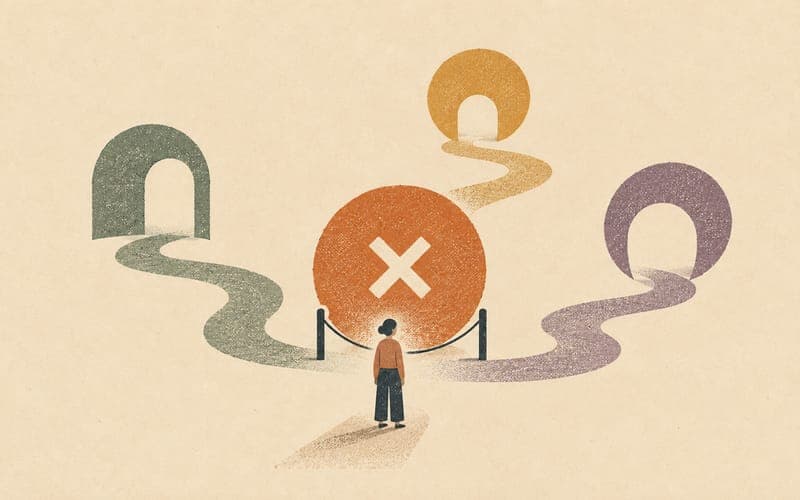
This is the structural barrier that affects everything else.
Provisional psychologists are generally not eligible for Medicare rebates under the Better Access scheme. Services provided by a provisional psychologist typically sit outside Better Access rebate eligibility. This has cascading effects:
For provisionals, it means their clinical services cannot be subsidised, which makes them less economically viable to employers. An employer choosing between a fully registered general psychologist (whose clients can claim Medicare) and a provisional psychologist (whose clients cannot) has a financial incentive to hire the registered psychologist. This is not an abstract market effect. It is the daily reality of placement-seeking for thousands of provisionals.
For clients, it means that seeing a provisional psychologist often requires private payment, employer subsidy, university clinic subsidy, NDIS funding, or another non-Better Access funding pathway. In a system where out-of-pocket costs are already a significant barrier to accessing psychological care, removing the rebate option further narrows access.
For employers, it means offering provisional psychologist placements is a financial cost rather than a revenue-generating arrangement. This contributes to placement scarcity: the very shortage that the $47.6 million federal investment is attempting to address.
AAPi has campaigned publicly for provisional psychologists to be added to the Medicare Benefits Schedule, arguing that their services are clinically supervised, evidence-based, and already being delivered to real clients with real needs. The two-tier Better Access system also means clients receive different rebate amounts depending on provider type — clinical psychology items attract a higher rebate than focused psychological strategies delivered by registered psychologists — while provisional psychologist services generally sit outside Better Access rebate eligibility altogether.
The result is a workforce paradox: Australia projects a 96.6% shortfall in psychology workforce supply in health settings by 2038, while simultaneously structuring the pathway in a way that financially punishes the people training to fill it.
Supervision dependency and power

Supervision is the cornerstone of provisional psychologist training. It is also one of the most significant power asymmetries in the profession.
A provisional psychologist is dependent on their supervisor for:
- Sign-off on clinical hours: without which registration cannot progress.
- Assessment of competencies: the supervisor's judgement directly determines whether the provisional meets the Board's requirements.
- Scope of practice decisions: what clients the provisional can see, what modalities they can use, what complexity they can manage.
- Professional references: for future employment, endorsement pathways, and registration progression.
- Day-to-day clinical support: debriefing, case discussion, guidance on difficult decisions.
This dependency is, in principle, appropriate and protective. Good supervision is one of the most valuable clinical resources a developing practitioner can have. The issue is not supervision itself. The issue is that the power imbalance is structural and largely unaccountable.
If a supervisor provides inadequate supervision — inconsistent, unavailable, dismissive, overly controlling, or clinically outdated — the provisional has very limited recourse. Raising concerns about supervision quality is complicated by the fact that the person you would raise concerns about is the person who holds the keys to your registration. Changing supervisor mid-placement is possible but often practically difficult: it can disrupt placement hours, damage workplace relationships, and create gaps in supervisory cover that jeopardise the entire internship.
For provisionals in smaller practices, rural settings, or niche areas of practice, there may be no alternative supervisor readily available. The dependency is not just emotional. It is geographical, logistical, and professional.
Some provisional psychologists report supervisory experiences that go beyond inadequate and into harmful territory: supervisors who are dismissive of neurodivergent experience, who pathologise the provisional's own identity, who use supervision as a space for control rather than development, or who blur boundaries between supervision and therapy. These experiences are not universal, but they are not rare, and the structural power imbalance makes them difficult to address from below.
A useful reframing for the profession: supervision of provisional psychologists is not just a clinical activity. It is a high-trust professional relationship in which the supervisor holds disproportionate power over another person's career. It should carry corresponding accountability.
For a practical companion on recognising healthier and riskier supervision patterns, read What Good Supervision Actually Feels Like. For the ethics of overlapping supervision, employment, and evaluation roles, see Role Collapse: When Dual Relationships Create Conflicting Responsibilities.
Neurodivergent trainees can face an additional bind around disclosure, masking, accommodations, and how differences are interpreted in supervision. The guide to neurodivergent provisional psychology and safe supervision works through those decisions in detail.
Employment conditions: contracts, payback clauses, insecure work

Many provisional psychologists are employed on conditions that would be considered unacceptable in most other professional fields.
Common features include:
- Piece-rate or session-based pay, with no guaranteed minimum income. If clients cancel, the provisional is not paid for that hour.
- No paid leave, or minimal leave provisions, particularly in private practice placements.
- Payback clauses. AAPi has published guidance on this specifically: some employers require provisionals to repay supervision costs, training fees, or onboarding expenses if they leave within a set period: sometimes 12 to 24 months. These clauses can effectively trap clinicians in workplaces that are not safe for them, because the financial penalty for leaving is significant relative to the income the placement generates.
- Short-term or casual contracts, without the security of ongoing employment.
- Administrative and non-clinical tasks absorbed without additional compensation: report writing, case notes, emails, phone calls, and professional development often occur outside paid hours.
- Expectation of unpaid overtime, particularly around report writing, case formulation, and preparation for supervision.
In the public sector, conditions are typically better: salaried positions with leave entitlements and structured supervision. But competition is intense. In South Australia, for example, 158 applications were received for 48 psychology positions in 2025, and SA Health psychologists are paid 10–40% less than their counterparts in other states. Public sector positions are often temporary or contract-based, and advancement pathways can be slow.
The private sector offers more positions but fewer protections. Many provisionals in private practice are classified as contractors rather than employees, which removes access to employment protections, workers' compensation, and employer superannuation contributions.
The pattern is consistent: provisionals absorb more risk and receive less protection than almost any other comparable professional group.
Caseload, scope creep, and the experience gap
Many provisional psychologists carry caseloads that more senior clinicians would consider demanding.
This happens for several reasons:
- Workforce shortages mean organisations need bodies in chairs. Provisionals fill gaps that experienced clinicians are not available to fill.
- NDIS work often involves complex presentations, lengthy report writing, and clients with multiple co-occurring conditions. Many provisionals work extensively in NDIS settings because these settings employ them, but the clinical complexity can outstrip the provisional's experience.
- Community mental health settings may assign provisionals to high-acuity clients, including suicidal ideation, family violence, psychosis, and substance use, with supervision that is stretched thin by organisational demands.
- Schools may use provisionals as de facto school counsellors, sometimes without adequate clinical supervision or role clarity.
- Private practices may assign clients based on availability rather than complexity-matching, particularly when the provisional is the only clinician with open slots.
Scope creep — the gradual expansion of clinical responsibility beyond what the provisional's training, experience, and supervision can safely support — is one of the most common and least-discussed risks in provisional psychologist employment. It typically happens incrementally. The provisional takes on one slightly-too-complex client, then another, then another. By the time the pattern is visible, the caseload has drifted beyond what the supervision arrangement was designed to support.
The related boundary question is covered in more detail in Was I Out of My Depth? Competence, Role Drift and Dual Relationships in Psychology Practice.
The experience gap is real. A provisional psychologist in their first months of supervised practice does not have the pattern recognition, clinical judgement, or crisis response skills that come with years of experience. This is not a criticism. It is a developmental fact. The system's job is to provide the scaffolding that protects both the provisional and their clients during this period. When the scaffolding is inadequate — when supervision is stretched, caseloads are too high, and complexity is unmanaged — the provisional carries the risk.
Full accountability, minimal power: the regulatory load

The system asks provisional psychologists to carry practitioner-level accountability while often denying them corresponding power, security, and professional networks.
As a provisional psychologist, you:
- Can have mandatory notifications made about you on the same thresholds as a fully registered psychologist.
- Can be the subject of voluntary notifications from clients, families, colleagues, employers, or members of the public.
- Are accountable to the full Code of Conduct and ethical guidelines.
- Can be investigated, cautioned, have conditions placed on your registration, or (in serious cases) be suspended or deregistered.
- Are required to hold professional indemnity insurance as a condition of registration.
You do this while:
- Having less clinical experience than the framework assumes.
- Often lacking an established peer network for support.
- Being financially dependent on the placement or employment that may also be the source of difficulty.
- Being professionally dependent on a supervisor whose judgement directly affects your career.
- Having less knowledge of the regulatory system, less experience navigating it, and less access to informal professional advice.
The shame and isolation of a notification or complaint are amplified for provisionals. Senior psychologists often have peers who have been through the process. Provisionals frequently have nobody to ask.
More detail on the notification process, the informal "Level 1, 2, 3" language, and what to do if a notification is made about you is available in the PsychVault guide to Ahpra notifications and mandatory reporting for provisional psychologists.
Mental health: burnout, distress, and the silence around both
The research on clinician wellbeing in Australia is consistent and uncomfortable.
McCade, Frewen, and Fassnacht (2021) found that 27.8% of Australian psychologists in their sample met criteria for burnout, while 16.9% reported at least mild depressive symptoms. Burnout and depression were significantly associated with each other. The study included psychologists at various career stages, but the pressures that drive burnout — workload, organisational climate, lack of resources, and inadequate support — are amplified in provisional and early-career roles.
For provisional psychologists specifically, the mental health picture is shaped by the structural conditions described in this post: financial stress, placement poverty, supervision dependency, insecure employment, scope creep, regulatory anxiety, and the gap between training and workplace reality.
Some provisionals describe their internship year as one of the most difficult periods of their lives, not because the clinical work was too hard, but because the conditions surrounding the clinical work were unsustainable. The work itself was often the rewarding part. The employment conditions, the supervision dynamics, the financial precarity, and the institutional weather were what made it hard.
The profession has a habit of framing clinician distress as an individual self-care problem. "Look after yourself." "Set boundaries." "Practice what you preach." This framing is not wrong at the individual level, but it is deeply incomplete. When 27.8% of psychologists meet criteria for burnout, the explanation is not that 27.8% of psychologists have poor self-care. The explanation is structural.
Provisionals are not burning out because they are weak. They are burning out because the system is designed in a way that depletes them. Naming that distinction matters, because the interventions are different. Individual self-care helps. Structural reform is what changes the baseline.
For provisionals navigating their own mental health alongside clinical work, the PsychVault guide to PTSD and the returning psychologist covers the body cost of practising with a trauma history, the Ahpra protections around practising with mental illness, the treating-practitioner exception, and graded return to safe practice.
The workforce paradox: massive shortage, can't get placed

The numbers are stark.
The Psychology Supply and Demand Compendium Report, published in April 2026 by the Australian Department of Health, projects a national workforce shortage of 96.6% in psychology positions in health settings by 2038. The national psychology workforce is projected to grow by 34% over the next fifteen years, but demand is projected to grow far faster. The workforce is also ageing: the proportion of FTE hours contributed by psychologists under 30 is projected to decrease from 13.7% to 9.3% by 2038.
At the same time, provisional psychologists report significant difficulty finding placements. University graduate numbers have been increasing: Flinders University reported an 80% growth rate in provisional psychologist graduates from 2022 to 2023. But placement availability has not kept pace. The result is a bottleneck: more graduates entering the pipeline, the same (or fewer) supervised placement positions available, and intense competition for the positions that exist.
This is the paradox: Australia desperately needs more psychologists, but the pathway to becoming a psychologist is structured in a way that financially punishes trainees, restricts placement availability, and pushes people out of the profession before they reach full registration.
The bottleneck is not academic training. The universities are producing graduates. The bottleneck is the supervised practice stage: the intersection of placement availability, supervision capacity, employer willingness to host provisionals, and the financial viability of positions that cannot generate Medicare rebates.
Why Psychology Internships Are So Hard to Find in Australia examines that bottleneck at the job-search level, including Medicare, disability access, interstate relocation and the pressure to accept highly specific regional roles.
The pathway reforms: what is actually changing
The training pathway is now under significant reform pressure. Current reform discussions point toward a more integrated training model, earlier practical exposure, and changes to existing bottlenecks in the pathway, including the removal of the national psychology exam for domestic graduates and a potential early exit point into a new "psychology assistant" role.
The detail matters, because a pipeline reform is not automatically a conditions reform.
The core question is not only "Can we move people through the pathway faster?" It is also "Can we make the pathway survivable, fair, supervised, and financially viable?"
These reforms are significant and under active consultation. They represent the largest structural change to Australian psychology training in decades. Some reforms are already moving through consultation and implementation, while changes to registration standards are staged, with key approved changes due to take effect from 1 January 2029. Whether they actually address the vulnerability of provisional psychologists will depend on how the implementation handles the specific structural issues named in this post, particularly placement funding, supervision capacity, and employment conditions during training.
The risk is that the reforms address the pipeline (more graduates, faster training) without addressing the conditions (placement poverty, supervision dependency, employment precarity). A faster pipeline through the same structural conditions will produce the same harms faster.
The $47.6 million investment: what it is and what it is not

In late 2025, the Australian Government announced a $47.6 million investment over 2026–27 to 2028–29 to fund 1,500 one-year internships for provisional psychologists in the 5+1 pathway, intended to address training bottlenecks and increase workforce supply.
This is a meaningful commitment. It represents the first significant federal investment specifically targeted at provisional psychologist placement availability.
What it is:
- A funding injection to expand the number of supervised internship positions.
- Targeted at the 5+1 pathway specifically.
- Intended to increase placement availability in underserved areas.
What it is not:
- A structural reform of provisional psychologist employment conditions.
- A change to the Medicare rebate system for provisional psychologists.
- A solution to supervision capacity constraints (funding positions is not the same as funding the supervisors who staff them).
- A permanent change: the funding is time-limited (three years).
AAPi's response to the announcement was measured: welcoming the investment while noting that "comprehensive support, including paid placements and Medicare rebates, will help more Australians immediately access psychological care while supporting the future workforce." Their two key structural asks — paid student placements and Medicare rebates for provisional psychologists — remain unmet.
The $47.6 million investment is meaningful. But funding internship places is not the same as reforming the conditions under which provisional psychologists train, work, and take clinical responsibility.
What this is not saying
This post is not an argument against supervision, accountability, or public protection. Provisional psychologists should be supervised. Clients should be protected. Regulators should respond when genuine risk emerges.
The argument is narrower and more structural: accountability should be matched with safeguards. If provisional psychologists are expected to carry practitioner-level duties, the system should provide training conditions that are financially viable, properly supervised, ethically governed, and safe enough for concerns to be raised without career-ending fear.
This is not a claim that every provisional psychologist has a bad experience. Many have excellent supervisors, supportive employers, and deeply rewarding internship years. The structural issues described in this post exist alongside those good experiences, not instead of them. The point is that when the system works well, it works despite the structural conditions, not because of them.
What actually helps right now
For provisional psychologists navigating the current system, the practical anchors:
- Join a professional association before you need one. AAPi and APS both offer member support, ethics lines, and resources for provisionals. AAPi provides complimentary indemnity insurance to student, provisional, and registrar members through its partner insurance.com.au. Don't wait until something goes wrong.
- Professional indemnity insurance is not optional. It is a registration requirement for provisional psychologists practising under supervision. If you are working without cover, stop and fix that today.
- Know your employment conditions in writing. Before signing, understand: pay structure, leave entitlements, supervision arrangements, scope of practice, payback clauses, notice periods, and what happens if the placement breaks down. If anything is unclear or missing, ask in writing. If the issue is a planned placement finish rather than a breakdown, the guide to ending therapy when a placement ends covers continuity, handover, consent, and documentation.
- Document scope discussions with your supervisor. When your supervisor agrees a piece of work is within scope, get it in writing: in your notes, supervision log, or email. This protects you.
- Know your supervisor agreement is bidirectional. A supervisor has obligations to you as well as the other way around. If supervision quality is inadequate, you can change supervisor (with appropriate process). This is not easy, but it is possible, and sometimes it is necessary.
- Talk to your peers. Other provisionals are going through the same structural vulnerability you are. Honest conversation with people in the same position is often more useful than any formal resource. Facebook groups, peer consultation, informal check-ins: the format matters less than the honesty.
- Protect your mental health. You are allowed to see a therapist. You are allowed to struggle. Having PTSD, anxiety, depression, or burnout does not make you unfit to practise: it makes you a person doing a hard job in a hard system. The Ahpra mandatory notification threshold for impairment is substantial risk of harm to the public, not having a diagnosis. See the PsychVault guide to Ahpra notifications for more.
- Use the AAPi Professional Guidance line. This is a bookable phone appointment — typically a 15-minute slot — where you speak with someone who knows the system about an ethical, employment, or regulatory question.
- Read your rights. The Psychology Board's registration standards, the Code of Conduct, the supervision guidelines, and the AAPi provisional psychologist resources are all publicly available. Knowledge of the system is a protective factor.
What needs to change structurally
Individual strategies help individuals survive. Structural change is what alters the baseline.
The structural changes that would most meaningfully reduce the vulnerability of provisional psychologists include:
Paid placements. Psychology should be added to the Commonwealth paid placement scheme, alongside nursing, midwifery, and teaching. Unpaid clinical placements exclude people who cannot afford to work for free, and they concentrate the profession among those with existing financial privilege. This is an equity issue, a workforce issue, and a diversity issue.
Medicare rebates for provisional psychologist services. If provisional psychologists are providing supervised clinical services to real clients with real clinical needs, those services should be rebatable. This would increase employer willingness to host provisionals, increase client access to affordable care, and reduce the financial penalty provisionals currently bear.
Supervision capacity investment. Expanding placement positions without expanding supervision capacity produces supervision that is stretched thinner over more provisionals. Funding for supervisor training, protected supervision time, and supervision-specific roles (rather than bolting supervision onto already-full clinical workloads) is needed.
Regulation of employment conditions. Payback clauses, piece-rate arrangements, unpaid overtime expectations, and contractor classifications should be scrutinised. If the profession expects provisionals to carry practitioner-level accountability, the employment conditions should reflect that.
Accountability for supervision quality. The profession needs meaningful mechanisms for provisionals to raise concerns about supervision quality without jeopardising their registration. The current system is structurally dependent on the supervisor's goodwill, and that dependency is insufficient as a safeguard.
Structural diversity measures. If the pathway financially excludes First Nations people, culturally and linguistically diverse communities, people with disability, people from low-income backgrounds, and people with caring responsibilities, then the profession will continue to be less diverse than the population it serves. Placement poverty is a diversity barrier. Addressing it is not optional if the profession is serious about equity.
Permanent funding, not time-limited grants. The $47.6 million investment is welcome but temporary. Structural reform requires permanent funding settings, not three-year cycles that disappear when political priorities shift.
Where to go from here
- Ahpra notifications page: how to make a notification and what happens next: ahpra.gov.au/Notifications
- Psychology Board of Australia: codes, guidelines, registration standards, and pathway reform consultation: psychologyboard.gov.au
- Department of Health: Psychology Supply and Demand Compendium Report (April 2026): hwd.health.gov.au
- AAPi resources for provisional psychologists: practical guides, advocacy campaigns, and member support: aapi.org.au
- AAPi Professional Guidance line: bookable phone appointments for members navigating ethical, employment, or regulatory matters: aapi.org.au (book via the member portal)
- APS provisional psychologist resources: ethics line, PD, College pathways: psychology.org.au
- PsychVault guide to Ahpra notifications and mandatory reporting: /blog/ahpra-notifications-mandatory-reporting-guide
- PsychVault guide to PTSD and the returning psychologist: /blog/ptsd-returning-psychologist-clinical-guide
- Your indemnity insurer's 24/7 line: the most important number to have saved before you ever need it.
If you are a provisional psychologist reading this, know that the vulnerability you feel is real and it is not your fault. The system you are working inside was not designed with your wellbeing as a priority. Much of the surrounding regulatory and employment architecture was built around fully registered practitioners, then applied to people still in supervised training. That is part of why it can feel hostile, opaque, and uneven.
Knowing that helps. So does refusing to navigate it alone.
If you are developing resources for provisional and early-career psychologists — supervision logs, ethics decision trees, notification response checklists, employment contract review guides, or onboarding materials for new staff — PsychVault is being built as a place to share practical tools that clinicians can actually use. Browse the resource library, or create a store if you have your own templates or psychoeducation handouts to share.
References
- 1Psychology Board of Australia. (2026). Registration standards and guidelines for provisional psychologists. https://www.psychologyboard.gov.au/Registration/Provisional.aspx
- 1Australian Health Practitioner Regulation Agency. (2026). Guidelines for mandatory notifications. https://www.ahpra.gov.au/Notifications/mandatorynotifications/Mandatory-notifications.aspx
- 1Health Practitioner Regulation National Law Act 2009 (Qld) (and as applied in each state and territory).
- 1Davis, E. L., et al. (2025). Placement poverty perpetuates privilege and impedes diversification of the psychology workforce in Australia. Australian Psychologist. https://doi.org/10.1080/13284207.2025.2558582
- 1Australian Government Department of Health, Disability and Ageing. (2026). Psychology Supply and Demand Compendium Report. https://hwd.health.gov.au/resources/primary/psychology-compendium-report-april-2026.pdf
- 1Australian Government Department of Health. (2025). Supporting the next generation of psychologists (media release, $47.6 million investment). https://www.health.gov.au/ministers/the-hon-emma-mcbride-mp/media/supporting-the-next-generation-of-psychologists
- 1Australian Government — GrantConnect. (2025). Addressing Critical Psychology Shortages — Supporting Provisional Psychologists to Practice (grant opportunity GO8036). https://www.grants.gov.au
- 1Australian Association of Psychologists Inc. (2025). Support the future psychology workforce (factsheet). https://www.aapi.org.au
- 1Australian Association of Psychologists Inc. (2025). Provisional psychologist support welcome but future psychologists need urgent help (media release, November 2025). https://www.aapi.org.au
- 1McCade, D., Frewen, A., & Fassnacht, D. B. (2021). Burnout and depression in Australian psychologists: The moderating role of self-compassion. Australian Psychologist, 56(2), 111–122.
- 1Devilly, G. J., Wright, R., & Varker, T. (2009). Vicarious trauma, secondary traumatic stress or simply burnout? Effect of trauma therapy on mental health professionals. Australian and New Zealand Journal of Psychiatry, 43(4), 373–385.
- 1Macquarie University / The Lighthouse. (2026). Psychologist shortfall to hit 96% by 2038 as sector urges government action. https://lighthouse.mq.edu.au
- 1InDaily. (2025). Looking for solutions in a psychology crisis. https://www.indailysa.com.au
- 1Australian Association of Psychologists Inc. (2024). AAPi 2024 Budget Summary. https://www.aapi.org.au
- 1Australian Government — Medicare Benefits Schedule. Item 80110 and related Better Access items. https://www9.health.gov.au/mbs/fullDisplay.cfm?type=item&q=80110
Discussion
Share your thoughts and experiences with this resource.
Sign in to leave a comment
Comments
Provisional Psychology in Australia
Continue with the complete provisional psychology in australia collection.
Browse clinician-designed resources
Find templates, handouts, and clinical tools created for use in real psychology and allied health work.
Continue exploring Provisional Psychology in Australia

A plain-English guide to Australia's proposed single 5-year psychology pathway, what has changed, what has not, and what current students and provisional psychologists should do now.

A practical guide for international psychology students in Australia on AHPRA registration friction points, including English, checks, visas, internship timing, and Medicare systems.

Neurodivergent provisional psychologists can face a difficult double bind: disclose to someone with supervisory power, or mask through placement at a real cost to wellbeing and performance. A practical, non-prescriptive