
A clinician-facing guide to PTSD in psychologists, risk factors, graded return to work, AHPRA mandatory notification thresholds, supervision, disclosure and recovery without unsafe overexposure.
Educational information, not individual clinical, legal or regulatory advice. No independent review is identified for this article. Editorial policy and corrections.
Psychologists are not exempt from trauma. We are, statistically, somewhat more exposed to it than the general population: through the work we do, the populations we serve, the institutional systems we operate inside, and the lives we lead alongside the work.
Despite this, the profession does not talk about PTSD in clinicians very often. There is a quiet expectation that psychologists will model regulation, demonstrate resilience, and absorb difficult material without showing the cost. Disclosure can feel professionally risky. Supervision can feel exposing. The fear of being seen as impaired, unfit, or unsafe runs alongside the genuine clinical and ethical obligation to practise safely.
This post is for psychologists living with PTSD, or with complex PTSD, or with the after-effects of a traumatic event or environment, and who are working out what it means to return to, sustain, or modify clinical practice while carrying that load. It is also for supervisors, employers, indemnity advisers, and clinical colleagues supporting someone in this position.
It covers what PTSD is and how it shows up clinically, the body-learning model and why work environments can become triggers, flashbacks as whole-body events, the body cost of sustained sympathetic activation, practical recovery, the AHPRA mandatory notification framework (and the important protections within it), graded return to work, the difference between graded exposure and unsafe overexposure, and the supervision, disclosure, and indemnity decisions that sit alongside all of this.
This is not legal advice, clinical advice, or fitness-to-practise advice. If you are experiencing PTSD symptoms, please work with a qualified trauma-informed clinician, your own treating practitioner, and (if your symptoms involve medical concerns like chest pain, fainting, severe breathlessness, or heat illness) your GP. If there is any concern that symptoms are affecting clinical judgement, boundaries, risk assessment, documentation, or client safety, seek advice from a treating clinician, supervisor, professional association, indemnity insurer, or lawyer rather than relying on a blog post. The aim of this guide is to make the territory legible, not to replace the people supporting you inside it.
Note: This article is a general, research-informed discussion intended for educational purposes. It does not comment on or make findings about any specific individual, organisation, workplace, or legal matter.
Jump to a section:
Post-traumatic stress disorder, as described in DSM-5-TR, follows exposure to actual or threatened death, serious injury, or sexual violence: directly experienced, witnessed, learned about in close family or friends, or experienced through repeated or extreme exposure to aversive details (as occurs in some occupational contexts, including clinical practice). The diagnostic clusters are intrusion symptoms, avoidance, negative alterations in cognition and mood, and alterations in arousal and reactivity, lasting more than one month and producing clinically significant distress or impairment.
ICD-11 takes a slightly tighter approach: PTSD is described as re-experiencing the traumatic event, avoidance of trauma reminders, and a persistent sense of current threat manifested by increased arousal or hypervigilance. The threshold is functional impairment.
ICD-11 also introduced complex PTSD (CPTSD) as a separate diagnosis — a meaningful addition for clinicians who have worked with patients whose presentations did not fit cleanly into PTSD as it had been narrowly defined. CPTSD includes the three PTSD clusters above, plus three additional disturbances in self-organisation: persistent difficulties in affect regulation, persistent negative self-concept (often shame and worthlessness), and persistent difficulties in sustaining relationships and feeling close to others. It typically arises from prolonged or repeated traumatic events from which escape was difficult or impossible — childhood abuse, ongoing domestic violence, prolonged institutional harm, repeated occupational exposure.
For clinicians, the CPTSD frame matters. Many psychologists carry developmental trauma histories, institutional injuries, or accumulated occupational exposure that does not look like the textbook single-event PTSD case. The CPTSD diagnosis is not a "worse PTSD." It is a different shape of trauma, with different implications for treatment, time course, and what recovery looks like.
The Australian Guidelines for the Prevention and Treatment of Acute Stress Disorder, Posttraumatic Stress Disorder and Complex PTSD, developed by Phoenix Australia under NHMRC funding and updated in 2020, are the relevant national reference. The first-line treatment recommendations for adult PTSD are trauma-focused cognitive behaviour therapy (including its variants: cognitive processing therapy, cognitive therapy, and prolonged exposure) and EMDR. The Guidelines note that the availability of suitably qualified trauma-focused practitioners in Australia is limited, particularly outside metropolitan areas, and that supportive counselling without trauma-focused intervention has been shown to be ineffective for PTSD.
That is the formal frame. The lived experience is messier.
The research on trauma in mental health professionals is large and consistent, and the headline findings are uncomfortable.
Secondary traumatic stress — the cluster of PTSD-like symptoms that can develop in clinicians from indirect exposure to clients' traumatic material — has been measured across the mental health workforce, with prevalence estimates ranging widely depending on setting and method, but typically falling somewhere between 15% and 40% of practitioners showing clinically significant symptoms. Trainee clinical psychologists have shown rates of around 30% in some studies. Among generalist social workers in earlier US research, over 15% met diagnostic criteria for PTSD itself — roughly twice the general population lifetime prevalence.
The Australian research is nuanced. A 2009 study by Devilly and colleagues, using a random sample of Australian mental health professionals, found that exposure to patients' traumatic material was not the strongest predictor of therapist distress. Work-related stressors — workload, organisational climate, supervision quality, lack of resources, conflict — predicted distress more strongly than the client content itself.
This matters because the most common framing of trauma in clinicians — "vicarious trauma from client work" — captures only part of the picture. Many clinicians develop PTSD or trauma-related symptoms from:
The first reframing this post asks for: PTSD in a psychologist is not a sign of failed self-care. It is a sign that the person was exposed to something — directly, indirectly, occupationally, or developmentally — that their nervous system has registered as traumatic. That registration is biological, not characterological. The clinical work, going forward, is what the person does next.
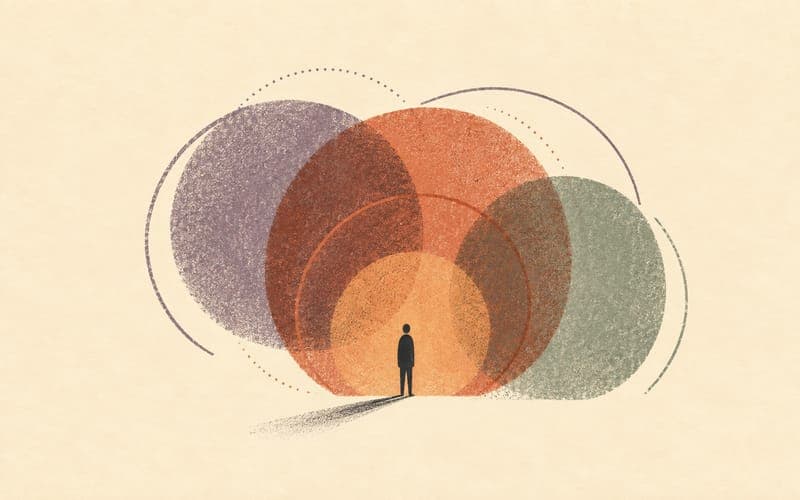
PTSD is not only a memory problem. It is also a body-learning problem.
The nervous system learns danger. It stores patterns. It notices similarities between past and present environments — sometimes accurately, sometimes overgeneralising — and produces protective responses before the conscious mind has caught up. A room, a tone of voice, a supervision dynamic, an email, a clinical theme, a power hierarchy, a particular kind of institutional setting, or even a smell or a temperature can start to feel like the trauma environment, even when the conscious mind knows the present is different.
This is why returning to work with PTSD can be so exhausting. The psychologist is not only doing the clinical task in front of them. They are also, often without realising it, running an ongoing background process: scanning for threat, comparing the present to the past, regulating physical activation, suppressing intrusive material, and trying to teach their body that the present environment is safe enough.
That background process is real work. It uses metabolic resources. It depletes attention. It shows up as fatigue at the end of a workday that, objectively, was not unusually demanding.
The body can respond first.
A similar-feeling environment can produce a sympathetic response before the person has words for what is happening: heat, sweating, shaking, nausea, urgency, panic, anger, freezing, dissociation, exhaustion, or a sudden need to escape. The clinician may notice the body response and only afterwards work out what triggered it. Sometimes the trigger never becomes consciously clear.
The phrase "the body keeps the score" is widely used in trauma-informed spaces. It is best treated as a clinical metaphor rather than a complete neuroscientific explanation. The lived experience the phrase describes — that trauma is registered, stored, and re-enacted at the level of the body — is well-supported by clinical observation and by the responses of patients across many treatment modalities, even where the specific neuroscience claims sometimes attached to it are more contested.
For the psychologist returning to or sustaining clinical work, this means the rehabilitation task is not only cognitive. It is also somatic. The body needs to be supported through the process, not bypassed by it.

Flashbacks are not just "bad memories." They can be whole-body events.
A person may experience some combination of intrusive images, body-temperature shifts, sweating, shaking, breathlessness, chest tightness, nausea, vertigo, dissociation, threat scanning, urgency, shame, or a sudden need to escape. Some flashbacks are fully experiential — the person is, internally, back in the traumatic moment. Others are partial or fragmented — only the body response, only the emotional charge, only a single sensory fragment without context.
Flashbacks can occur during sessions. They can occur in supervision. They can occur in meetings, in waiting rooms, in carparks, in the moment of unlocking the office door. They can also occur hours after the apparent trigger, when the workday is over and the nervous system finally drops its guard.
The cost is real.
A psychologist may complete a session that appeared, from the client's perspective, entirely professional and helpful, while internally managing significant re-experiencing, body activation, and threat response. After such a session, the workday does not simply resume. The body may need recovery time. The next client may not be possible at the same intensity. The remainder of the day may pass at half-capacity.
This is one of the under-recognised realities of clinical work with PTSD. The visible workday and the lived workday are not the same. The hours billed are not the same as the hours of internal load.
A useful clinical reframing: flashbacks are work. They are not interruptions to the work. They are not character failures. They are not something to be hidden, fixed, or pushed through invisibly. They are a category of internal labour the nervous system is doing, often in real time, alongside the clinical task. Naming that as work — to yourself, to your supervisor, in your own internal accounting — is part of treating yourself as a clinician rather than as a machine.
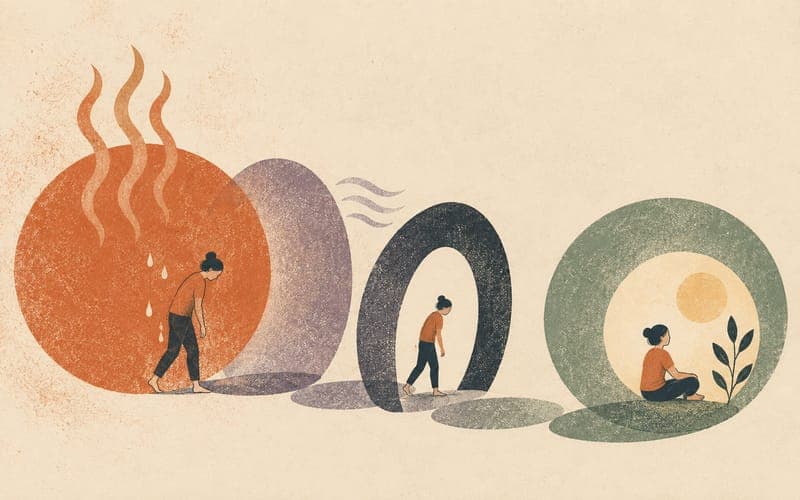
Sympathetic activation has physiological signatures, and they are not subtle once you start noticing them.
Sustained or repeated activation can produce:
These are normal physiological responses to a nervous system that is running at high capacity. They are also depleting, and the depletion compounds across days, weeks, and seasons of work.
For some people, the cycle of activation and recovery produces practical needs that workplaces are not set up for. Heavy sweating during sympathetic activation may mean dry clothes, towels, or a change of shirt are needed afterwards. Temperature crashes after prolonged activation may mean warmth becomes a real recovery need: a warm shower, a heater, dry clothes, a blanket, warm socks, a hot drink, food. Cognitive fog may mean the next task needs to be lower-complexity than the day's schedule assumed.
A practical safety note. Sweating, temperature changes, fatigue, and body activation are common features of PTSD physiology. But if these symptoms become intense, new, or medically concerning — particularly chest pain, severe breathlessness, fainting, confusion, severe shaking, signs of heat illness, or rapid temperature changes — it is worth seeking medical advice rather than assuming the experience is "just trauma." Many physical conditions can present alongside or be misread as PTSD. Some are urgent. The trauma frame should never delay appropriate medical assessment.
Recovery time is not optional and not negotiable. It is the period during which the nervous system returns to baseline, the body reabsorbs the effort of activation, and capacity is rebuilt for the next demand. If recovery is consistently truncated by workload, deadlines, or the next session, the system never returns to baseline. The cumulative load builds. Burnout, breakdown, or relapse follow.
The interventions that help are often unglamorous.
For some psychologists with PTSD, the most useful recovery practices include:
These are not cures for PTSD. They do not replace evidence-based treatment. They are the practical reality of having a nervous system that has been working hard, and they are the difference between sustainable practice and slow collapse.
A clinical note worth holding: many psychologists are trained to deliver these regulation strategies to clients and inconsistently apply them to themselves. The training does not exempt us from needing them. If anything, it should make us more confident in deploying them.
The intersections are specific and worth naming.
Trauma-themed client material can trigger or re-trigger symptoms. This is the textbook concern, and it is real. Some psychologists with personal trauma histories find that working with clients whose material echoes their own becomes unsustainable, at least for a period. Others find it deeply meaningful and manageable. There is no universal rule. The clinical question is not "should I avoid this material" but "can I work with this material safely, with adequate support, while doing my own treatment?"
Workplace environments can themselves be triggering. The smell of a particular building. The sound of certain footsteps. The room lighting. The hierarchical dynamic with a particular manager. The way a supervision room is set up. The institutional culture. Many psychologists with PTSD discover that their workplace is part of the trigger landscape, regardless of what the client work involves.
Power and authority dynamics can re-activate trauma responses. Supervision with a clinician who carries authority over the psychologist's registration, training, or employment can replicate the structural conditions of past harm, particularly for clinicians whose trauma involves institutional, professional, or educational settings.
Documentation and review processes — file notes, audits, complaint responses, AHPRA notifications, performance reviews — can produce flashback-like activation in psychologists whose trauma involves institutional accountability or scrutiny. The act of writing a clinical record can feel disproportionately threatening. So can opening a file, reading old supervision notes, or returning to a setting where harm occurred.
Communication channels can carry significant trauma weight. An email tone, a calendar invitation, a meeting request, a voice on the phone. These can all trigger sympathetic activation before the conscious mind has registered any specific threat.
Specific clinical events can be acute triggers. Client suicide. Client disclosures of similar trauma. Threats to clinician safety. Boundary breaches by clients. Acute escalations. These events affect every clinician; they affect clinicians with PTSD more, and they may require more deliberate recovery and support.
Cumulative load is its own intersection. PTSD does not always have a clear single trigger in the workday. It can manifest as a slow accumulation of background activation, with the result that by Friday the system is depleted in ways that Monday's clinical task did not predict.
The clinical work of navigating these intersections is not to eliminate triggers, which is usually impossible. It is to know them, plan around them when feasible, support recovery after them when they hit, and reduce cumulative load where the system is consistently exceeding capacity.
Risk factors matter, but they need to be named carefully.
A risk factor is not the same as impairment. It is not proof that a psychologist is unsafe. It is information about context, vulnerability and exposure. The question is not "does this person have risk factors?" Everyone does. The better question is: are the risk factors recognised, managed and buffered, or are they being denied while the person keeps absorbing harm?
Some risk factors sit inside the work environment.
Unmanaged conflicts of interest can become traumatic when power, assessment, supervision, friendship, employment, money, reputation and gatekeeping collapse into the same relationship. A dual relationship is not automatically abusive, especially in small communities where some overlap is unavoidable. But it becomes dangerous when the person with more power does not manage it, cannot name it, or uses the overlap to pressure the person with less power.
This is the abusive form of a dual relationship: the trainee, supervisee or early-career psychologist cannot tell where supervision ends, where friendship begins, where employment pressure sits, or whether disagreement will affect references, hours, placement sign-off, reputation, registration progress or future work. The relationship becomes a closed system. The person is expected to trust someone who also controls access to safety, opportunity or professional survival.
For a psychologist with PTSD, that kind of unmanaged dual relationship can be more than "messy". It can recreate the original threat structure: dependence, ambiguity, coercion, fear of retaliation, loss of voice and nowhere safe to appeal.
Other workplace risk factors include:
Some risk factors sit in the person, not as blame, but as vulnerability.
Neurodivergence can increase exposure to harm when environments punish difference, sensory needs, processing style, direct communication, fluctuating capacity or requests for clarity. Autistic and ADHD clinicians may carry years of masking, misattunement, exclusion, bullying or institutional invalidation before they ever enter professional training. A workplace that demands constant masking can turn ordinary clinical load into a much heavier body cost.
Genetic and family vulnerability also matters. PTSD is not caused by weakness, but people differ in baseline nervous-system sensitivity, family histories of anxiety, depression, trauma exposure, substance use, sleep disturbance and stress physiology. Those vulnerabilities do not decide anyone's future. They do change the load a person may be carrying before the current trauma even begins.
Environmental vulnerability matters just as much. Poverty, housing instability, racism, disability, chronic illness, insecure work, caring responsibilities, migration stress, regional isolation, previous family violence, developmental trauma and lack of safe social support all reduce the spare capacity available for recovery. The same clinical workload does not land the same way in every body or every life.
The ethical point is simple: vulnerability increases the duty to manage context, not the right to blame the vulnerable person.
If a psychologist is neurodivergent, traumatised, financially trapped, dependent on a conflicted supervisor, working inside a small community and already carrying genetic or environmental vulnerability, the answer is not "they are impaired". The answer is that the system has fewer buffers and more ways to harm them. Good supervision names that. Good workplaces reduce the load. Good regulators and educators ask whether the environment is making safe practice harder than it needs to be.
This is also why safe practice planning cannot focus only on symptoms. It needs to ask:
These questions are not dramatic. They are the minimum due diligence required when a clinician's nervous system is already under load.
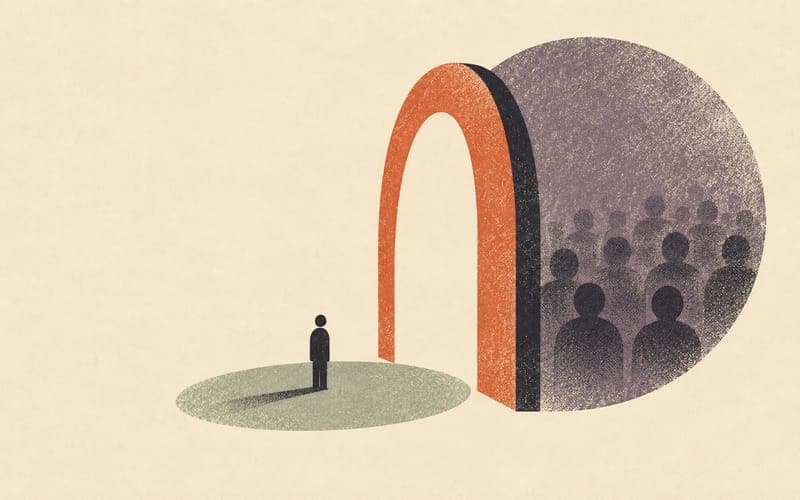
This is one of the most misunderstood points in clinical practice, and the misunderstanding causes real harm to clinicians.
Having a mental illness, including PTSD, is not in itself grounds for a mandatory notification.
The mandatory notification thresholds under the National Law require a reasonable belief that a registered practitioner has engaged in notifiable conduct. For impairment specifically, the threshold is that the practitioner is placing the public at risk of substantial harm because of the impairment.
The word "substantial" carries weight. AHPRA and the Psychology Board have been clear that practitioners may live and work with mental illness, including significant mental illness, without meeting the threshold for notifiable conduct. The relevant question is not "does this practitioner have a diagnosis" but "is this practitioner's impairment placing the public at substantial risk of harm."
For a psychologist with PTSD who is in treatment, supervised, working within their capacity, modifying their workload appropriately, and practising safely: the threshold is not met. The fact of the diagnosis is not the issue. The fact of safe practice is.
This matters because the fear of mandatory notification keeps many psychologists from seeking treatment, disclosing in supervision, or making the workplace adjustments they need. That fear is largely misplaced. A psychologist who is actively managing their PTSD — including through treatment, supervision, workload adjustment, and clinical insight — is doing exactly what the framework is designed to encourage.
The framework is not designed to punish clinicians for having mental illness. It is designed to protect the public from impairment that creates substantial risk. The two are not the same.
What does meet the threshold? Practitioners who are not managing their impairment, who are not aware of its impact, who continue to practise in ways that create real risk to clients, or whose insight is significantly compromised. The threshold is high, and the fact that it is high is a deliberate protection: both for the public and for clinicians.
If there is any concern that symptoms are affecting clinical judgement, boundaries, risk assessment, documentation, or client safety, seek advice from a treating clinician, supervisor, professional association, indemnity insurer, or lawyer rather than relying on a blog post. Those people can speak to your specific situation. This post cannot.
There is more detail on the AHPRA framework and the notification process in the PsychVault guide to AHPRA notifications and mandatory reporting for provisional and early-career psychologists, which covers the four thresholds, the notification stages, and what to do if a notification is made about you.
There is a specific protection that matters enormously for psychologists who are also receiving treatment.
In 2020, the National Law was amended to raise the mandatory notification threshold for treating practitioners: practitioners providing healthcare to another practitioner-patient. The change was made because the previous threshold was discouraging health practitioners from seeking treatment for their own mental health and substance use concerns.
Under the current rules, a treating practitioner only has to make a mandatory notification about impairment, intoxication, or significant departure from professional standards when they form a reasonable belief that the practitioner-patient is placing the public at substantial risk of harm. The treating-practitioner threshold is deliberately higher than the general threshold.
Western Australia goes further: treating practitioners in WA are exempt from the mandatory notification requirement entirely when providing a health service to a practitioner-patient. They may still make a voluntary notification, but the legal compulsion does not apply.
The principle behind these reforms is straightforward and worth saying plainly: practitioners need to be able to access healthcare for their own wellbeing without fear that their treating clinician will be forced to report them for routine mental health or substance use treatment. The system is designed to keep clinicians in care, not out of it.
For a psychologist with PTSD, this means:
There are still difficult conversations to have with your treating clinician about the boundaries of their reporting obligations, particularly if your symptoms are severe or your insight is reduced. Those conversations are healthy. They are not the same as a guaranteed referral pathway to AHPRA.
If you are not seeing a treating practitioner because of fear of mandatory notification, this fear is largely misplaced. Find a clinician. The framework is designed to support that decision, not to punish it.

Half-days. Fewer clients. Longer gaps between sessions. Reduced exposure to trauma-heavy presentations. Predictable supervision. A temporary shift into lower-intensity work.
These are not laziness. They are not avoidance. They are not a sign that the psychologist has failed at their profession or lost the capacity to practise. They are, when applied deliberately and with clinical reasoning, a form of graded return: the same principle this profession teaches to clients, applied to ourselves.
Returning to practice after PTSD may need to look less like "back to normal" and more like retraining safety. The psychologist may need shorter days, fewer clients, less trauma-heavy work, more predictable supervision, protected admin time, and time between sessions. This is not laziness. It is energy accounting. The person is doing the clinical task, while also doing the invisible task of teaching their body that the present environment is safe enough.
A graded return might progress through stages:
| Stage | Possible work focus |
|---|---|
| Stabilisation | Active treatment, sleep restoration, body care, predictable daily routine, reduced exposure to known triggers, paid leave or work pause if available. |
| Low-intensity return | Admin, writing, scoring, resource development, training, professional reading, non-urgent emails, supervision observation. No live client work. |
| Supported client work | Small caseload, lower-intensity presentations, longer gaps between sessions, close supervision, telehealth where it reduces sensory and travel load, capacity reviews every fortnight. |
| Graded exposure | Gradual return to harder client material or workplace triggers, only if the environment is genuinely safe enough (see next section). |
| Sustainable practice | Ongoing boundaries on workload, regular supervision, ongoing treatment as needed, a written relapse plan, periodic workload review. |
The stages are not linear and not time-bound. Some psychologists move through them over months. Some move over years. Some move forward and then need to step back. The pace is set by the nervous system, not by the calendar.
The clinical and ethical point: reducing load is sometimes the most ethically sound clinical decision a psychologist can make. It protects clients from clinical work delivered by a depleted practitioner. It protects the practitioner from sliding into the kind of impairment that does meet the AHPRA threshold. It models for clients and for the profession that mental illness in clinicians is something that can be managed, not hidden.

Graded exposure is one of the most evidence-supported interventions in PTSD treatment. It is not the same as forcing a person to tolerate ongoing exposure to an unsafe environment.
This distinction matters more than almost any other clinical decision in this space.
If the environment is genuinely safe enough, graded return can help. The psychologist may need to work their way back toward the stressor or trigger slowly: starting with indirect work, writing, resource development, assessment scoring, admin, telehealth, lower-intensity clients, co-facilitation, supervision observation, or part-days before returning to fuller client work. With trauma-informed support, this kind of staged re-entry can be deeply rehabilitative. The nervous system relearns safety in the context where threat was previously registered. Capacity expands. Confidence returns.
If the environment is not safe, graded exposure is not the appropriate intervention.
A psychologist should not be asked to "desensitise" to an unsafe workplace, an exploitative supervisor, a bullying culture, a discriminatory environment, or a genuinely harmful system. Doing so risks compounding the trauma rather than resolving it. The clinical task is not adaptation. The task is protection, change, advocacy, or — sometimes — exit.
The question worth asking, honestly, before pursuing graded return to a specific workplace:
If the honest answer to most of these is "no" or "I don't know," graded exposure to this environment is not the appropriate next step. It is, more accurately, repeated exposure to a real source of harm.
The aim is not to avoid every trigger forever. The aim is to stop confusing unsafe overexposure with recovery.
This is one of the places where good supervision matters most. A supervisor who is trauma-informed, who knows the clinician, and who is willing to ask the hard environmental safety question — rather than defaulting to "you need to get back on the horse" — is one of the most useful clinical resources available in PTSD recovery.
Disclosure is one of the most complicated decisions in this territory, and there is no universal answer.
Disclosing to your treating clinician. Always indicated. Your treating psychologist, GP, or psychiatrist needs the full clinical picture to provide effective treatment. The treating-practitioner exception (above) is designed specifically to make this disclosure safe.
Disclosing to your supervisor. Often indicated, sometimes complicated. A trauma-informed supervisor can be an enormous resource: adjusting case mix, modifying expectations, providing reflective space, advocating to employers. A supervisor who is not trauma-informed, or who has authority over your registration or training, may make disclosure feel professionally risky. The decision is yours to make, in your own time, with your treating clinician's input. There is no rule that requires you to disclose to a supervisor unless your symptoms are creating clinical risk you cannot manage.
Disclosing to your employer. Highly context-dependent. In a supportive workplace with mature mental health policies, disclosure can lead to genuine accommodations. In a less supportive workplace, disclosure can produce informal discrimination, restriction, or loss of opportunities: none of which are legal but all of which happen. Many psychologists choose to disclose only what is necessary to access specific adjustments, rather than the full clinical picture.
Disclosing to colleagues. Personal choice, with the caveat that workplace relationships can shift after disclosure in ways that are hard to predict.
Disclosing to clients. Generally not indicated, except in specific therapeutic contexts where measured self-disclosure serves the clinical work. Your trauma is not your clients' clinical material.
Your indemnity insurer. Worth checking your policy wording. Most professional indemnity policies do not require routine disclosure of mental health diagnoses. They do typically require disclosure of regulatory matters, claims, or known circumstances that could give rise to claims. If you are uncertain, your insurer's 24/7 line can give you general guidance without committing you to a formal disclosure.
The general principle: disclose where disclosure produces a clear benefit (treatment, accommodation, supervision support), and pause before disclosing where the benefit is unclear or the recipient's response is unpredictable. You are not obligated to share clinical information with everyone in your professional life. Your own clinician, your supervisor (in most cases), and the relevant person managing any accommodations you need. That is usually the working list.
The decision about whether to keep working, modify work, or step back entirely is not binary, and it is not made once.
Some signs that suggest stepping back, at least temporarily, may be the right call:
Some signs that suggest continuing, with appropriate modification, may be the right call:
There is no perfect formula. There is no objective threshold. The decision is made with your treating clinician, supervisor (where appropriate), and your own honest read of your capacity.
A useful question for the decision: Is this work, in its current form, restoring my capacity over time, or depleting it? If consistently depleting, something needs to change — workload, environment, content, hours, support — or stepping back, even temporarily, becomes the safer clinical decision.
Stepping back is not the end of a career. Many psychologists step back, recover, and return to practice with more capacity, more clarity, and more sustainable approaches than they had before. The profession does not need to lose the clinicians who pause. It loses the ones who push through until they collapse and cannot return.
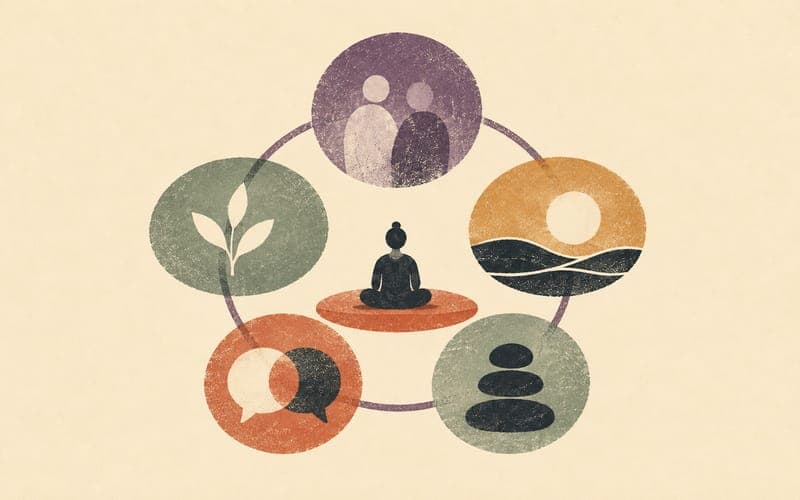
Sustainable practice is not the same as comfortable practice. The work remains difficult. Clients remain in pain. Some sessions remain hard. Some weeks remain depleting.
Sustainable practice is the version of the work that you can do across years and decades without breaking. It is built from:
The psychologists I know who sustain careers over decades — through their own trauma, their clients' trauma, the institutional weather of the profession — do not look like superhumans. They look like people who have negotiated honest limits with themselves and the systems they work inside, and who have stopped treating their own nervous systems as exempt from the principles they apply to clients.
The issue is not whether a psychologist has PTSD. The issue is whether the PTSD is recognised, supported, treated, and managed in a way that protects both the psychologist and the people they work with.
That work is possible. It is not glamorous, and it does not produce a clean ending. But it is the version of clinical life that lets the person keep doing the work, and lets the work, in time, become survivable again.
If you are a psychologist navigating PTSD, the practical anchors:
For peer connection, the conversations that help most are the ones with other clinicians who understand the work. These conversations happen in supervision, in trusted collegial relationships, and increasingly in online communities for clinicians. The isolation that often accompanies clinician trauma is one of the most damaging features of the experience. Connection is not a cure, but it changes the shape of the load.
If you are developing your own resources for clinicians navigating PTSD, supervision after trauma, return-to-work planning, body-based regulation, or trauma-informed practitioner self-care, PsychVault is being built as a place to share practical tools that clinicians can actually use. Browse the resource library, or create a store if you have your own worksheets, group plans, psychoeducation handouts, or clinical templates to share.
For visual psychoeducation on clinician wellbeing, neurodiversity-affirming clinical practice, and trauma-informed care, I also share content on TikTok: @ethonsmoth.
Share your thoughts and experiences with this resource.
Sign in to leave a comment
Continue with the complete therapist resources for australian clinicians collection.
Find templates, handouts, and clinical tools created for use in real psychology and allied health work.
A practical guide to competence boundaries, role drift, and dual relationships in Australian psychology practice, with a focus on when helpfulness becomes a second role.
A practice-focused guide to dual relationships in psychology: what they are, why they matter, when they are manageable, and how Australian ethical frameworks expect psychologists to think about risk.
How ethical fading, workplace culture and gradual normalisation can weaken psychological practice—and how practitioners, supervisors and organisations can respond.