
A practical Australia-wide guide to psychology honours year, WAM expectations, supervisor allocation, thesis life, university differences, APAC pathways, and what honours students should do before applying for masters.
Educational information, not individual clinical, legal or regulatory advice. No independent review is identified for this article. Editorial policy and corrections.
Psychology honours is the year where psychology stops feeling like a degree and starts feeling like a ranking system.
That sounds harsh. It is also how many students experience it.
You are told honours is about research training, independent thinking, professional development, and preparation for postgraduate study. That is all true. But in Australia, psychology honours also functions as the narrow bridge between undergraduate psychology and the postgraduate pathways that lead to registration. Your WAM matters. Your thesis matters. Your supervisor relationship matters. Your choice of university can matter more than students are usually told.
This guide is for Australian psychology students heading into fourth year, choosing between honours and a Graduate Diploma of Psychology Advanced, trying to understand WAM cut-offs, or wondering whether they have any realistic chance of getting into a Master of Psychology later. It is practical, Australia-wide, and a little blunt where bluntness is kinder.
Jump to a section
Psychology honours is usually the fourth year of an APAC-accredited psychology sequence in Australia.
In plain English, it is the year after your three-year accredited psychology major where you complete advanced psychology coursework and a supervised research thesis. Some students complete it as the fourth year of an embedded Bachelor of Psychology (Honours). Others apply into a standalone Bachelor of Psychological Science (Honours), Bachelor of Arts or Science honours specialisation, or Graduate Diploma of Psychology Advanced.
The structure varies by university, but the core ingredients are similar:
It is not therapy training. It is not a mini masters. It is not a placement year.
It is a research-heavy transition year that proves you can work independently, think scientifically, write at a higher level, tolerate ambiguity, and produce a substantial piece of psychology research under supervision.
That last part matters. Honours is often the first time psychology students discover that being good at exams is not the same as being good at a year-long project.
In Australia, honours matters because it sits inside the pathway to becoming a registered psychologist.
The broad sequence is:
APAC maintains the accredited programs search, which is the place to verify whether a specific program is currently accredited. The Psychology Board of Australia explains the registration framework through its registration and forms pages. The Australian Psychological Society also has a useful public overview of study pathways.
The key point is this: masters programs normally require a completed fourth-year APAC-accredited psychology qualification. Honours is therefore not just another year of study. It is the academic gate into postgraduate psychology.
However, the word "Honours" is not itself the requirement. The guide to whether you need Honours for a psychology master's explains which Level 2 alternatives may occupy the same place in the accredited pathway.
If you are planning beyond fourth year already, keep the psychology masters interview guide, Master of Professional Psychology programs guide, and Clinical Psychology endorsement guide nearby. They explain what honours is feeding into.
If your goal is clinical psychology, professional psychology, forensic, educational and developmental, counselling, organisational, health, sport and exercise, or neuropsychology, your fourth-year result becomes one of the most important numbers in your application.

Students often talk about "honours" as if it is one thing. It is not.
There are several fourth-year formats in Australia.
Embedded honours means you are enrolled in a degree that includes an honours year if you meet progression requirements. Examples include Bachelor of Psychology (Honours) style degrees. You may still need to meet a WAM threshold to progress into fourth year.
Standalone honours means you finish a three-year degree first, then apply into a separate honours program. This is common for students completing a Bachelor of Arts, Bachelor of Science, Bachelor of Psychological Science, or equivalent accredited sequence.
Graduate Diploma of Psychology Advanced is a fourth-year equivalent pathway offered by some universities. It is often used by students who did not enter or continue in an embedded honours stream, students changing institutions, or students returning after a gap.
Graduate Diploma in Professional Psychology can be confusing because at some providers it is a fifth-year pathway rather than a fourth-year honours equivalent. Do not rely on the title. Check the APAC accreditation level.
The practical differences are:
The label matters less than the accreditation level, entry rules, delivery mode, supervisor availability, and what the program will let you do next.
WAM means Weighted Average Mark. It is usually calculated from your unit marks, weighted by credit points. A 25-point subject affects your WAM more than a 12.5-point subject. The University of Melbourne's WAM explainer gives a clean general definition, but every university can apply its own selection formula for honours.
That is where students get caught.
Your "overall WAM" may not be the number the psychology school uses.
Depending on the university, selection might use:
For example, the University of Melbourne states that its psychology fourth-year selection score uses second and third-year psychology subjects, with third year weighted twice as heavily. The University of Sydney's 2026 honours information booklet describes an Honours Application Mark based on PSYC2 and PSYC3 units, with PSYC3 weighted twice as much. UNSW's external honours page describes a psychology WAM requirement of 80 or better for the Bachelor of Psychological Science (Honours). Monash describes different rules for embedded Bachelor of Psychology (Honours) students and other applicants, including a 70 average across named units for M3005 students and a 75 minimum distinction average in relevant Level 2 and 3 psychology units for other applicants. Deakin's Bachelor of Psychology (Honours) page describes an 80% average across specified Psychology Essentials units, with availability of supervisors and resources also relevant.
The lesson is not "you need exactly 80 everywhere." The lesson is that WAM is local. A 76 at one university may sit differently from a 76 at another because the calculation, cohort, intake size, supervisor capacity, and internal preference rules differ.

There are three numbers students confuse:
They are not the same number.
A university might list a minimum of 65, 70, 75, or 80 depending on the course and applicant category. But a minimum is not a promise of an offer. Many psychology honours programs are quota-managed or constrained by supervisor availability. Meeting the minimum often means "eligible to be ranked", not "likely to get in."
As a rough Australia-wide guide:
| WAM or psychology average | What it usually means |
|---|---|
| Below 65 | Usually below fourth-year eligibility at many providers, though rules vary |
| 65 to 69 | Possible at some providers or pathways, but limited for competitive honours and later masters |
| 70 to 74 | Often meets minimums, but may be marginal for high-demand honours programs |
| 75 to 79 | More competitive for honours, still not guaranteed at selective providers |
| 80 to 84 | Strong honours-entry territory and a healthier base for later masters applications |
| 85+ | Very strong academically, especially if backed by research skill and relevant experience |
For postgraduate psychology later, fourth-year marks matter even more. Honours Class I or a strong upper second-class result is commonly the academic profile of competitive applicants for clinical and specialist masters. A lower honours result does not end your pathway, but it changes the strategy.
If you are aiming for clinical masters, do not treat the honours entry threshold as the target. Treat it as the floor.
The biggest mistake students make is assuming psychology honours works the same everywhere.
It does not.
Here are the differences that actually matter.
| Difference | What to check |
|---|---|
| Accreditation | Is the program currently APAC-accredited as a fourth-year psychology program? |
| Selection formula | Does the school use whole-degree WAM, psychology WAM, second and third-year units, or third-year units only? |
| Internal preference | Are continuing students preferred over external applicants? |
| Minimum mark | Is the listed minimum 65, 70, 75, 80, or something else? |
| Competitive reality | Does the school say minimum eligibility is not enough for selection? |
| Intake timing | Is there one intake per year, mid-year intake, or trimester intake? |
| Delivery | Is the program on campus, online, blended, full-time only, or part-time possible? |
| Supervisor model | Do you nominate projects, rank preferences, or get allocated after admission? |
| Thesis weighting | How much of the final mark is thesis versus coursework? |
| Fees | CSP, full-fee, domestic/international differences, and HELP availability |
Some current examples show the spread:
Those examples are not a ranking. They are a warning. You cannot plan honours based on a friend at another university.
Read the current page for your exact program. Then read the PDF or handbook. Then email the school if anything is unclear.

The honours year usually has two lives running at once.
The first is visible: classes, assignments, statistics, presentations, lab meetings, ethics forms, thesis milestones.
The second is private: the constant awareness that every mark may affect your next application.
Most students underestimate the emotional load of the second one.
In a normal undergraduate year, a bad assignment hurts. In honours, a bad assignment can feel like it changes your future. That pressure can distort how you work. It makes students over-edit, avoid their supervisor, compare themselves constantly, and treat every piece of feedback as a verdict.
The year commonly includes:
None of this means you are failing. It means the year is structurally intense.
Your job is not to make honours calm. Your job is to make it survivable, organised, and good enough to open the next door.
Your honours supervisor can shape the year dramatically.
They do not control everything. They do not write the thesis for you. They may not be able to rescue a weak study design, poor time management, or missing data. But they can make the difference between a difficult year that feels contained and a difficult year that feels chaotic.
A good honours supervisor usually does four things:
A poor fit can look like:
This does not mean you should choose only the "nicest" supervisor. Sometimes the better supervisor is direct, busy, and very structured. Sometimes the warmest supervisor is too vague. Fit is about what lets you produce good work.
Before ranking projects or supervisors, ask:
If you are choosing between a fascinating topic with a risky structure and a slightly less exciting topic with excellent supervision, think carefully. Honours rewards finished, coherent, well-scoped projects. It does not reward suffering beautifully.
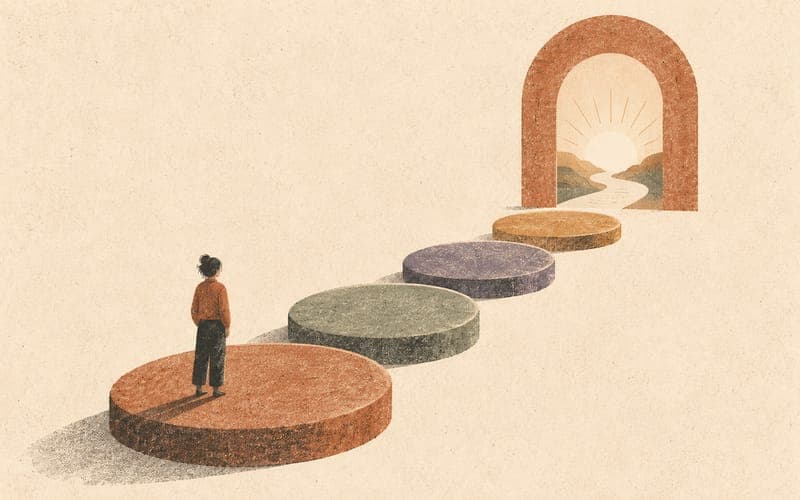
Students often choose honours topics like they are choosing an identity.
"I want trauma."
"I want neuropsychology."
"I want youth mental health."
"I want autism."
That instinct is understandable. You want your thesis to mean something. You also want it to help your masters application.
But the best honours topic is not always the most impressive-sounding one. The best topic is the one you can complete well within the year.
Prioritise:
Be cautious with:
A modest thesis done extremely well is better than an ambitious thesis that becomes a debris field by September.
You can still connect it to your future interests. If your thesis is on cognitive control and you want clinical psychology, you can talk about research skill, measurement, evidence-based thinking, and how your interests evolved. Your thesis does not need to be a perfect miniature version of your future career.
Honours results are often described using class levels.
The exact rules can vary by university, but the common Australian pattern is:
| Honours class | Common mark band |
|---|---|
| First Class Honours | 85+ |
| Second Class Honours Division A or IIA | 75 to 84 |
| Second Class Honours Division B or IIB | 65 to 74 |
| Third Class or Pass | below 65 |
UNSW's honours FAQ uses this general classification pattern. Other universities may phrase the labels slightly differently.
Masters programs look at more than the class label. They may look at:
Still, the fourth-year mark is a central screening variable. It is the cleanest academic signal programs have.
If your goal is a highly competitive clinical masters, an H1 result gives you more room to move. A strong H2A can still be competitive, especially with good experience and interviews. H2B or lower does not make registration impossible, but it usually means you need a broader pathway strategy, especially for MPP, regional providers, repeat applications, or additional experience.
For a deeper look at postgraduate interviews after honours, read Psychology Masters Interview Preparation Australia. For the one-year fifth-year route after fourth year, read the Master of Professional Psychology Programs in Australia guide.
The mistakes that hurt honours students are often ordinary, not dramatic.
Treating the thesis like a long essay. It is not. It is a project with dependencies. You need timelines, version control, data management, supervisor checkpoints, and contingency plans.
Choosing prestige over fit. A famous supervisor who is unavailable may be less useful than a less famous supervisor who actually teaches you.
Ignoring statistics until the data arrive. Start early. Your analysis plan should not be a late-year surprise.
Waiting to write until the study is done. Write the introduction, method skeleton, and analysis plan as early as possible. Future you will be less tired if present you is slightly disciplined.
Comparing projects. Some students get existing datasets. Others recruit from scratch. Some supervisors edit heavily. Others expect independence. Comparison will make you irrational unless you account for project structure.
Letting masters applications hijack honours. You need to apply, yes. But your fourth-year result is still the foundation. Do not spend so much time planning the next door that you stop doing the work that opens it.
Disappearing when things go wrong. If ethics is delayed, recruitment fails, data look strange, or you are falling behind, tell your supervisor early. Silence is rarely protective.
Assuming one bad mark ends everything. It usually does not. But repeated avoidable damage can. Recover quickly.
If your WAM is lower than you hoped, do not turn the problem into a personal verdict. Turn it into a pathway problem.
Ask three questions.
First: competitive for what? A WAM that is not competitive for one embedded honours program may still be viable for another fourth-year pathway, a Graduate Diploma Advanced, an online option, or a less saturated provider.
Second: which WAM are we talking about? Your whole-degree WAM, psychology WAM, Level 2 and 3 psychology average, third-year psychology average, or honours application mark may all differ.
Third: what is still movable? You may not be able to change completed marks, but you can change application breadth, experience, references, project fit, interview preparation, and whether you apply to MPP as well as specialist masters later.
Possible next steps include:
Be careful with shame-based decision making. It makes people apply too narrowly, hide from advice, and interpret every alternative pathway as failure.
The psychology pathway in Australia is narrow. It is not morally pure. Strong future psychologists can and do arrive through messy routes.

Honours is not just about surviving. It is also a chance to build the story you will later tell in postgraduate applications.
Use the year to collect evidence of:
Keep a simple document during the year with:
That document will help later with interviews, statements, and referee conversations. It will also stop the year from becoming a blur of marks.
If you are planning to apply for masters, start early:
The best applicants do not just have high marks. They can explain what their marks, thesis, experience, and motivations say about their readiness for training.
Psychology honours is hard because it asks you to become more independent while also making you feel constantly measured.
That combination can make even capable students brittle.
Try to remember what the year is actually testing. Not whether you are already a psychologist. Not whether you can predict every result. Not whether your thesis changes the field.
It is testing whether you can work scientifically, respond to supervision, finish a substantial project, tolerate uncertainty, and keep going when feedback is uncomfortable.
Those are not just academic skills. They are the same habits you will need in postgraduate training.
So yes, care about your WAM. Be strategic. Read the rules. Choose supervisors carefully. Apply broadly. Do the work early.
But do not let the year reduce you to a number.
Your WAM matters. It is not the whole story.
If you are heading into honours, postgraduate applications, or the 5+1 pathway, PsychVault has practical templates for reflection, supervision preparation, logbook systems, progress reviews, and early-career clinical documentation. Browse the PsychVault resource library. If you do not see what you need there, or you can build something better from your own training experience, become a creator on PsychVault and earn from resources that genuinely help the next cohort.
Terminology note: universities use different names for fourth-year psychology programs, including honours, Bachelor of Psychological Science (Honours), Bachelor of Psychology (Honours), Graduate Diploma of Psychology Advanced, and other variants. Always verify the APAC accreditation level, entry rules, delivery mode, fees, and registration pathway for the specific program you are considering.
Share your thoughts and experiences with this resource.
Sign in to leave a comment
Continue with the complete provisional psychology in australia collection.
Find templates, handouts, and clinical tools created for use in real psychology and allied health work.
A practical guide to psychology masters interview questions in Australia, covering format, case studies, reflective questions, university differences, WAM expectations, fit, common mistakes, and how to get through the pr
Everything Australian psychology honours graduates need to navigate postgraduate applications: pathway types, offer timing, WAM, waitlists, CSP places, and how to make good decisions under pressure.
How early-career psychologists can respond to concerns about age and experience, and how supervisors can turn difficult client feedback into useful learning.