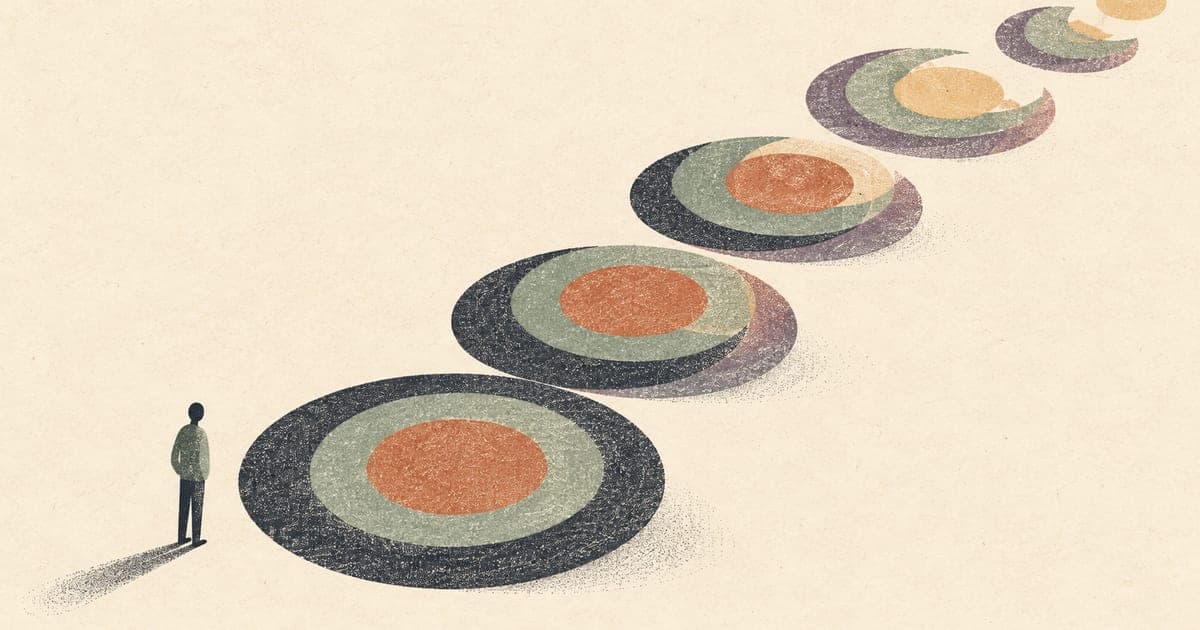
Coercive control is a pattern, not a single incident. A look at how disagreement becomes risky, why emotional safety matters, and what accountability actually sounds like.
Educational information, not individual clinical, legal or regulatory advice. No independent review is identified for this article. Editorial policy and corrections.
People often look for the moment that proves abuse. Coercive control is usually harder than that. The problem is often not one incident, it is a relationship where saying no slowly becomes dangerous.
Coercive control is the gradual loss of emotional safety, dignity, agency, clarity, and freedom. A person may not be afraid of being physically harmed every day. They may be afraid of the silence, the sulking, the escalation, the financial punishment, the threat to leave, the threat to take the children, the humiliation, the smear campaign, or the next impossible argument.
That distinction matters. The pattern is often built long before outsiders would call it violence.
Note: This article is a general, research-informed discussion intended for educational purposes. It does not describe or make findings about any specific relationship, person, or circumstance. Nothing in this article constitutes legal or clinical advice. Readers who may be experiencing coercive control or family violence can contact 1800RESPECT (1800 737 732) or reach out to a qualified clinician.
Jump to a section:
One of the most useful questions in this area is not just:
"Did they hurt me?"
It is also:
"What happens when I disagree?"
Or does disagreement lead to consequences?
Those consequences might include stonewalling, rage, interrogation, punishment, threats, withdrawal of affection, financial control, public humiliation, sleep disruption, taking the children, threatening court, smearing a reputation, or using services, police, family, or systems against you.
This is why coercive control can be hard to identify from the outside. The person may technically have choices, but those choices are not free if every option except compliance carries a cost.
The Australian Institute of Health and Welfare describes coercive control as a pattern of controlling behaviour used by a perpetrator to establish and maintain control over another person, depriving them of liberty, autonomy and agency [1]. 1800RESPECT similarly describes patterns of abusive behaviour used over time to create fear and deny liberty and independence [2]. The Standing Council of Attorneys-General formalised the same framing in the National Principles to Address Coercive Control in Family and Domestic Violence [3].
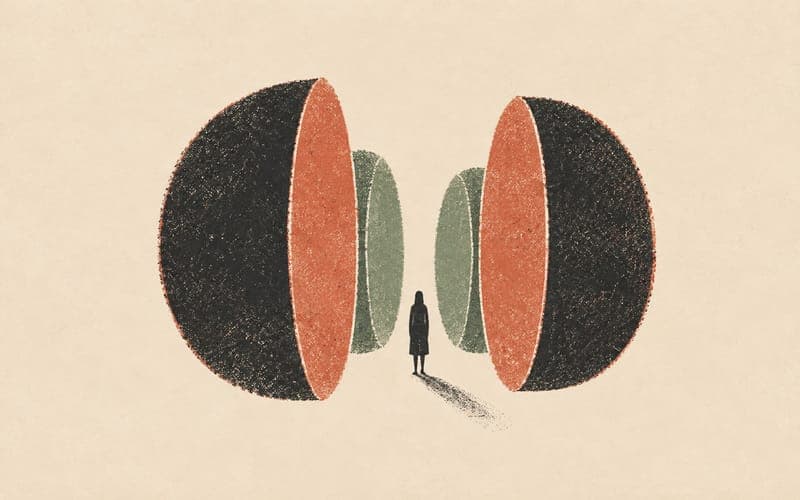
A relationship can look functional from the outside while being unsafe on the inside.
Emotional safety means a person can express needs, uncertainty, disagreement, distress, or limits without being punished. In coercive control, emotional safety disappears. The relationship becomes organised around managing the other person's reactions.
The victim-survivor may begin to think:
This is not ordinary conflict. Ordinary conflict still leaves room for dignity, repair, accountability, and mutual influence. Coercive control removes that room. It creates a relationship where one person has increasing power to define reality, control consequences, and avoid accountability.
One argument does not equal coercive control. One selfish decision does not equal coercive control. One regretted reaction does not equal coercive control.
The issue is the pattern.
Over time, coercive control often follows a sequence:
Love and intensity -> dependency -> isolation -> conditional choice -> fear of consequences -> self-doubt -> loss of autonomy -> post-separation control.
At first, the relationship may feel intense, special, or unusually close. Then one person gradually becomes the centre of emotional stability, approval, money, transport, parenting, belonging, or daily functioning. Social contact narrows. Choices become conditional. Disagreement becomes risky. The victim-survivor begins doubting their own memory, judgement, reactions, and worth.
By the time the person realises something is wrong, their practical and emotional world may already be smaller. 1800RESPECT notes that the impacts of coercive control build up over time, can make a person feel trapped, and make it harder to seek support or leave a relationship [2].
Physical violence is serious and dangerous. But coercive control does not always rely on physical injury. In some relationships, physical violence may never occur, or may occur later after the pattern is already established. The AIHW is explicit that physical and/or sexual violence do not need to be present for coercive control to occur, or for it to have harmful or traumatic consequences [1].
This is important because many victim-survivors dismiss their own experience by thinking:
The word only does a lot of harm.
Psychological and emotional abuse can be profoundly damaging. In Australia, partner emotional abuse is common. Analysis of the ABS Personal Safety Survey found that an estimated 3.6 million Australian adults had experienced emotional abuse by a partner since the age of 15, about 2.2 million women (23%) and 1.4 million men (16%) [4]. More recent PSS data shows that around 1 in 5 Australian adults, or 4.2 million people, have experienced violence, emotional abuse, or economic abuse by a partner [5]. Canadian population data tells a similar story, with psychological abuse consistently the most commonly reported form of intimate partner violence [6].
So no, emotional abuse is not a side issue. It is often central.
A healthy relationship involves negotiation. Not perfect agreement, but a meaningful ability for both people to influence decisions.
Coercive control erodes joint decision-making. One person increasingly decides:
This creates disempowerment. It is not just that one person is being difficult. It is that the relationship stops functioning as a relationship between equals.
A useful framework is:
| Domain | Question |
|---|---|
| Agency | Do I have real choices? |
| Dignity | Am I treated as a full person? |
| Clarity | Can I trust my own perception? |
| Safety | Can I disagree without retaliation? |
| Accountability | Does the other person take responsibility for harm? |
In coercive control, all five are gradually distorted.
Coercive control is not only about external restriction. It also changes the person's internal world.
A victim-survivor may become less confident, less decisive, less able to identify what they feel, less trusting of their own judgement, and more dependent on the abusive person's version of events. This is not weakness. It is an expected effect of living inside a dynamic where reality is constantly challenged.
It can sound like:
Over time this produces confusion, shame, and self-monitoring. The person may spend more energy trying to avoid consequences than asking whether the relationship is fair.
Research backs this up. A 2024 systematic review and meta-analysis of 45 studies found coercive control exposure is moderately associated with both PTSD (r = .32) and depression (r = .27), comparable in magnitude to the mental health impact of broader psychological IPV [7]. If someone is repeatedly controlled, humiliated, isolated, monitored, or punished for asserting themselves, their nervous system and self-concept are affected.
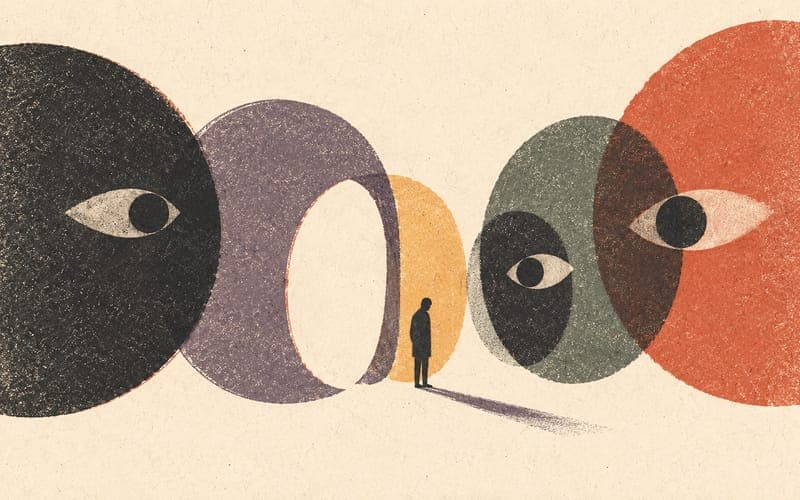
One uncomfortable but important point is that coercive control usually has a function. It works for the person using it.
It may help them avoid rejection, shame, accountability, compromise, vulnerability, uncertainty, or loss of status. It may allow them to get their way without negotiating. It may keep the other person available, compliant, confused, financially dependent, sexually accessible, socially isolated, or too exhausted to resist.
This does not mean the abuser is always consciously plotting every behaviour. Some coercive people experience themselves as the victim. They may genuinely feel rejected, humiliated, abandoned, disrespected, or out of control when their partner asserts independence.
But the emotional explanation is not an excuse.
Shame, rejection sensitivity, trauma history, attachment insecurity, or emotional dysregulation may help explain why someone becomes controlling, but they do not remove responsibility for the harm. Reviews of the aggression literature have identified shame as a clinically relevant antecedent to intimate partner violence, with shame-regulation proposed as a meaningful target for perpetrator intervention [8]. Other research has examined rejection sensitivity as a vulnerability factor that, via self-silencing and hostility, can sit beneath both IPV victimisation and perpetration [9].
The key issue is accountability. If someone's fear of shame leads them to punish another person for having needs, boundaries, opinions, or independence, the harm still belongs to the person doing the punishing.
Coercive control thrives when the perpetrator's behaviour is constantly reframed as someone else's fault.
They may say:
This creates a loop where the victim-survivor becomes responsible for preventing the abuser's behaviour. They must manage the other person's emotions, anticipate triggers, avoid shame, prevent rejection, soothe insecurity, and accept blame.
That is not accountability. That is control.
Real accountability sounds different:
Without accountability, the abuse adapts. If one method stops working, another may replace it.
One of the most dangerous misunderstandings about coercive control is the idea that leaving ends the abuse.
Sometimes leaving ends the relationship but not the control.
Post-separation abuse can include stalking, monitoring, repeated messages, threats, economic pressure, withholding child support, using parenting arrangements to maintain contact, weaponising legal systems, making reports to services, smear campaigns, or using new partners and public narratives to punish or replace the victim-survivor. A concept analysis of the post-separation abuse literature identifies essential attributes including fear and intimidation, domination and control, intrusion and entrapment, omnipresence, and manipulation of systems [10].
In Australia, Monash University research on legal systems abuse describes how perpetrators can weaponise criminal and civil protection order systems to continue control, threaten, and harass current or former partners, particularly post-separation [11]. The Australian Attorney-General's Department has noted that coercive control can occur in intimate partner relationships even after they have ended [3].
This is why just leave is not a safety plan.
Leaving may increase risk, especially where the abusive person experiences separation as rejection, humiliation, abandonment, or loss of control. The issue is not only emotional distress. It is what the person does with that distress.
Do they seek support, tolerate grief, and respect the other person's autonomy?
Or do they escalate?

Coercive control can include many tactics, but the underlying pattern is often the same:
That is why coercive control is not just toxic communication. It is not just relationship problems. It is not just both people need to communicate better.
In ordinary relationship conflict, both people can still have agency.
In coercive control, one person is gradually trained to abandon agency to avoid consequences.
Instead of asking only whether abuse has occurred, it may be more useful to ask:
If the answer is repeatedly no, the problem may not be communication. It may be control.
Visual handouts for neurodiverse clients and familiesFor clients, family members, or anyone who processes this kind of information better visually, I share illustrated handouts on coercive control patterns over on TikTok: @ethonsmoth.
If you create handouts or psychoeducation resources for this kind of material, how to make psychoeducation handouts clinicians actually want to use is a practical companion piece.
Abuse is not only violence.
It can be the gradual loss of choice. The gradual loss of emotional safety. The gradual loss of dignity. The gradual loss of agency. The gradual loss of self-trust. The gradual loss of a life that still feels like yours.
And because it happens gradually, many people do not recognise it while they are inside it.
That does not make them naive. It makes the abuse effective.
Coercive control works by making the victim-survivor adapt, shrink, explain, apologise, comply, doubt, and survive. Recovery often begins by naming the pattern clearly:
I was not overreacting. I was responding to a relationship where disagreement had consequences.
If you are a clinician looking for practical psychoeducation materials, visual resources, or templates you can adapt carefully for client work, you can browse PsychVault resources and psychoeducation tools. The point is not to flatten a complex experience into a worksheet. It is to give people language that helps them recognise the pattern sooner.
For psychologists working through whether family violence concerns permit or require disclosure, the confidentiality and mandatory reporting guide separates adult autonomy, child protection duties and jurisdiction-specific information-sharing rules.
Terminology note: this piece uses victim-survivor and abuser/perpetrator language because the topic is about a patterned use of power and control. In practice, language should still stay responsive to the person's safety, preferences, and context.
For a broader systems perspective on boundaries, individuation, and conditional belonging, read When Systems Cannot Tolerate Difference. If control is being exercised through hacked accounts, impersonation, or other online abuse, the Australian online harm reporting guide explains which reporting pathway may fit.
In Australia:
This piece draws on professional development training delivered by Krasi Kirova, Melbourne-based clinical psychologist and AAPi member, whose work on coercive control and domestic abuse has shaped much of the clinical framing here.
Share your thoughts and experiences with this resource.
Sign in to leave a comment
Continue with the complete therapist resources for australian clinicians collection.
Find templates, handouts, and clinical tools created for use in real psychology and allied health work.
A practical guide to confidentiality, serious risk and mandatory child protection reporting for psychologists in Australian private practice.
How ethical fading, workplace culture and gradual normalisation can weaken psychological practice—and how practitioners, supervisors and organisations can respond.
A practical guide to separating useful professional uncertainty from global self-doubt, perfectionism and shame in therapy work.