

Neurodivergent provisional psychologists can face a difficult double bind: disclose to someone with supervisory power, or mask through placement at a real cost to wellbeing and performance. A practical, non-prescriptive
Provisional psychologists occupy a difficult position in the profession.
They carry real clinical responsibility, but often with limited power. Their hours, competency sign-off, supervision reports, and future references may depend heavily on the judgement of one or two supervisors.
Neurodivergent professionals can face another dilemma: whether to disclose a diagnosis, identity, or support need in order to access understanding and adjustment, while also risking stigma, misunderstanding, or being viewed through a deficit lens.
Neurodivergent provisional psychologists sit inside both realities at once.
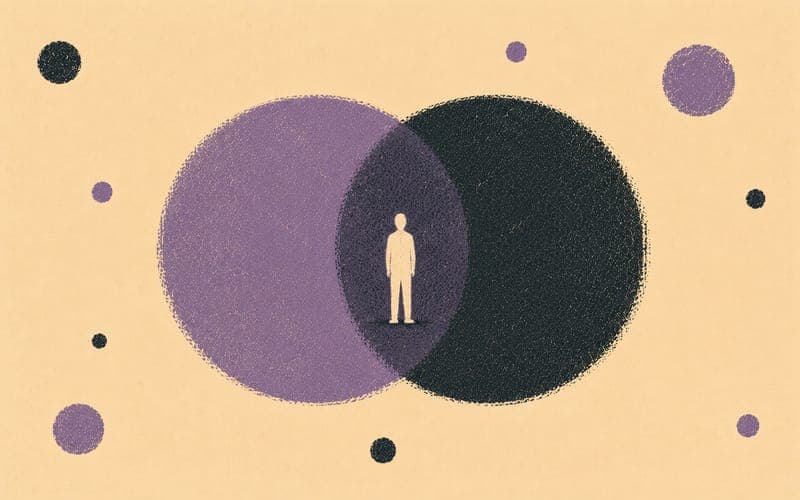
The overlap is not simply additive. It can become multiplicative, because the person a provisional psychologist may need to disclose to is often the same person who evaluates their competence, signs off their hours, and shapes their future pathway.
This post is about that specific overlap: what disclosure may cost or unlock in supervision, what masking can cost during placement, and what neuro-affirming supervision looks like when it is more than a slogan.
I am writing this as a neurodivergent provisional psychologist and as someone building neuro-affirming resources for clinicians through PsychVault. This is not legal, medical, or career advice, and it is not a recommendation to disclose or not disclose. Disclosure is context-dependent. You are the only person with full information about your supervisor, workplace, supports, and risk.
If you are navigating a specific disclosure, accommodation, supervision, or registration concern, it may be worth speaking with AAPi, APS, your indemnity provider, a trusted senior clinician, or an independent professional advisor.
Note: This article is a general, research-informed discussion intended for educational purposes. It does not comment on or make findings about any specific individual, organisation, workplace, complaint, investigation, or legal matter. Nothing in this article constitutes legal, clinical, regulatory, or career advice. Readers with concerns about their specific circumstances are encouraged to seek advice from a professional association (AAPi or APS), indemnity insurer, legal adviser, or treating clinician.
Jump to a section:
Neuro-affirming practice has grown quickly as a framework for how psychologists work with neurodivergent clients. It has grown more slowly as a framework for how the profession supports its own neurodivergent trainees.
If you want the wider profession-level context, see Neurodivergent Clinicians Navigating Psychology.
Research on neurodivergent students in health professions education repeatedly points to similar themes: disclosure dilemmas, inconsistent accommodations, stigma, inflexible placement environments, and the burden placed on the individual student to adapt to systems that were not designed with them in mind.
Psychology-specific research on neurodivergent provisional psychologists is still limited. That absence matters, because provisional psychology pathways contain several conditions that can make disclosure feel especially risky:
The result is a quiet dilemma: disclose and risk being misunderstood, or do not disclose and carry the cost alone.
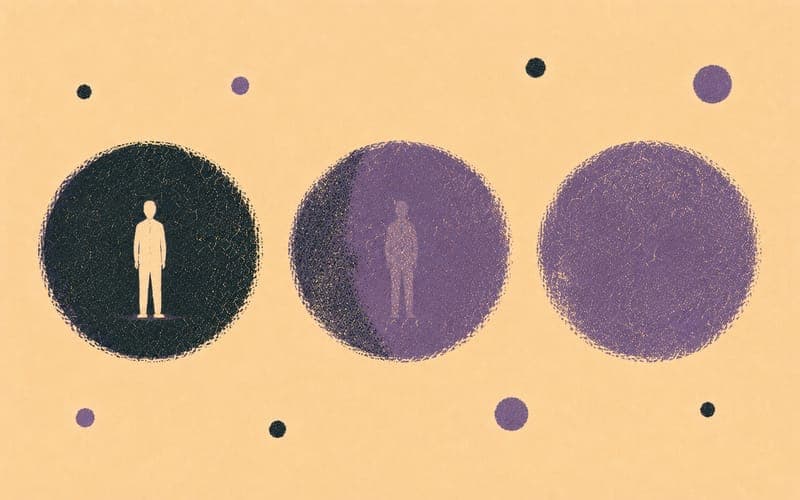
Disclosure is not one decision. It exists on a spectrum.
At one end is identity-based disclosure:
"I am autistic.""I have ADHD.""I am neurodivergent."
This can provide important context, but it can also feel exposing, especially when the person receiving the information has evaluative authority.
A more contained option is needs-based disclosure:
"I process feedback better when I also have it in writing.""I do my best clinical thinking when I have a few minutes to reflect before responding.""I work best when expectations are explicit and prioritised."
This does not require naming a diagnosis. It focuses on the practical conditions that support performance.
Another option is non-disclosure: making private adjustments, relying on external supports, and choosing not to share identity or diagnosis information with a supervisor. That can be a reasonable and good-faith choice, especially where the relationship does not feel safe.
The key point is this: non-disclosure is not dishonesty. It can be a protective response to an environment where disclosure outcomes are uncertain.
Research following autistic adults through workplace disclosure decisions has found genuinely mixed outcomes. Some participants who disclosed gained accommodations, legal protection, and greater understanding. Others experienced bullying, discrimination, or a lack of support after sharing their diagnosis.
There is no single "correct" answer implied by the evidence, because so much depends on how the specific recipient responds.

Many provisional psychologists worry that disclosing neurodivergence, mental health concerns, burnout, or support needs could create registration risk.
It is important to separate the fear from the actual threshold.
Ahpra's mandatory notification framework is not triggered simply by having a diagnosis, being neurodivergent, seeing a psychologist, taking medication, or needing workplace adjustments.
Notifiable concerns include impairment, intoxication while practising, a significant departure from accepted professional standards, or sexual misconduct. For impairment specifically, the relevant threshold is whether there is a substantial risk of harm to the public, not whether a practitioner holds a diagnosis, has a mental health condition, or receives treatment. Ahpra's own guidance gives examples where a stable, appropriately managed condition does not meet that threshold.
That distinction matters.
Being autistic is not a regulatory problem. Having ADHD is not a regulatory problem. Needing written instructions, processing time, sensory adjustments, or structured supervision is not, in itself, a regulatory problem.
However, knowing the formal threshold does not completely remove the felt risk of disclosure. A supervisor may still misunderstand neurodivergence, over-pathologise ordinary differences, or interpret support needs through a competence lens.
That is why disclosure is not just a legal or regulatory question. It is also a relational and power question.

Masking refers to the conscious or unconscious effort to suppress, hide, compensate for, or translate natural ways of communicating, sensing, moving, thinking, and responding in order to meet social or professional expectations.
It has been studied most extensively in autistic adults, though the underlying dynamic — presenting a curated version of yourself to avoid stigma or negative judgement — can extend across neurodivergent profiles.
In placement, masking can become especially costly.
A provisional psychologist may be managing client sessions, report writing, case formulation, supervision, observation, feedback, documentation, workplace relationships, competency assessment, and anxiety about sign-off, all at once.
If they are also masking heavily, they may be drawing from the same executive, sensory, emotional, and social resources that clinical work already requires.
Autistic burnout research helps explain why this compounds rather than simply adds up. Autistic burnout has been defined as a syndrome arising from chronic life stress and a mismatch between expectations and abilities without adequate supports. It is marked by long-term exhaustion, loss of previously manageable functioning, and reduced tolerance to stimulation, and is distinct from generic occupational burnout in both cause and recovery profile.
For a deeper clinical breakdown of burnout dynamics, see Autistic Burnout and Demand Avoidance.
Workplace masking research has also found masking to be a common and costly strategy among autistic adults, other neurodivergent adults, and neurotypical adults, with consequences for wellbeing.
This creates an assessment problem.
A masked provisional may look composed while internally overloaded. A supervisor may interpret that composure as capacity. Then, when masking drops — after several sessions, during unstructured feedback, in a noisy workspace, or at the end of a long day — the same supervisor may misread fatigue, flat affect, direct communication, shutdown, or processing delay as a professionalism issue.
The clinical skill may be intact. The nervous system may simply be over capacity.
This does not mean masking is always the wrong choice. Sometimes masking is the safest available option in a particular workplace. But it should be recognised as a cost, not treated as a neutral background condition.

For some provisionals, full disclosure will not feel safe.
A practical middle ground is to ask for what supports performance without naming identity or diagnosis.
Instead of:
"I am autistic and need processing time."
Try:
"I do my best clinical thinking when I have a moment to reflect. Is it okay if I pause before answering more complex supervision questions?"
Instead of:
"I have ADHD and struggle with verbal-only instructions."
Try:
"I retain instructions best when key points are written down. Would you mind sending a brief summary after supervision when there are action items?"
Instead of:
"I experience sensory overwhelm."
Try:
"I write reports more effectively in a quieter space. Is there a low-distraction area I can use for documentation?"
This is not deception. It is functional communication. It asks for the condition that supports performance without requiring the provisional to hand over personal information before trust has been established.
Broader workplace-inclusion scholarship increasingly argues for this approach: disclosure should not be the only pathway to support, because universal, needs-based practices — such as flexible scheduling, quiet workspaces, and written follow-ups — can help people who are not ready, or do not want, to disclose an identity at all.
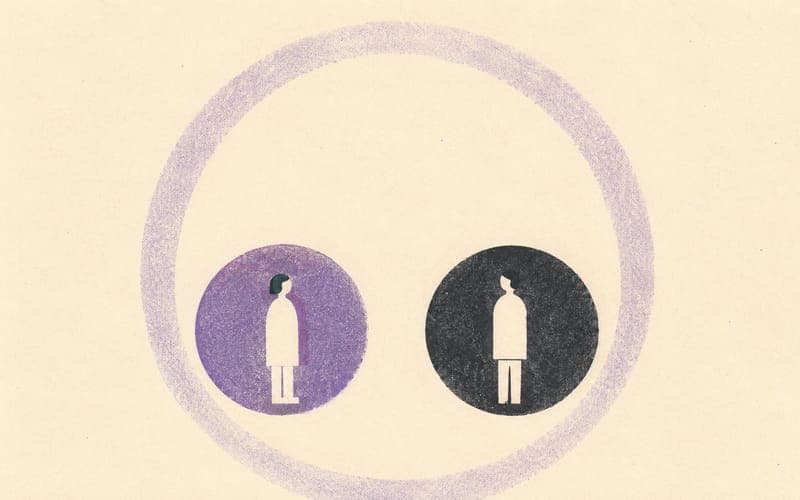
When the supervisory relationship is genuinely supportive, disclosure can be helpful.
It can allow a supervisor to understand the provisional's working style more accurately, reduce misinterpretation, and make support proactive rather than reactive.
Good supervision after disclosure might include:
The aim is not special treatment. It is accurate supervision.
A neuro-affirming supervisor does not lower standards. They make the pathway to meeting those standards clearer, fairer, and less dependent on neurotypical performance.

Ideally, you want information about a supervisor before you are dependent on them.
You do not have to disclose in order to test the environment. You can ask general questions and watch the response.
For example:
The content of the answer matters, but so does the tone.
A supportive supervisor is likely to respond with curiosity, clarity, and collaboration. A concerning supervisor may respond with defensiveness, vagueness, moralising language about "professionalism," or an assumption that flexibility means lowering standards.
If you want a practical green-flags and red-flags lens, see What Good Supervision Actually Feels Like.
Those early signals are useful.

Sometimes the issue is not the provisional's coping skills. Sometimes the supervision environment is unsafe, dismissive, or controlling.
Research on neurodivergent professionals in clinical workplaces has documented patterns that can appear when a supervision environment is poorly calibrated or actively harmful. These may include:
If this happens, the power imbalance matters. The person causing harm may also be the person whose sign-off you need.
That does not mean you must stay silent. It means you may need to be strategic: document concerns, keep records of feedback and requests, and seek external guidance before escalating where possible: through AAPi, APS, your indemnity provider, a trusted senior clinician, or another appropriate support.
The goal is not to overreact. The goal is to avoid being isolated inside a high-stakes relationship with no outside perspective.

Psychology often turns systemic problems into self-management tasks.
Set better boundaries.Communicate more clearly.Be more resilient.Advocate for yourself.Regulate before supervision.
Those things can help, but they do not solve the structural problem.
A system that gives provisional psychologists full professional accountability while leaving them highly dependent on supervisor judgement creates predictable vulnerability. For neurodivergent provisionals, that vulnerability is intensified by disclosure risk, masking pressure, and narrow assumptions about what professionalism looks like.
The solution is not simply asking neurodivergent provisionals to mask better or disclose more bravely.
The solution is better supervision design:
Disclosure should not have to feel like a gamble.


If you are a neurodivergent provisional psychologist reading this, the bind you are navigating is real.
It does not mean you are not suited to the work. It does not mean you are fragile. It does not mean you are unprofessional.
It means you are trying to develop inside a system where disclosure, supervision, assessment, and power are not always separated clearly enough.
There may not be a universally correct answer about disclosure. The aim is to make the most informed, self-protective decision you can with the specific supervisor, workplace, and supports in front of you.
The difficulty of that decision reflects a gap in the system, not a gap in you.
If you are developing neuro-affirming resources for clinicians and trainees — supervision agreements, disclosure decision aids, or reflective tools for neurodivergent practitioners — PsychVault is being built as a place to share practical tools clinicians can actually use. Browse the resource library, or create a store if you have your own templates to share.
Share your thoughts and experiences with this resource.
Sign in to leave a comment
Move from strategy into implementation with templates, handouts, and psychoeducation tools already live on the marketplace.
Publish clinician-grade templates, build trust signals, and start growing an evergreen library under your own brand.
A practical guide to the Australian Psychology Board internship pathway. Understand the 5+1 requirements, logbooks, supervision hours, competencies, and how to survive without burnout.
A practical and honest guide for neurodivergent psychologists and allied health clinicians navigating systemic ableism, masking, burnout, and finding environments where they actually thrive.
A practical guide for provisional psychologists on the green flags, red flags, and grey areas of the supervisory relationship.


