

1 / 2
Adolescent Psychology Progress Notes: Four Worked Examples
A progress note written during intake should not look the same as a note written during intervention or at the planned ending of therapy.
This resource follows one fictional 15-year-old client across four psychology sessions. It demonstrates how documentation can develop as more information becomes available, the working formulation becomes clearer and therapy progresses.
Intake Session 1: Presenting concerns and current context
Covers consent and adolescent assent, confidentiality, the perspectives of the young person and caregiver, current functioning, initial goals and safety.
Intake Session 2: Developmental interview
Covers pregnancy and birth history where known, developmental milestones, health, sleep, education, learning, sensory experiences, social and emotional history, family patterns and optional genogram use.
Intervention Session 4: Practising change
Demonstrates progress monitoring, school participation, sensory adjustments, behavioural practice, clinical reasoning, setbacks and risk clarification.
Review and Ending Session 10: Outcomes and maintenance
Demonstrates outcome review, ongoing adjustments, early warning signs, maintenance planning, information sharing and planned ending.
Each example uses the same practical headings:
Using the same structure across all four examples makes it easier to see how the content and level of detail change throughout therapy.
The example also demonstrates that developmental information should contribute to a broader formulation rather than being treated as proof of a diagnosis on its own.
This resource may be useful for:
This resource provides fictional educational examples only. It is not legal advice, a mandatory documentation standard or a substitute for clinical judgement, supervision, workplace policies and applicable professional requirements. Practitioners should adapt their documentation to the person, referral question, setting, consent arrangements, risk presentation and purpose of the record.
A quick snapshot of what buyers receive and how this resource is packaged.
Explore more resources for the same client group, theme, or workflow.
No reviews yet.
Loading similar resources from this creator and category.
Related resourcesSimilar resources from this creator or the same category.
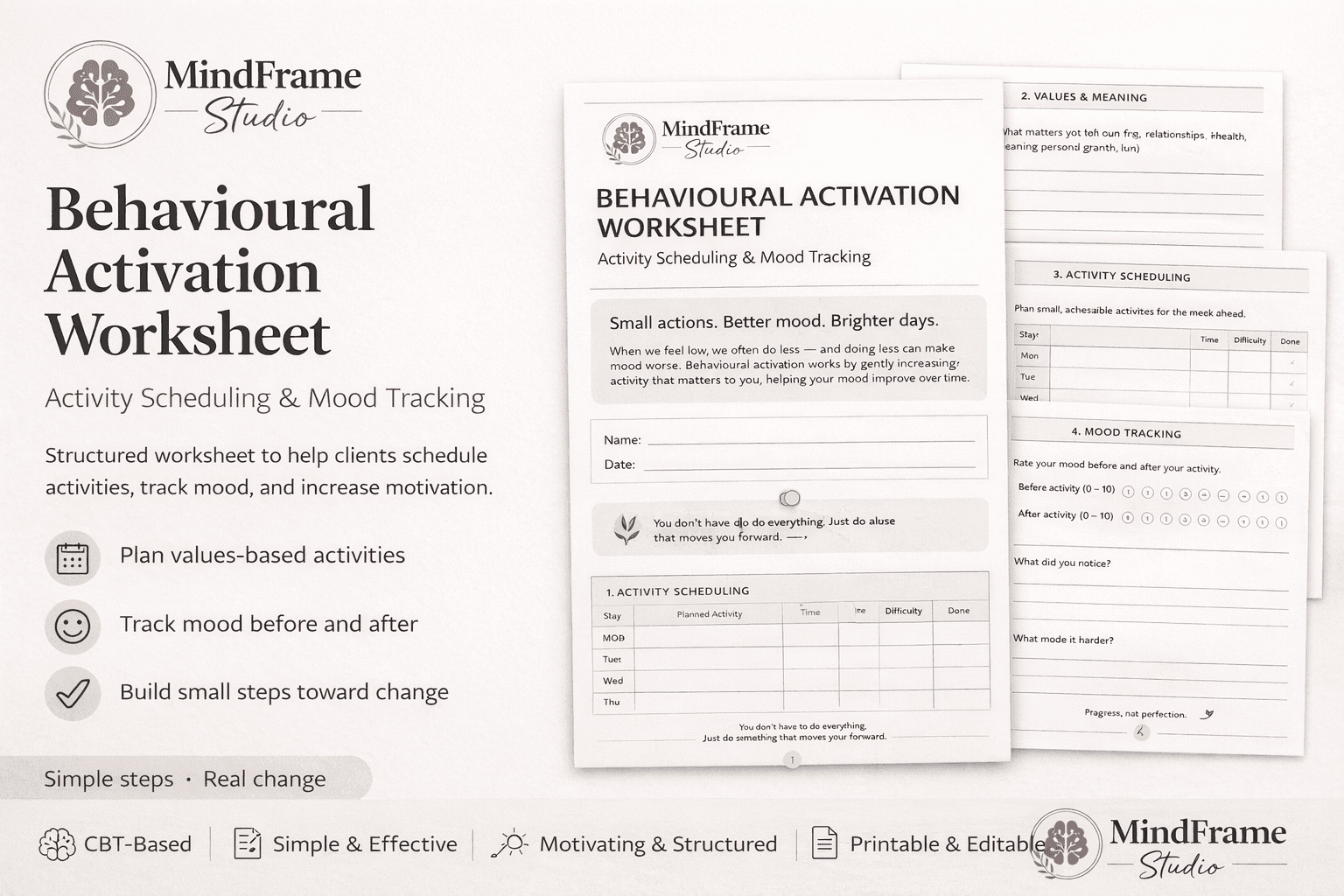
A clear, structured worksheet designed to help clients gently reconnect with meaningful activities and improve mood through evidence-based behavioural activation.
MindFrame
No reviews yet
Secure Stripe checkout available

A 46-page printable workbook for Australian psychology applicants, with reflective exercises, case-formulation prompts, worked answer examples, interview frameworks, and preparation checklists.
MindFrame
No reviews yet
Secure Stripe checkout available
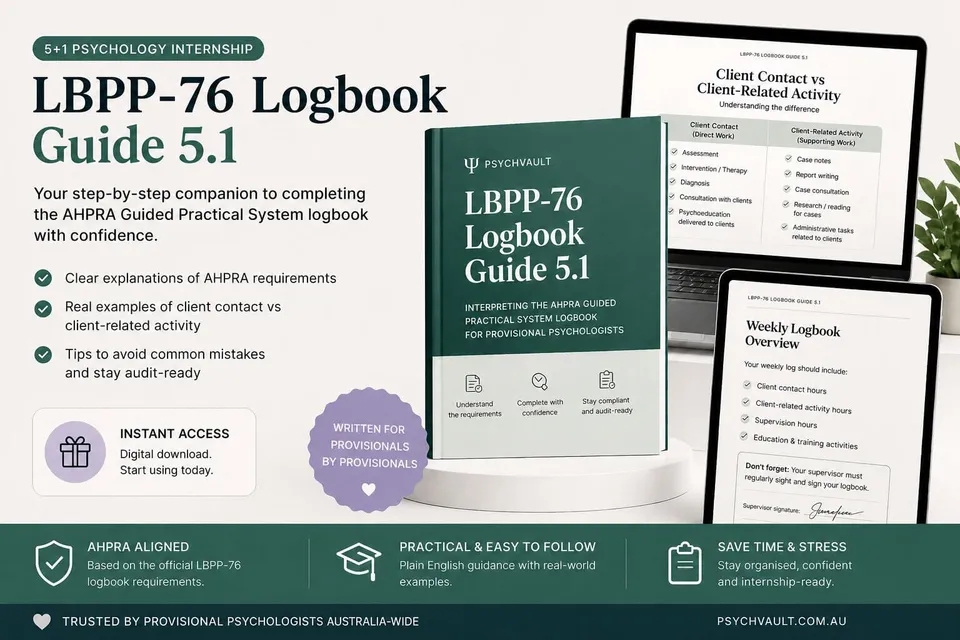
A clear, practical guide to mastering your LBPP-76 logbook with confidence, structure, and supervisor-ready entries.
MindFrame
No reviews yet
Secure Stripe checkout available
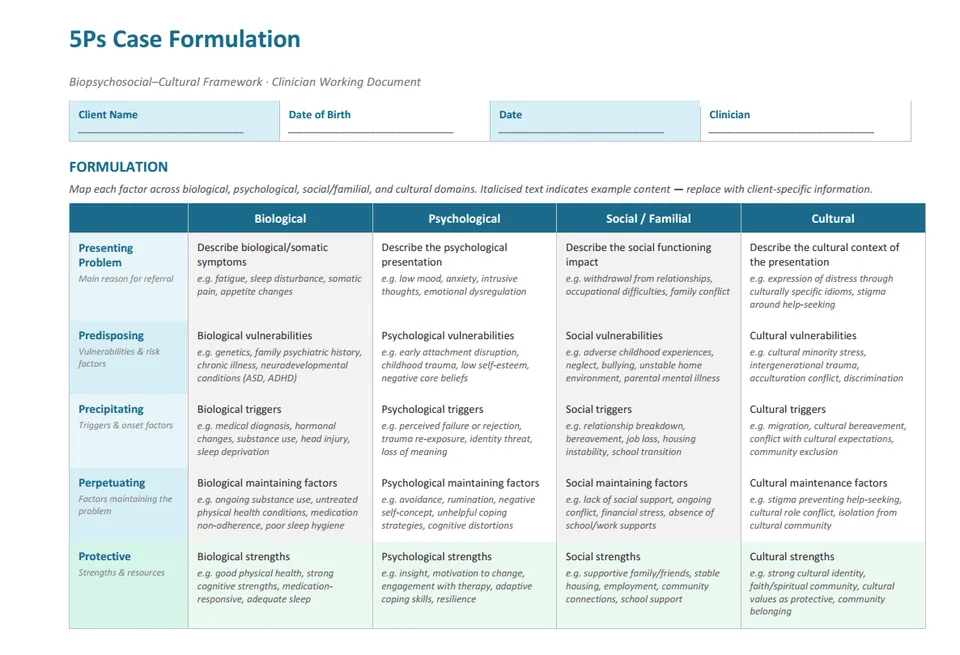
A comprehensive, clinician-ready 5Ps formulation template integrating biological, psychological, social, and cultural domains. Designed for case conceptualisation, treatment planning, and professional documentation.
MindFrame
No reviews yet
Secure Stripe checkout available
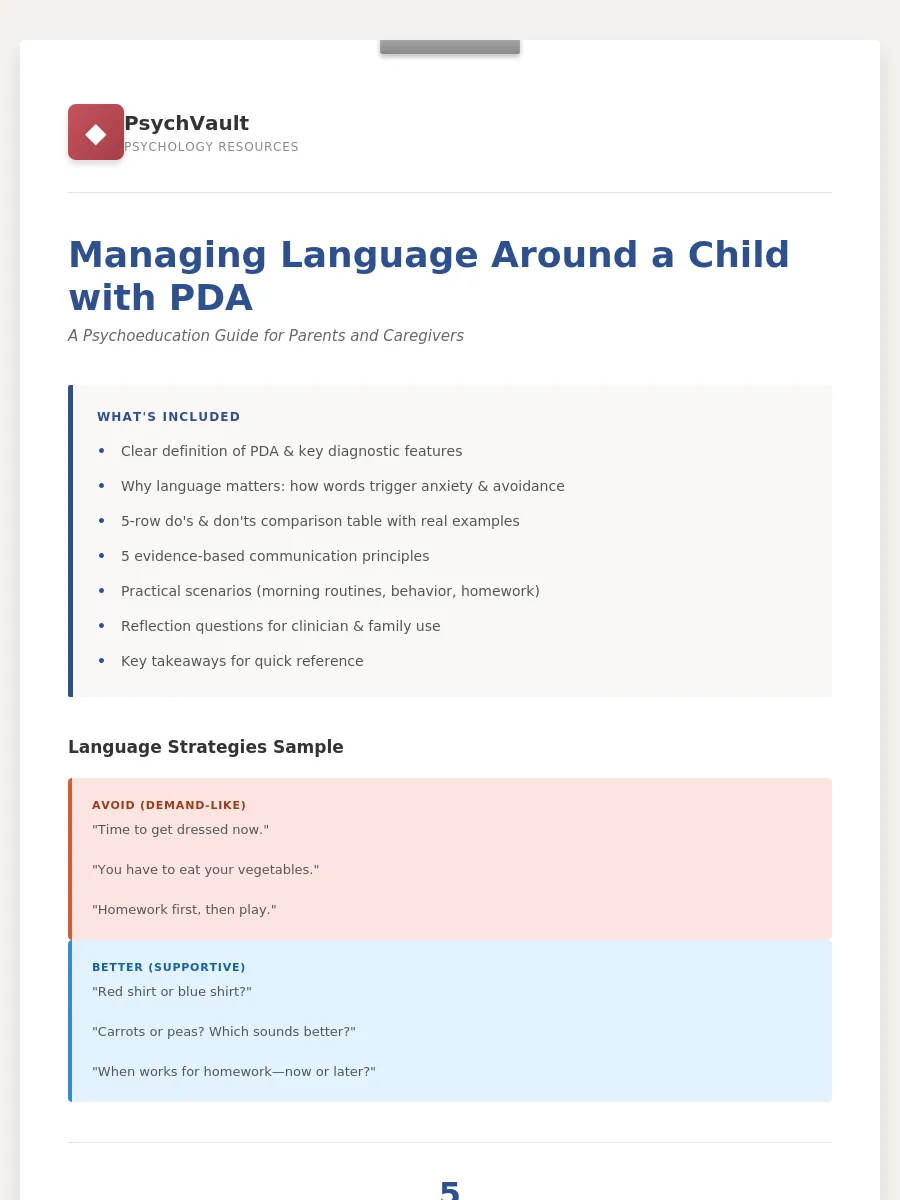
A practical PDA psychoeducation worksheet for parents, with low-demand language strategies, do-and-don’t examples, and reflection prompts that support autonomy.
MindFrame
★ 4.0 · 1 review
Secure Stripe checkout available
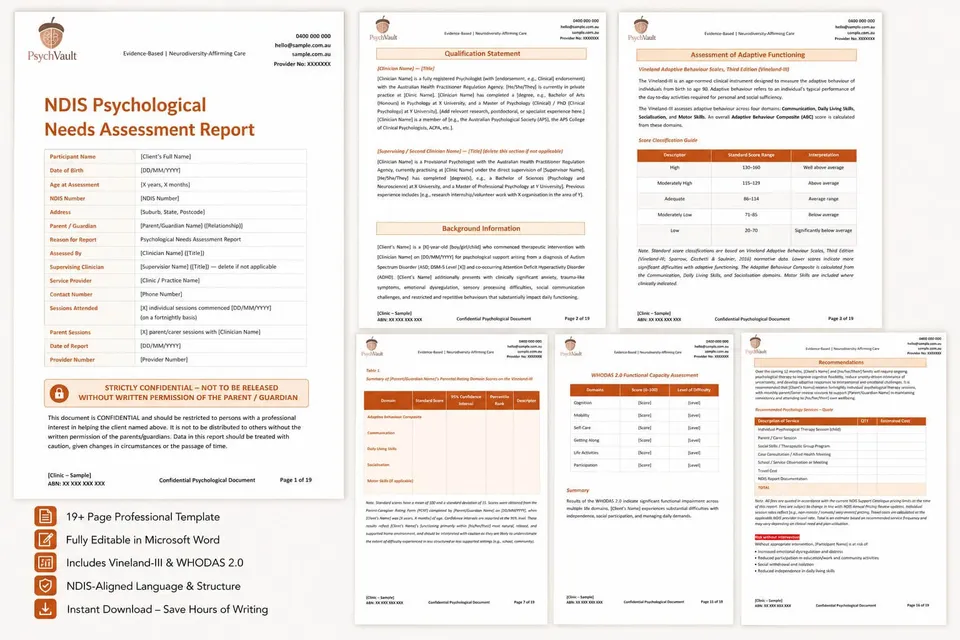
Write high-quality NDIS reports faster with this fully structured Functional Capacity Report template. Designed for psychologists and allied health clinicians.
MindFrame
No reviews yet
Secure Stripe checkout available