

A practical guide to the Australian Psychology Board internship pathway. Understand the 5+1 requirements, logbooks, supervision hours, competencies, and how to survive without burnout.
If you're a provisional psychologist in Australia entering the 5+1 internship pathway, you've probably felt it — that moment around week 3 of your internship when you realise the full weight of what's in front of you. AHPRA requirements. Logbooks. Supervision hours. Competencies. Admin. So. Much. Admin. Your supervisor hands you a checklist, you open your logbook template, and suddenly the year stretches out like an endless highway.
The AHPRA psychology internship requirements are structured — but how the parts connect isn't always obvious before you've seen the whole picture. The pathway is logical, almost elegant, once you map it out. The challenge is that official documentation describes each component separately, which makes it easy to misinterpret how supervision, competencies, logbooks, and progress reviews relate to each other.
This guide gives you a clear, practical picture of what the Psychology Board actually requires, why they require it, and how to navigate the year without burning out.
Who this guide is for: The 5+1 pathway is open to graduates who have completed five years of undergraduate and postgraduate psychology study. The undergraduate component varies by university — some embed Honours as the final year of a four-year degree, while others (like UWA) have a three-year undergraduate degree followed by a separate Honours year. Either way, combined with a one-year Master of Professional Psychology, both meet the five-year requirement. It leads to general registration as a psychologist.
If you are still choosing the study component before internship, start with the Master of Professional Psychology programs guide. If you are considering moving from the 5+1 pathway into a clinical master's place, read the clinical hours trap explainer before changing supervision or employment arrangements. For the wider workforce and training-governance bottleneck behind these pressures, read When Psychology Training Is Too Small to Govern Fairly.
Jump to a section:

Let's start with the fundamentals.
In Australia, after you graduate with your psychology degree, you can't just hang up a shingle and start seeing clients as a registered psychologist. The Psychology Board of Australia (administered through AHPRA) requires a supervised internship. This is often called the 5+1 pathway — five years of study (your degree) plus one year of structured, supervised practice.
The goal is simple: demonstrate that you can work safely, ethically, and competently with clients under supervision. Crucially, completing the internship alone does not automatically grant registration — interns must also pass the National Psychology Exam (NPE) before they become generally registered. The internship and the exam are both required.
Your internship doesn't feel simple, though. It's a year of juggling clinical hours, documenting everything, attending supervision, hitting competency targets, and managing logistics that would make an administrative coordinator's head spin.
But here's the important bit: The Board's internship requirements exist to protect clients and ensure your safe entry into professional practice, not to torture you. Once you understand that, the checklist becomes a roadmap instead of a trap.
The 5+1 internship is competency-based. This is the structural fact that makes everything else easier to understand: hours, supervision, and assessments are all tied to demonstrated capability, not just time served. You're not accumulating a number — you're building and evidencing professional competence across eight defined areas.
Here's how the components connect:
Keep this structure in mind as you read. Every requirement below connects back to it.
Here's what the 5+1 internship year typically looks like:
| Milestone | Timing | Key Activities |
|---|---|---|
| Internship Setup | Month 0–1 | Submit INPP-76 (Internship Program Plan); establish supervision schedule; set up logbook system |
| Ongoing Supervision | Every week (Year-round) | Weekly formal supervision (typically 1–2 hrs) with principal supervisor; discuss cases, receive feedback, reflect on practice |
| Competency Development | Month 1–12 | Build evidence across all 8 competencies; accumulate direct observation hours; maintain logbook entries |
| First Progress Review | ~Month 6 | Formal 6-monthly competency check-in with principal supervisor; review hours to date; identify gaps; adjust plan if needed |
| NPE Preparation | Month 10–11 | Register for National Psychology Exam; revise psychology knowledge; exam typically scheduled during final 3 months |
| Final Progress Review | Month 11–12 | Second 6-monthly review; final competency sign-off; supervisor completes PACF-76 (Final Assessment of Competence) |
| General Registration | After internship completion | Submit PACF-76 + NPE pass results + AGEN-76 (Application for General Registration) to Psychology Board |
This timeline is typical — your individual internship may have different rhythms depending on your workplace, supervisor, and any adjustments needed along the way. Always confirm the specifics with your principal supervisor and organisation's internship coordinator.
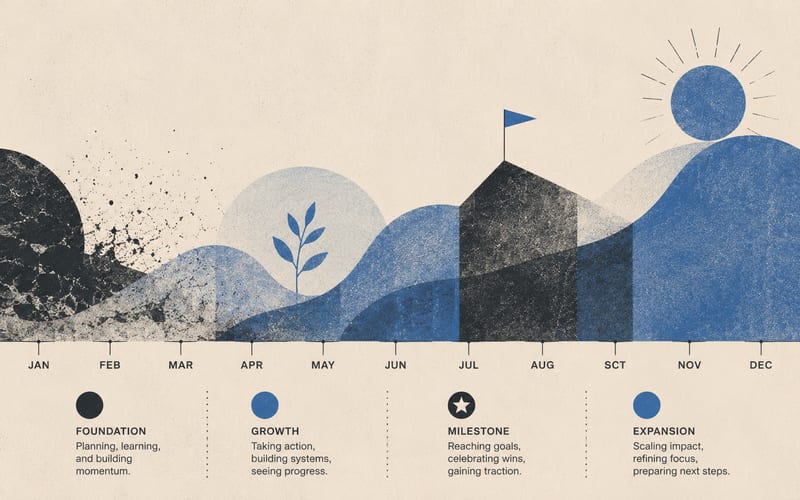
This is the headline requirement. The hour categories are clearly defined by the Board, but the distinctions between them are easy to misinterpret until you've mapped them out.
You need 1,500 hours of supervised practice during your internship year. This isn't "time you spend in a room" — it's structured, documented hours where you're doing professional psychological work under the direction of a qualified supervisor.
Not all hours are equal. The Board breaks this down further:
The supervision requirement has a specific internal structure. Your supervision hours are entirely separate from your practice hours.
You need 80 hours of formal supervision, broken down as:
Supervision is not optional, and it's not just a chat. It's a formal, documented meeting where you discuss cases, get feedback, and demonstrate your developing competence. Your supervisor signs off on your hours, and their sign-off is what AHPRA sees.
Common mistake: Thinking that 80 hours of supervision is the same as 80 billable client hours. It's not. You'll be clocking up to 1,500 practice hours (much of which is solo work) while fitting 80 hours of supervision around it.
AHPRA doesn't just care about hours. They care that you can actually do the job. This is where the 8 core competencies come in.
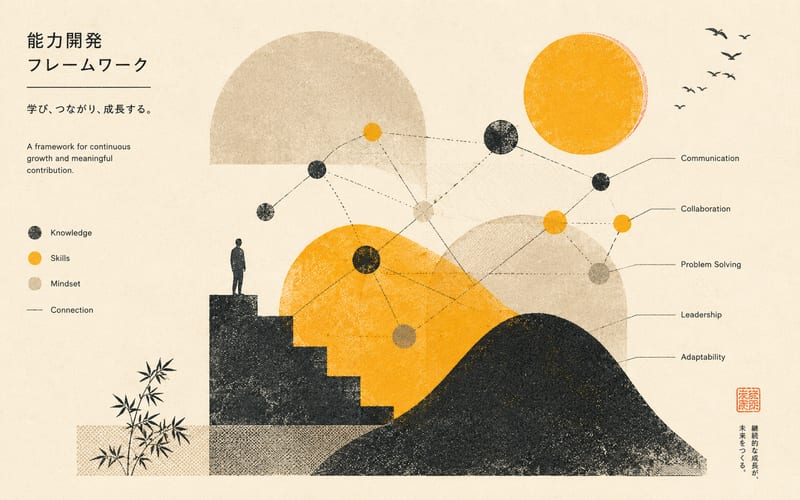
These aren't abstract concepts — they're observable skills that you need to develop and demonstrate over the course of your internship.
These are the competency domains specified by the Psychology Board of Australia for the 5+1 internship pathway. The descriptions below reflect what each domain looks like in day-to-day supervised practice:
1. Professional practice and conductYou understand ethics, confidentiality, record-keeping, and professional boundaries. You don't gossip about clients, you keep files secure, and you know when to break confidentiality.
2. Knowledge of the psychology disciplineYou understand psychological theories, evidence-based practice, and how to stay current with research. You're not just doing therapy by habit — you know why you're doing it.
3. Assessment and diagnosisYou can accurately assess client presentations, diagnose when needed, and communicate findings clearly. This includes formal testing and clinical interviewing.
4. Intervention and treatmentYou can plan and deliver evidence-based psychological interventions. You know when to use CBT, motivational interviewing, acceptance and commitment therapy, or other modalities — and why.
5. Consultation and collaborationYou can communicate effectively with other professionals (GPs, psychiatrists, other psychologists) and coordinate care. You're not a silo.
6. Cultural competenceYou understand the cultural, spiritual, and socioeconomic contexts that shape your clients' experiences. You actively reduce bias and discrimination in your practice.
7. Self-awareness and reflectionYou reflect on your own work, identify your strengths and gaps, and actively work to improve. You seek feedback and respond to it.
8. Research and evaluationYou can critically appraise research, apply it to practice, and evaluate your own work. You're not just following old playbooks.
Your supervisor will assess you against these competencies at regular intervals. They're not looking for perfection — they're looking for evidence that you're developing in each area and reflecting on your practice.
The logbook is the evidence record for your internship. AHPRA uses it to verify your hours, understand your development, and assess your competency evidence.
It is also genuinely demanding to maintain — because it requires not just tracking hours but documenting your learning, linking your work to competencies, and building a coherent narrative of professional development over a year.
What the Board requires: A complete logbook demonstrating your hours, case exposure, and reflective learning across all 8 competency domains — maintained throughout the internship and available for Board review on request.
You're not just tracking hours. You're writing reflections on cases, documenting your learning, linking your work to competencies, and creating a narrative that demonstrates your professional development over a year.
This is genuinely difficult. Not because it's complex, but because it requires:
The logbook is most likely to slip between weeks 4 and 8, when your caseload builds faster than your documentation system does. A backlog that starts as two entries missed becomes eight entries missed, and eight entries missed is genuinely demoralising to catch up on.
A second pressure point usually appears around weeks 40–45, when clinical fatigue is high and the finish line still feels distant.
Here it is: The logbook is admin, and it's emotionally taxing.
You're tired. You've had difficult client sessions. The last thing you want to do is write a thoughtful reflection. But you also can't write garbage, because your supervisor will read it and know you're burnt out.
This is one of the most underestimated stressors in the internship, and it's worth naming. The logbook isn't a punishment. It's documentation. But documentation has a weight to it, especially when you're doing it weekly for 52 weeks.

The Psychology Board of Australia publishes all required forms on its forms and applying for registration page. For the 5+1 pathway, the key documents are:
| Form | Purpose | When |
|---|---|---|
| INPP-76 | Internship Program Plan | Submitted at the start, with your application |
| LBPP-76 | Logbook of Professional Practice | Maintained weekly; submitted to Board if requested |
| CHPS-76 | Change of Principal Supervisor | If your principal supervisor changes during the internship |
| PACF-76 | Final Assessment of Competence | Submitted at the end, with your general registration application |
| Progress review template | 6-monthly competency check-in (internal) | Every 6 months; kept by you and supervisor |
The progress review template is not a numbered Board form — it's an internal supervisory document. A Word template is provided on the 5+1 internship page, but your principal supervisor determines the format.
Form codes are current as at May 2026 and verified against the Psychology Board of Australia's December 2025 guidelines. The Board occasionally updates form codes — always confirm current versions on the forms and applying for registration page before submitting anything.
The hours requirement is necessary but not sufficient. The Board requires you to demonstrate competency throughout the internship — not simply accumulate time. That competency demonstration is built on two distinct but connected processes: ongoing supervision and formal progress reviews conducted every six months.
Understanding how these two processes differ — and how they connect — is what makes the rest of the internship easier to plan.
Because this section touches several interconnected processes, here's a plain breakdown:
| Ongoing Supervision | Progress Reviews | Competency Assessment | |
|---|---|---|---|
| What it is | Structured weekly meetings to discuss cases and develop your practice | Formal 6-monthly checkpoints where your development is documented | Continuous evaluation of your skills across the 8 competencies |
| How often | Weekly throughout the year | Twice — around month 6 and month 11–12 | Ongoing |
| Submitted to Board? | No | No — kept internally; produced if the Board requests it | Yes — at final assessment (PACF-76) and if changing supervisors (CHPS-76 includes competency documentation) |
| What you do | Discuss cases, receive feedback, reflect, course-correct | Review hours, confirm competency evidence, identify gaps | Demonstrate skills through your work; collect evidence |
Where direct observation fits: Direct observation (your supervisor watching or recording real client sessions) is the evidence that feeds into both supervision and progress reviews. It's not a separate process — it's how your supervisor validates competency claims. The minimum requirement is at least 2 assessment sessions and 2 intervention sessions observed every 6 months.
Formal supervision is a structured meeting (typically 1-2 hours weekly) between you and your principal supervisor. In supervision:
What Your Supervisor Is Actually Looking For in These Sessions
Your supervisor is not looking for perfection. They're looking for evidence that you're developing competence and responding to feedback.
Supervision quality varies significantly across placements, and understanding what healthy supervision actually feels like — green flags, red flags, and grey zones — is essential for your professional development. For a deeper practical guide, read What Good Supervision Actually Feels Like.
Supervision is not the same as direct observation hours. Your 80 hours of formal supervision is separate from your practice hours — it's the space where learning happens, not billable client contact.

Every six months, your principal supervisor conducts a formal competency review — a structured assessment of your progress across the eight competencies. This is a supervisor-led professional review, not an administrative check-in. It draws directly on what your supervisor has observed and documented throughout the period.
What the 6-Monthly Progress Review Requires
Important distinction from the 4+2 pathway: In the 5+1 internship, the progress review is an internal document between you and your supervisor — it is not submitted to the Psychology Board of Australia unless the Board specifically requests it. The Board provides a template on its forms page, but the format is ultimately determined by your principal supervisor.
The progress review should cover:
Records of progress reviews are kept by you and your supervisor. They must be made available to the Board if requested — so maintain them carefully and treat each review as a formal professional document. The 5+1 progress review guide goes deeper on what supervisors are actually assessing at those checkpoints.
This is not a pass/fail at this stage. It's a checkpoint. The Board is looking for evidence that you're progressing competently and safely.
Note on case reports: Case reports (written 2,500-word clinical write-ups submitted to the Board for review) were a feature of the 4+2 internship pathway. The 5+1 pathway does not require case reports. The Psychology Board of Australia closed the 4+2 to new applicants on 30 June 2022. If you commenced your internship on or after 1 July 2022, you are on the 5+1 pathway and case reports are not required. Those still completing an existing 4+2 enrolment must continue to meet the 4+2 case report requirements.
Direct observation is the mechanism through which your supervisor verifies competency claims. It is built into both the ongoing supervision process and the formal progress review — not a separate hidden requirement, but a structured part of how competency is evidenced over the internship year.
The Board requires that your principal supervisor directly observes, at minimum:
Direct observation includes:
Critical point: Direct observation means observation of real client work — live or recorded. Your supervisor is assessing your actual clinical skills in real time with real clients, not discussing hypotheticals.
Any direct observation — whether live or recorded — requires:
This isn't bureaucracy for bureaucracy's sake. Clients have a right to know they're being observed, and you have an obligation to protect their privacy.
Direct observation works best when it is planned systematically from week one rather than concentrated in the weeks before a progress review. Starting early means your supervisor has a richer evidence base to draw on, and you have time to address any gaps before they become problems.
Build your observation evidence progressively across the internship year.
Real-world examples of what observation evidence looks like:
Practical tips for collecting observation evidence:
Supervision is the ongoing structured learning process — where competency develops through case discussion, feedback, and direct observation throughout the year.
Progress reviews are your supervisor's formal, documented assessment of your competency at each six-month interval. In the 5+1 pathway they are kept internally and produced to the Board only if requested — they are not automatically submitted.
The distinction matters because they serve different purposes. Supervision supports development; progress reviews formally document it. Strong supervision with insufficient observation evidence means your supervisor has less to draw on when substantiating the review — which is why planning direct observation from the start, rather than retrospectively, matters.

Here's what makes the internship year genuinely demanding: you're not just learning clinical skills. You're learning administrative systems, documentation standards, workplace politics, professional culture, and a million other things at the same time.
You're also doing this while you're still new to the profession. That cognitive-behavioural therapy formulation you'll complete in 15 minutes in three years takes you 90 minutes now. That assessment write-up? An hour of writing to cover 45 minutes of testing. You're working in slow motion because everything still requires conscious thought.
The gap between clinical demand and your current capacity is real, and it's the main source of overwhelm. That gap shrinks as you develop experience, but in month 1-3 especially, it's legitimately wide.
But here's what makes the internship year uniquely hard: the admin layer sits on top of the clinical layer. You're not just managing the clinical work — you're documenting it, reflecting on it, tracking it against competencies, writing it up for your supervisor, and feeding it into your logbook. You could spend 40–50% of your time doing administrative work — and then feel guilty that you're not "doing real therapy."
This is normal. You're not inefficient. You're not failing. You're internalising a new professional identity, learning a complex workplace system, and drowning in paperwork — all while holding a caseload of real, vulnerable humans. That takes effort, and it's okay to name how hard that is.

Burnout is the silent threat of the internship year. Not everyone experiences it, but many do. Here's how to reduce your risk.
Don't do logbook entries randomly throughout the week. Set aside 2 hours on Friday afternoon to write all your entries from the week. This lets you stay in "reflection mode" instead of context-switching constantly.
Set a recurring calendar reminder to update your hours every Friday. Five minutes then saves five hours of panic in month 11.
Whether it's for case notes, logbook entries, or supervision prep — templates speed up documentation and reduce decision fatigue.
Every 13 weeks, sit down with your supervisor and plan the next quarter. Where are you on hours? What competencies need development? What cases or client groups do you need exposure to? This prevents drift.
Admin is necessary, but it shouldn't consume your capacity for actual clinical work. If you're spending more than 40% of your time on admin, your configuration is wrong. Talk to your supervisor about adjusting.
Connect with other interns. Email chains, monthly coffee dates, group chats — these become lifelines when you're stuck on a difficult case or feeling isolated. Interns understand the internship in a way supervisors and managers don't.
Some interns are morning people; others hit a wall by 3 pm. Schedule difficult cases when you're at your best. Schedule admin when you're lower energy.
You don't need much, but what you do get should actually work for you — designed by people who've walked this path.
A logbook system that doesn't make you want to scream. This is the foundation. Whether you use a template, a structured tool, or a guided format — invest the time early in getting this right. You'll use it 52 times, and a good system becomes invisible. A bad one becomes a weekly source of stress.
A case tracker. A simple spreadsheet or form where you log client initials, presenting problem, and date seen helps you see patterns (Are you seeing mostly anxiety? Depression? Trauma? Are you getting diverse presentations?) and verify that you're developing across a genuine range of experience.
Supervision prep template. A half-page template you fill out before each session makes supervision more productive and your notes more useful for reflection later. It ensures you're bringing structured material instead of vague concerns.
Logbook reflection prompts. Instead of staring at a blank page, having 4–5 structured prompts like "What surprised you this week?" and "What did your supervisor highlight?" makes reflection feel less daunting and your entries more substantive.
Many of these tools are created by provisional psychologists for provisional psychologists — which means they tend to be practical in ways that generic clinical templates aren't. They understand the actual workload, the documentation burden, and what actually reduces your stress versus what sounds good in theory.

Practical templates and supervision guides designed specifically for the 5+1 exist — including a collection we built to help fund educational content like this article. Many are available on a donation basis. If you do not like what you see there, or you know you can build something better, become a creator on PsychVault and earn from resources that genuinely help other provisional psychologists. If you've created something useful during your internship and want to share it (and fund your own work in the process), we're always looking for new creators building resources that actually help.
This article reflects current Psychology Board of Australia guidance as of May 2026. It's been cross-referenced against the 5+1 Internship Program Guidelines (December 2025) and official forms.
That said: internship requirements can change, and individual circumstances vary significantly. Here's what this means:
The bottom line: Use this article to understand the landscape of the 5+1 pathway and reduce confusion about moving parts. Don't use it as your only reference for critical decisions. Your supervisor + the Psychology Board website are your primary sources of truth.
How many hours are required for the AHPRA 5+1 psychology internship?
The 5+1 internship requires a minimum of 1,500 hours of supervised practice, with at least 1,000 of those hours in direct client contact. Specific minimum supervision hour requirements also apply. Always verify current figures on the Psychology Board of Australia website as requirements are updated periodically.
Can you do the 5+1 psychology internship part-time?
Yes. The 5+1 internship can be completed on a part-time basis. The same total supervised hours requirements apply regardless of the time taken to accumulate them. The Psychology Board sets maximum timeframes for completion — check current guidance for the applicable deadline.
What happens if I fail the National Psychology Examination during the internship?
You can re-sit the National Psychology Examination if you do not pass. The Psychology Board sets limits on the number of permitted re-sits and conditions for re-sitting. Check the current exam policy on the Board website for up-to-date re-sit rules.
How long does the AHPRA 5+1 internship typically take?
Full-time, most interns complete the 5+1 pathway in approximately 12 months. Part-time arrangements typically extend completion to 18–24 months. The Psychology Board sets maximum permitted timeframes — confirm the current deadline before commencing your internship.
What counts as direct client contact hours in the 5+1 internship?
Direct client contact hours are hours spent in face-to-face or telehealth clinical work with clients, including assessment, intervention, consultation, and some group facilitation. Administrative time, supervision, report writing, and professional development do not count as direct client contact. Check the 5+1 Internship Program Guidelines for the full definition and any discipline-specific requirements.
Can I count supervision hours towards my internship total?
No. Supervision hours are separate from the supervised practice hour requirement. Supervision time is in addition to your 1,500 minimum practice hours, not included within them.
The AHPRA psychology internship requirements are challenging, but they're designed to make you a better, safer clinician — not to torture you.
Thousands of interns complete them every year. Many of them felt exactly as confused as you do right now. The overwhelm you're experiencing? That's not a sign you're not cut out for this. It's a normal part of the process.
But here's what I know: you wouldn't have made it through five years of psychology study if you couldn't learn, adapt, and persist under pressure. The internship is hard, but it's hard in ways you're actually equipped to handle.
Here's how you make it through:
Lean into your supervision. Be honest about what's not working. Stay on top of your hours — even just 5 minutes on Friday afternoon. Use tools and templates that actually reduce your workload. Connect with other interns; they're your people and they understand this in ways nobody else can. And remember that the admin is temporary — it's a year, and it leads somewhere real.
You're building the foundations of a career in psychology. That's worth the year of logbooks.
Now go do it. We're rooting for you.
Official regulatory guidance:
Disclosure: This article is published on PsychVault, a marketplace where mental health professionals share resources for the psychology sector. This article was written to be accurate and useful; we've cross-referenced it against official Psychology Board guidance and verified it against current requirements (as of May 2026). However, the Board's website remains your primary source of truth for any regulatory decision. If you've built something useful during your training, we're actively looking for creators to contribute resources to the community.
Share your thoughts and experiences with this resource.
Sign in to leave a comment
Move from strategy into implementation with templates, handouts, and psychoeducation tools already live on the marketplace.
Publish clinician-grade templates, build trust signals, and start growing an evergreen library under your own brand.
A practical guide for provisional psychologists on the green flags, red flags, and grey areas of the supervisory relationship.
A practical and honest guide for neurodivergent psychologists and allied health clinicians navigating systemic ableism, masking, burnout, and finding environments where they actually thrive.
A practical guide for provisional psychologists on what the form actually requires, where most people get stuck, and how to get it approved the first time.


