PsychVault
HomeBrowseStoresBlogSell
AboutContactFAQFeedbackCareersTemplatesCategories
PsychVault

Discover and sell psychology resources that save time in real clinical work.

hello@psychvault.com.au
FacebookInstagramTikTokLinkedInYouTube

Browse

All resourcesCreator storesBlogTemplatesFree resourcesBest sellersTop rated

Creators

DashboardUploadStore

Support

ContactFAQFeedbackCareersPrivacy policyTerms of serviceRefund policy

Made in Australia for Australian psychologists and allied health professionals.

Handcrafted resources by practising clinicians for your practice.

© 2026 PsychVault · RSS · Sitemap

AHPRAExternalAPS AlignedExternalAAPI MemberExternal
Free Resources
Home/Blog/Australia's Under-16 Social Media Rules Explained: What Parents, Schools, and Clinicians Need to Know
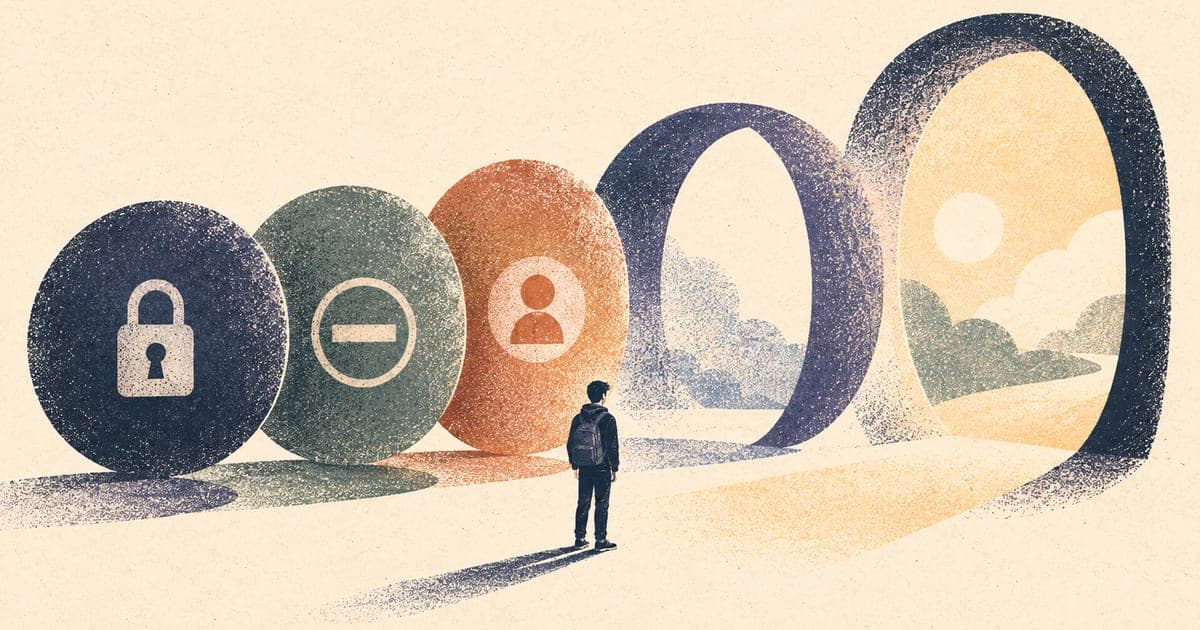
Teen silhouette standing between platform icons, age gates, and open pathways, Risograph editorial illustration in dusty blue and charcoal on warm cream, 16:10 landscape
Digital Safetyunder 16 social media AustraliaeSafety social media rulesparents social media law Australia

Australia's Under-16 Social Media Rules Explained: What Parents, Schools, and Clinicians Need to Know

A practical Australian guide to the under-16 social media rules, what platforms are age-restricted, what children can still use, where parents get confused, and what schools and clinicians should say about it.

By Ethan Smith17 May 20265 min read1066 words
Share

Australia's under-16 social media rules are now one of the most talked-about parts of the online safety landscape, and also one of the most misunderstood.

Many adults hear "under-16 ban" and assume children are simply prohibited from using anything social online. That is not what the current Australian framework actually does.

This guide is one branch of the wider Online Safety in Australia pillar guide. The aim here is narrower: to explain what the rules do, what they do not do, why parents and schools keep getting confused, and what questions matter more than just "is this app legal?".

This article is general information only. Platform rules, enforcement approaches, and eSafety guidance can change. Always check the latest official material if you are making school, family, or policy decisions.


Jump to a section

  • What the under-16 rules actually do
  • Which platforms are age-restricted
  • What children under 16 can still use
  • Why parents still need to worry about non-restricted apps
  • Questions to ask about any app
  • What schools should say about the rules
  • A better way to talk to families about it

Teen silhouette standing between platform icons, age gates, and open pathways, Risograph editorial illustration in dusty blue and charcoal on warm cream, 16:10 landscape
Age restrictions change the platform rules, not the whole internet

What the under-16 rules actually do

As of 10 December 2025, age-restricted social media platforms in Australia must take reasonable steps to prevent under-16s from creating or keeping accounts.

The legal burden sits with platforms, not with children and not with parents.

That matters because a lot of the public discussion slips into the wrong frame. The law is not mainly a punishment model. It is a platform-compliance model.

In practical terms, the rules are trying to reduce young people's exposure to services built around:

  • algorithmic feeds
  • public posting
  • follower economies
  • private messaging at scale
  • recommendation loops
  • constant social comparison

This is best understood as one part of a broader harm-reduction strategy. It is not a magic switch that makes the internet safe.

Which platforms are age-restricted

According to the current Australian position reflected in eSafety guidance, age-restricted social media platforms include large social and social-video services such as:

  • Facebook
  • Instagram
  • Kick
  • Reddit
  • Snapchat
  • Threads
  • TikTok
  • Twitch
  • X
  • YouTube

eSafety also identifies some services that have self-assessed as age-restricted for Australian users, including:

  • BigoLive
  • BlueSky
  • Lemon8
  • Wizz
  • Yubo

These lists can change if platform features change or eSafety updates its view. That is why family and school guidance should link out to current official sources rather than freeze a list in a PDF for years.

What children under 16 can still use

This is where much of the confusion starts.

Under the current framework, many services that are primarily messaging, education, gaming, or child-focused services are not treated as age-restricted social media platforms.
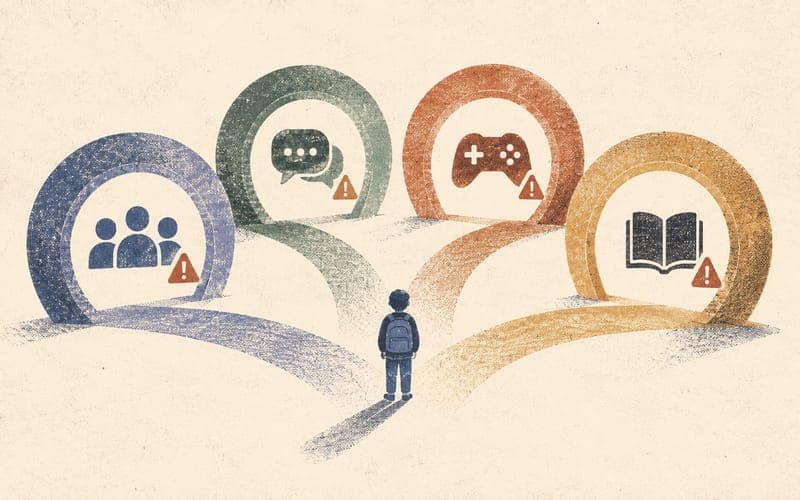
Family and school decision map comparing age-restricted platforms with messaging, gaming, and education apps that still carry social risk, Risograph editorial illustration in dusty blue and charcoal on warm cream, 16:10 landscape
The biggest confusion is not the rule itself but what still sits outside it

Examples often discussed in that context include:

  • Discord
  • GitHub
  • Google Classroom
  • LEGO Play
  • Messenger
  • Pinterest
  • Roblox
  • Steam and Steam Chat
  • WhatsApp
  • YouTube Kids

That does not mean they are automatically low-risk.

It means they are not currently captured by this specific legal category.

A child can still be:

  • bullied in a group chat
  • pressured in a Discord server
  • groomed through a game
  • scammed through a gaming marketplace
  • exposed to sexual content through private contact

So the right question is not only whether a platform is on the restricted list. The right question is what the child can actually do on it and what others can do to them on it.

Why parents still need to worry about non-restricted apps

Adults often think in brand names. Young people experience ecosystems.

A service may not be classified as age-restricted social media, but still include:

  • private messaging
  • group servers
  • voice chat
  • livestreaming
  • public discovery
  • gifting
  • virtual spending
  • linked accounts with other services

That means a platform can function socially even if it is not legally described as a social media platform for this purpose.

This is one reason the wider online safety pillar spends so much time on features rather than just app names. Safety often lives in the feature mix.

Questions to ask about any app

If you want a more useful family or school checklist, start here:

  • Can strangers contact a child on this app?
  • Does it support direct messages, voice chat, or video?
  • Can users be added to group chats or servers without much friction?
  • Does it include livestreaming, gifting, or creator economies?
  • Does it include in-app spending or virtual currency?
  • Can it link a child to off-platform contact?
  • Does it reward constant participation, streaks, or rapid replies?
  • Is content public by default?
  • How easy is it to report or block someone?

These questions work better than broad statements like "social media is banned" or "this app is fine because it is educational".

What schools should say about the rules

Schools do not need to become amateur regulators, but they do need to explain the rules clearly.

A sensible school position is usually:

  1. 1The under-16 rules matter and should be taken seriously.
  2. 2They do not cover every digital risk environment.
  3. 3Harm can still happen through messaging apps, games, chats, group servers, livestreams, and shared screenshots.
  4. 4Students still need explicit teaching about privacy, consent, bullying, scams, sexual pressure, and reporting pathways.

Schools also need to avoid using the law as a conversation-ender.

If a student says, "But Discord is allowed," the correct adult response is not "then it's fine." It is "allowed under this rule does not mean low-risk in practice."

A better way to talk to families about it

The most useful family message is calm and specific:

The law changes some platform rules. It does not remove the need to teach judgment, boundaries, privacy, consent, and help-seeking.

Parents are often more effective when they avoid:

  • panic
  • legalistic overstatements
  • pretending one rule solves everything
  • focusing only on screen time

They are usually more effective when they focus on:

  • what apps their child actually uses
  • what features create contact or spending risk
  • what a child should do if something goes wrong
  • how to keep disclosure shame-free

If your main concern is not the law itself but what online peer harm looks like once children are already in group chats and social ecosystems, the next best companion piece is What Cyberbullying Looks Like Online in Australia.

If your main concern is private pressure, sexual coercion, or fake explicit images, go next to Sextortion, Deepfakes, and Image-Based Abuse in Australia.

Final takeaway

Australia's under-16 social media rules matter. They are also easy to misunderstand.

They change what platforms are expected to do. They do not remove the need for parents, schools, and clinicians to understand:

  • messaging risks
  • gaming risks
  • bullying dynamics
  • app design
  • scams
  • privacy loss

That is why this topic works best as part of a wider online safety conversation, not as a standalone legal fact.

Read next in this cluster

  • Online Safety in Australia: A Practical Guide to Social Media, Gaming, AI, Sextortion, and Cyberbullying
  • What Cyberbullying Looks Like Online in Australia
  • Gaming Microtransactions, Loot Boxes, and Battle Passes in Australia
  • Parental Controls, Monitoring Software, and Online Safety in Australia

Discussion

Share your thoughts and experiences with this resource.

Sign in to leave a comment

Comments

Next step

Browse real clinician-designed resources

Move from strategy into implementation with templates, handouts, and psychoeducation tools already live on the marketplace.

For creators

Turn your own resources into a polished store

Publish clinician-grade templates, build trust signals, and start growing an evergreen library under your own brand.

Related reading

Keep the topic cluster growing

Young person and clinician facing a glowing chatbot interface surrounded by privacy fragments and care boundaries, Risograph editorial illustration in violet and charcoal on warm c
Digital Safety
17 May 2026 / 3 min read

AI Safety for Young People, Families, and Clinicians in Australia

A practical Australian guide to AI companions, chatbots, privacy, deepfakes, emotional dependence, and the risks of using AI for support, advice, or therapy-adjacent care.

AI safety AustraliaAI companions young peoplechatbot mental health
By Ethan Smith
Read article
Game controller, coins, crates, season pass ladder, and status skins arranged as a persuasive system, Risograph editorial illustration in amber and charcoal on warm cream, 16:10 la
Digital Safety
17 May 2026 / 4 min read

Gaming Microtransactions, Loot Boxes, and Battle Passes in Australia: What Parents Should Actually Watch For

A practical Australian guide to gaming spending risks, including currency distancing, loot boxes, battle passes, skins, gifting, status pressure, and why modern games can feel more like platforms than toys.

loot boxes Australiabattle passes childrenmicrotransactions gaming
By Ethan Smith
Read article
Parent and child reviewing device settings, console controls, and transparent digital guardrails together, Risograph editorial illustration in olive green and charcoal on warm crea
Digital Safety
17 May 2026 / 4 min read

Parental Controls, Monitoring Software, and Online Safety in Australia: What Helps, What Backfires, and What to Set Up First

A practical Australian guide to parental controls, monitoring software, Screen Time, Family Link, console settings, purchase controls, and how to use oversight without turning family online safety into a secrecy war.

parental controls Australiamonitoring software parentsFamily Link
By Ethan Smith
Read article
On this page
What the under-16 rules actually doWhich platforms are age-restrictedWhat children under 16 can still useWhy parents still need to worry about non-restricted appsQuestions to ask about any appWhat schools should say about the rulesA better way to talk to families about itFinal takeawayRead next in this cluster
Article details
Category: Digital Safety
Published: 17 May 2026
Reading time: 5 min
under 16 social media AustraliaeSafety social media rulesparents social media law Australiaschools online safetychildren social media Australia

Found this helpful?

Share