

How to Make Psychoeducation Handouts Clinicians Actually Want to Use
A practical guide to creating psychoeducation handouts for Australian practice: clear, credible, and designed for real clinical sessions.
Educational information, not individual clinical, legal or regulatory advice. No independent review is identified for this article. Editorial policy and corrections.
Why so many psychoeducation handouts still feel disappointing
There is no shortage of psychoeducation handouts online. The problem is that many of them are either too academic to use with clients, too simplified to feel clinically useful, or too visually messy to inspire confidence.
A good handout should reduce explaining work, not create more of it.
When a resource is strong, it helps the clinician teach a concept quickly, gives the client language they can actually use, and reinforces the therapeutic tone of the session. That combination is why high-quality handouts remain one of the most attractive categories on PsychVault.
If you are still deciding what belongs in a broader practice library, the guide to choosing psychology resources for Australian practice separates handouts from templates, assessment aids, worksheets, and report tools.
Start with the session moment, not the layout

Before thinking about colors, icons, or formatting, ask one question:
At what exact point in therapy would I hand this over?
That question makes almost every design decision easier. If the handout is meant to:
- introduce a new concept
- normalise a common experience
- summarise a formulation idea
- support between-session reflection
- help a parent or support person understand a pattern
then the wording, length, and complexity should match that moment.
The best handouts feel anchored to a real use case, not to a generic content idea.
For a broader overview of clinical resource types, see Psychology templates for therapy, assessment, and NDIS work. If you are creating resources for autistic or ADHD clients, the neuroaffirming templates guide is the natural next read.
What makes a psychoeducation handout feel genuinely usable
One clear concept per page
Trying to cover too much at once usually weakens the resource. One strong concept with a few concrete examples is often more valuable than five half-developed ideas squeezed together.
Language that sounds like a clinician, not a textbook
Clients need clarity. Clinicians need credibility. The sweet spot is language that is simple without becoming flat, childish, or over-sanitised.
Clear headings and visual rhythm
People scan before they read. Distinct headings, short sections, and good spacing reduce cognitive load immediately.
A believable therapeutic voice
The handout should feel like an extension of the clinician's work, not like a random internet printable dropped into session.
The strongest psychoeducation handouts feel calm, specific, and useful within seconds.
A simple structure that works for most handouts
If you want a reliable framework, start here:
- 1Name the concept clearly.
- 2Explain what it means in plain language.
- 3Show two or three examples of how it might appear.
- 4Add why it matters in daily life or therapy.
- 5Finish with a reflective prompt, small exercise, or next-step question.
This structure works because it moves the reader from recognition to understanding to action without demanding too much effort.
What should a client handout include?
For many therapy or psychoeducation resources, these elements are worth checking for:
- a clear title
- a short introductory explanation
- specific examples rather than vague generalisations
- enough white space to keep the page calm
- emphasis used sparingly
- wording that sounds warm but not patronising
- a logical next step for the client
If the handout does all of those things, it is usually already ahead of most generic worksheets online.
Design choices that build trust quickly
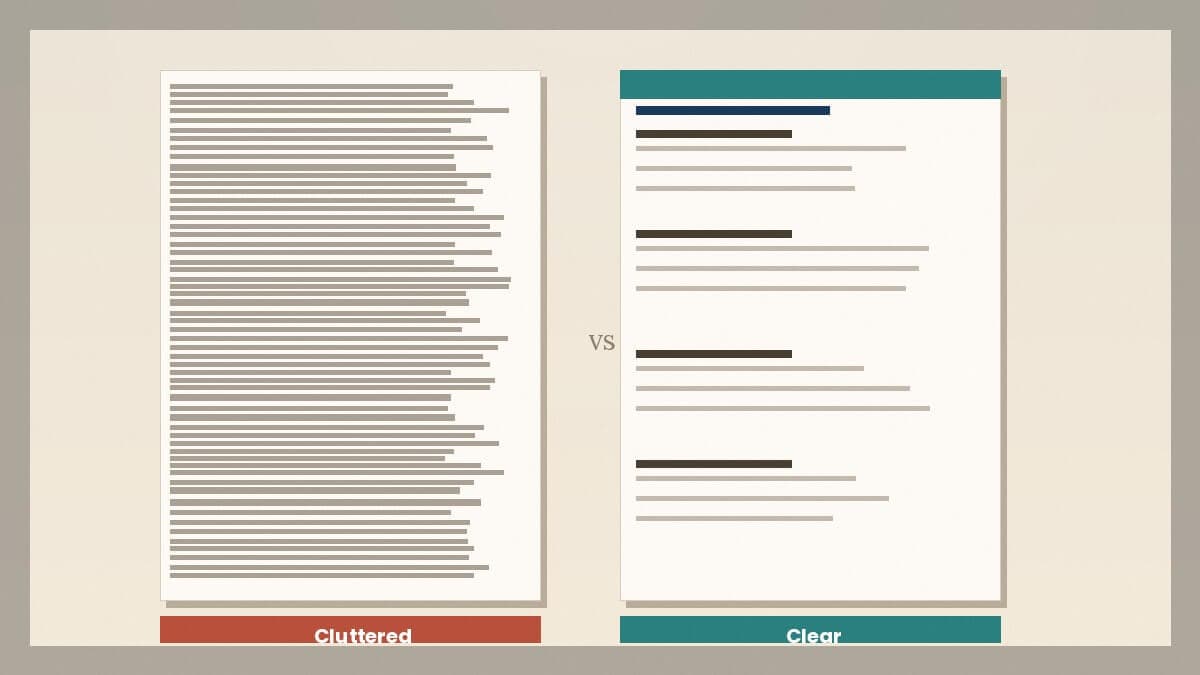
You do not need flashy design. You do need design that feels intentional.
Strong handout design usually means:
- the page can breathe
- the type is easy to read
- the hierarchy is obvious
- the most important lines still stand out
- the exported file looks good on both screen and paper
Clinicians often use visual quality as a shortcut for judging whether the underlying content is likely to be good. Buyers do the same. That is why design polish matters even when the core value is clinical.
Common handout mistakes
Mistake 1: explaining the concept like a lecture
A client handout is not a literature review. If the explanation feels dense, the handout will often go unread.
Mistake 2: using therapy jargon without translating it
Specialist language may be accurate, but the resource still needs to be usable. If the client has to decode every second sentence, the handout is doing too much work for itself and not enough for them.
Mistake 3: over-decorating the page
Too many visual elements can make the document feel noisy or childish. Calm structure is usually more powerful than decorative clutter.
Mistake 4: forgetting the takeaway
A handout should leave the client with a clearer understanding or next step. If it ends without any practical anchor, it often feels incomplete.
Adapting handouts for different client contexts
Not every handout works the same way across different populations. A resource that lands well with an adult in individual therapy may need significant adjustment for use with adolescents, families, or group settings.
A few practical adjustments worth considering:
For children and adolescents: Shorter sentences, larger print, and concrete examples from daily life. Avoid metaphors that assume adult experience. Visual cues often help.
For parents and support people: Focus on how the concept shows up in behaviour they can observe, and what they can do practically. Avoid language that sounds clinical or evaluative.
For group settings: Streamline the content so a handout can stand alone without extensive explanation. White space matters more here because the clinician cannot always pause to clarify.
For culturally diverse clients: Where possible, review whether the assumptions built into the handout are culturally relevant. Generic wellbeing language can sometimes feel disconnected from specific community contexts.
The best handouts tend to be built for one specific moment and one specific audience, then adapted carefully for others rather than designed to serve everyone at once.
A practical readiness check before you publish
Before listing a handout, ask:
- 1Would I feel comfortable using this with a client tomorrow?
- 2Is the concept clear within five seconds?
- 3Does the wording sound like a clinician?
- 4Would another professional know how to use it immediately?
- 5Does the layout still feel clean when printed?
If the answer is yes, the handout is probably close to market-ready.
If you plan to sell the resource rather than only use it in your own practice, read How to sell psychology resources online without looking spammy. It covers the trust signals clinicians look for before buying.
Final takeaway
Great psychoeducation handouts are not just attractive PDFs. They are clinical tools that support therapeutic understanding while making the clinician's work easier.
The closer the handout stays to a real session moment, the more valuable it becomes for clients, clinicians, and buyers alike.
Looking for ready-to-use psychoeducation resources? Browse psychoeducation handouts for Australian practice and therapy worksheets for Australian clinicians in the PsychVault library. If you do not like what you see there, or you can design something more useful, become a creator on PsychVault and earn from resources that actually help other clinicians.
Discussion
Share your thoughts and experiences with this resource.
Sign in to leave a comment
Comments
Therapist Resources for Australian Clinicians
Continue with the complete therapist resources for australian clinicians collection.
Browse Therapy Worksheets
Find templates, handouts, and clinical tools created for use in real psychology and allied health work.
Continue exploring Therapist Resources for Australian Clinicians
Find and assess free or downloadable psychology templates for therapy, intake, case formulation, behaviour support, progress notes, and NDIS documentation.

A grounded guide to selling psychology resources with clear scope, useful previews, credible claims, and marketing that does not undermine clinical trust.

A practical guide for psychologists writing NDIS reports, with a clear structure, functional-impact examples, recommendation prompts and an editable Word template.