Practical low-demand communication scripts for clinicians, parents, carers, and schools supporting PDA-profile autistic children, adolescents, and adults.
Educational information, not individual clinical, legal or regulatory advice. No independent review is identified for this article. Editorial policy and corrections.
Low-demand communication is not soft parenting dressed up as clinical language.
It is a way of reducing threat so the nervous system can actually hear the message.
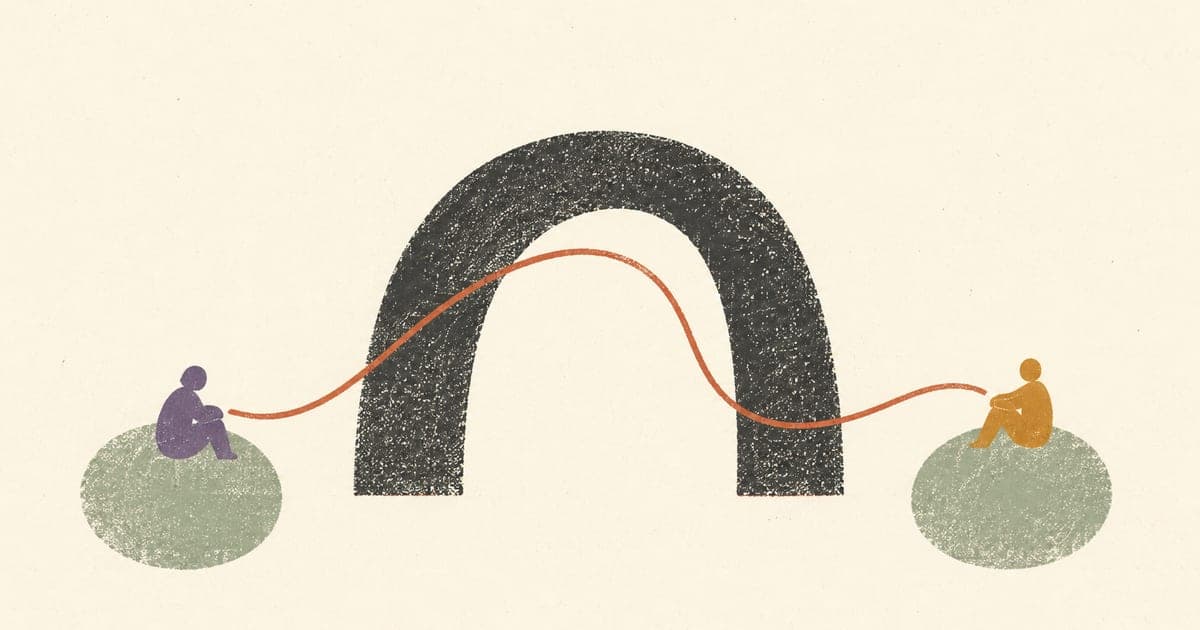
For PDA-profile autistic people, the problem is often not the content of the request. It is the felt loss of autonomy that arrives with the request. A sentence can land as pressure even when it is gentle, reasonable, and well-intended.
This article is a practical branch from the main PDA clinical pillar guide. It focuses on wording, tone, timing, and repair.
Jump to a section:
Low-demand communication changes the demand field around the person.
The goal is not to trick someone into compliance. It is to reduce the perceived threat of the interaction so that choice, thinking, and relationship stay online.
The PDA Society's helpful approaches guidance describes low-arousal and flexible approaches as ways to reduce anxiety, lower demand load, and preserve relationships. That maps closely onto clinical experience: when pressure drops, capacity often returns.
The shift is from command to collaboration.
Instead of:
"You need to start now."
Try:
"I'm going to put the first bit here. You can decide whether to look at it now or after a break."
Same direction of travel. Very different nervous-system load.
Some phrases often land as high demand:
The issue is not that these phrases are morally wrong. It is that they can close the person's sense of exit. Once exit disappears, threat rises.
Low-demand alternatives often use:
Getting ready
Instead of:
"Get dressed. We are leaving soon."
Try:
"The clothes are on the chair. The car leaves after breakfast."
Or:
"I'm going to get my shoes. Yours are by the door if your body is ready."
Meals
Instead of:
"Come and eat dinner."
Try:
"Food is on the table. You can sit with us, take it somewhere quiet, or leave it for now."
Hygiene
Instead of:
"Brush your teeth."
Try:
"The toothbrush is ready in the bathroom. Mint or plain toothpaste today?"
Screens
Instead of:
"Turn that off now."
Try:
"The next thing is dinner. Do you want to pause at the end of this round or set a five-minute timer?"
Repair after escalation
Instead of:
"You need to apologise."
Try:
"That got big. I'm not angry. We can work out repair later."
Repair is a demand too. It often works better after regulation returns.
School is a demand-rich environment. The bell, uniform, seating plan, worksheet, eye contact, group task, homework system, and hidden social rules all carry pressure.
For PDA-profile students, a low-demand school plan needs communication changes, not just sensory breaks.
Starting work
Instead of:
"Start question one."
Try:
"Question one is available. You can do it, circle it, or tell me which part is annoying."
Transitions
Instead of:
"Pack up now."
Try:
"This activity is closing in five minutes. You can finish the part you are on or choose where to pause."
Refusal
Instead of:
"If you don't do this, you will miss recess."
Try:
"Looks like this is too much right now. I'll leave it here and check back later."
Attendance
Instead of:
"You need to come to school every day."
Try:
"We are trying to make school feel safer. Which part of arriving is the worst bit?"
For attendance-specific support, read the companion branch on PDA and school refusal.

Therapy can accidentally become a demand factory.
"Tell me how you feel." "Make eye contact." "Try this strategy." "Practise this at home." "Rate your anxiety." These are all demands, even when they are clinically sensible.
Opening a session
Instead of:
"What do you want to talk about today?"
Try:
"I have a few options. We can talk, draw, look at the plan, or do nothing for a minute."
Emotion work
Instead of:
"What are you feeling?"
Try:
"Is it more body, thought, or noise right now?"
Or:
"No need to name it. We can just notice whether it is big or small."
Psychoeducation
Instead of:
"I want you to learn this model."
Try:
"This model might be useful, or it might be annoying. Want the short version?"
Homework
Instead of:
"Practise this three times before next session."
Try:
"If it happens naturally, notice whether it helps. No worksheet required."
If you are building handouts or worksheets around this, the related guide is how to make psychoeducation handouts clinician-friendly.
More broadly, when a client says they already know the strategy, When Clients Already Know the Coping Skills helps distinguish an access barrier, poor treatment fit, unclear goals, and a possible relational rupture before another technique is added.
Low-demand does not mean unsafe.
If someone is about to run into traffic, hit another person, self-harm, or enter immediate danger, adults still need to act. The difference is that safety action should use the least relational threat possible.
Useful safety scripts:
"I'm moving this away to keep bodies safe."
"I won't let you get hurt."
"I'm going to stand between you and the road."
"No talking needed. I'm here."
Avoid moralising during the peak:
Those conversations may matter later. In the moment, they add heat.
Using low-demand language as a technique for compliance. PDA-profile people often detect the hidden demand quickly. If the choice is fake, the threat remains.
Overexplaining. Long reasoning can become another demand. Keep language short.
Praising too intensely. Praise can feel like performance pressure. Some people prefer quiet acknowledgement.
Turning every need into a question. "Would you like to maybe possibly consider..." can become confusing. Low-demand communication still needs clarity.
Withdrawing all boundaries. A low-demand approach works best when the person still experiences adults as steady, warm, and predictable.
Pick three phrases and use them until they become natural:
The aim is not perfect wording. The aim is a different relational stance.
Low-demand communication says: I am not here to overpower your nervous system. I am here to keep connection available while we work out what is possible.
That is the work.
For parents balancing lower-demand language with firm limits and repair, see Holding Boundaries Without Becoming the "Bad Guy".
Share your thoughts and experiences with this resource.
Sign in to leave a comment
Continue with the complete neurodiversity-affirming practice collection.
Find templates, handouts, and clinical tools created for use in real psychology and allied health work.
A practical PDA assessment and formulation framework for clinicians integrating autism history, psychometrics, masking, sensory load, executive function, family context, and school or work data.
A neurodiversity-affirming guide to PDA, school refusal, emotionally based school avoidance, masking, attendance pressure, and low-demand school support.
A clinical differential guide to PDA, oppositional defiant disorder, conduct disorder, anxiety-driven demand avoidance, intent, empathy, and contraindicated behavioural responses.