When Clients Know the Skills but Cannot Use Them: The Problem of Skill Generalisation
A practical clinical guide to understanding why familiar therapy skills disappear under emotional load, and how to build retrieval, rehearsal and generalisation into treatment.
Educational information, not individual clinical, legal or regulatory advice. No independent review is identified for this article. Editorial policy and corrections.
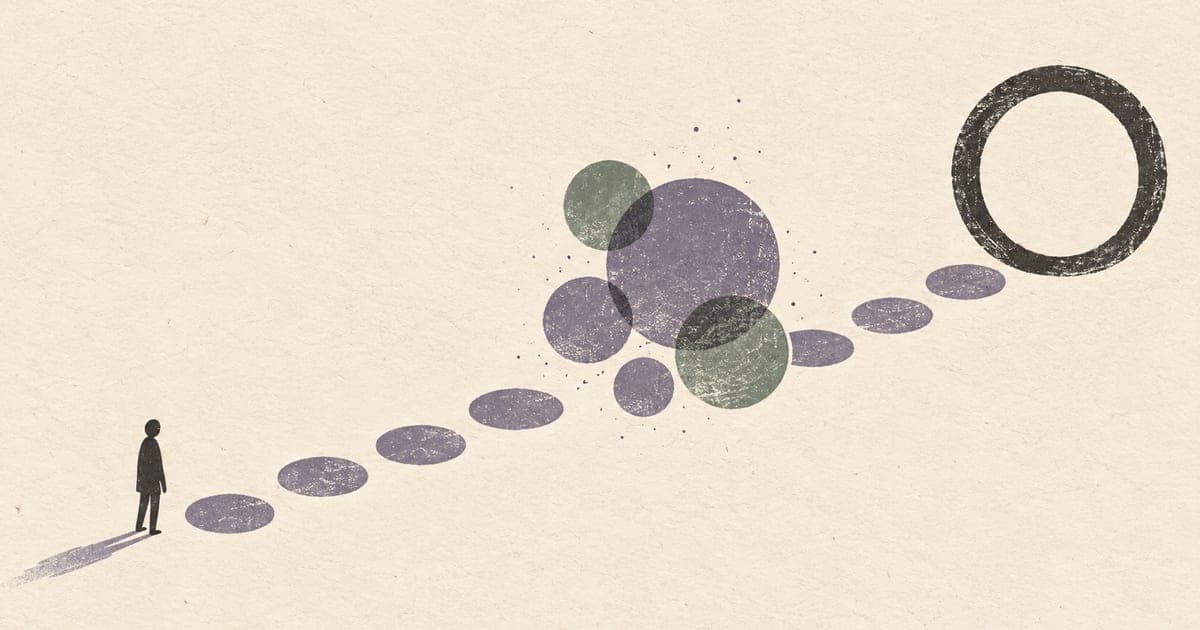
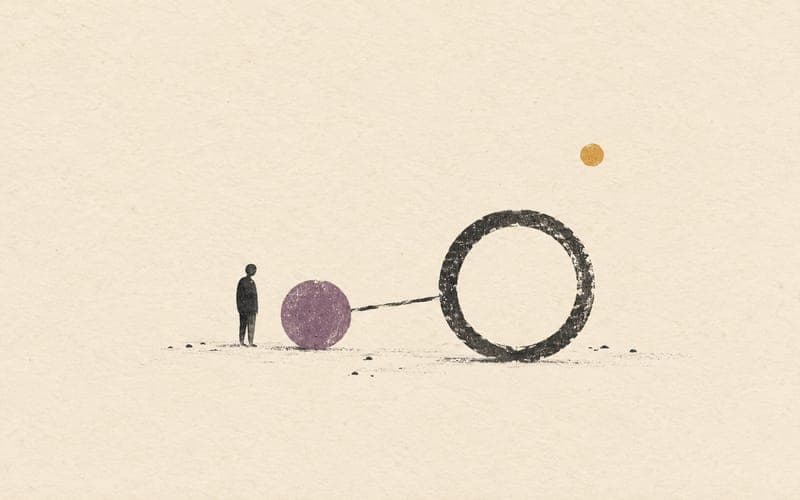
A client can explain the skill, demonstrate it in the room and genuinely intend to use it. Then the situation arrives and the skill seems to disappear.
This is easy to misread as a knowledge problem. We explain the exercise again, provide another worksheet or emphasise the importance of practice. Sometimes that is appropriate. Sometimes the client already knows the skill well enough. The problem is that it does not survive contact with the conditions in which it is needed.
The broader guide to what comes next when clients already know the coping skills considers several possibilities, including poor treatment fit, practical burden and a mismatch in goals. This article focuses on one narrower branch of that formulation: the skill is relevant and understood, but it is not reliably available under emotional load.
The central clinical question becomes:
Where in the chain is the skill breaking down?
That question is more useful than asking whether the client "did the skill". It turns a yes-or-no judgement into something we can investigate.
Contents
- Knowing is not the same as being able to use
- Find where the chain breaks down
- Emotional load changes the task
- Practise closer to the conditions of use
- Use plans and cues to reduce cognitive load
- Check what the environment does next
- Review failed attempts without turning them into failure
- Know when the formulation needs to change
- The goal is availability, not perfect performance
Knowing is not the same as being able to use

A useful working distinction is between three tasks:
- Acquisition: learning what the skill is and how to perform it.
- Strengthening: making the skill more fluent, accurate or reliable through practice and feedback.
- Generalisation: using the skill across the people, places, emotional states and situations in which it matters.
This distinction is described directly in the DBT skills-assessment literature. Swales and Dunkley argue that assessment should locate obstacles across acquisition, strengthening and generalisation, rather than treating every instance of non-use as the same problem. Swales and Dunkley, 2020.
These categories are not a diagnosis and they will not always be cleanly separated. A client may still need to strengthen one part of a skill while generalising another. They do, however, prevent us from assuming that a client who cannot use a skill during conflict needs another explanation of its steps.
The same literature distinguishes problems of capability from problems of motivation. That distinction needs care. "Motivation" is not a polite substitute for resistant, lazy or non-compliant. A person can want the outcome and still judge that a particular skill is too effortful, unsafe, socially costly or unlikely to help. Capability can also fluctuate with fatigue, arousal, sensory load and competing demands.
The task is to understand the behaviour in context, not to decide which unhelpful label belongs to the client.
Find where the chain breaks down
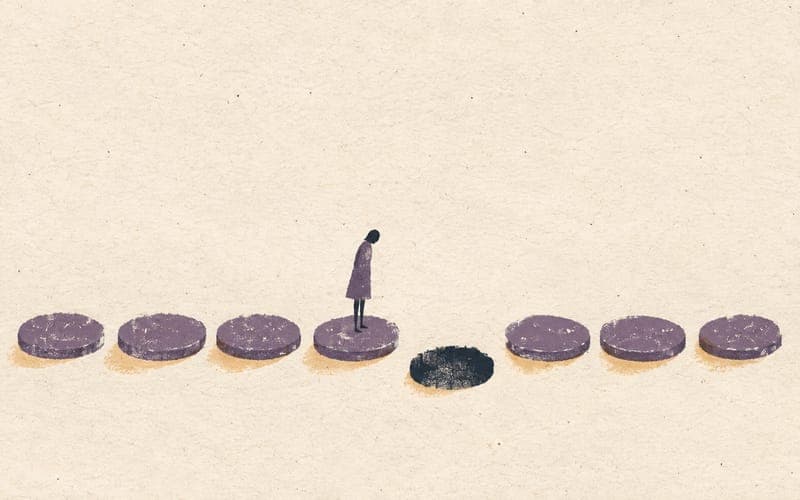
"I did not use it" contains very little clinical information. Walk through one recent situation slowly enough to identify what happened before, during and after the opportunity to use the skill.
The skill-use chain might include:
- 1Notice: Did the client recognise the relevant cue while the situation was unfolding?
- 2Remember: Did the skill come to mind in time?
- 3Choose: Did it seem relevant, worthwhile and safe enough to try?
- 4Start: Could the client begin the first step?
- 5Sustain: Could they continue once distress, distraction or another person's response increased?
- 6Adapt: Could they adjust the skill when the real situation differed from the practice example?
- 7Recover: If the first attempt did not work, could they return to the plan or try an alternative?
Each breakdown suggests a different intervention. A noticing problem may call for clearer cues. A remembering problem may call for rehearsal and prompts. A skill that collapses halfway through conflict may need shorter steps, graded practice or a safety plan. A client who chooses not to use it may be responding sensibly to the consequences they expect.
This is where formulation earns its keep. Instead of documenting "client did not complete homework", we can record the point of difficulty, the conditions around it and the adjustment we agreed to test. The guide to writing psychology progress notes offers a structure for capturing that reasoning without writing a transcript.
Emotional load changes the task

A skill demonstrated in a quiet therapy room is not being performed under the same conditions as a skill used during panic, shame, anger, sensory overload or an escalating argument.
The cost of that load may not be fully visible before the client leaves. The companion article on post-session recovery in therapy considers what delayed exhaustion, withdrawal or disruption can add to formulation and pacing decisions.
The distinction between "cool" and "hot" executive functioning is useful here. Cool tasks are relatively abstract and emotionally neutral. Hot tasks involve motivational or emotional significance. The framework has been developed substantially in child and adolescent research, so it should not be treated as a complete explanation of an adult client's difficulty. It does provide useful language for the difference between solving a problem calmly and trying to solve it while the stakes feel immediate. Zelazo and Carlson, 2012.
A meta-analysis of laboratory studies found that acute stress was associated with poorer working memory and cognitive flexibility, while effects on inhibition were more complicated. That finding supports a cautious clinical hypothesis: some of the processes needed to retrieve, sequence and adapt a skill may be less available under stress. It does not mean all emotion impairs all thinking, or that every failed attempt has the same mechanism. Shields, Sazma and Yonelinas, 2016.
Learning a skill while calm and expecting it to appear intact during intense activation is a little like practising a bicycle on a smooth empty path and then judging performance in traffic. The original practice was not useless. It simply did not include all the demands of the later task.
That analogy has limits. Therapy is not a mechanical training exercise, and distress should not be manufactured merely to make practice more realistic. The practical point is smaller: context changes performance, so context needs to be part of the formulation.
Practise closer to the conditions of use
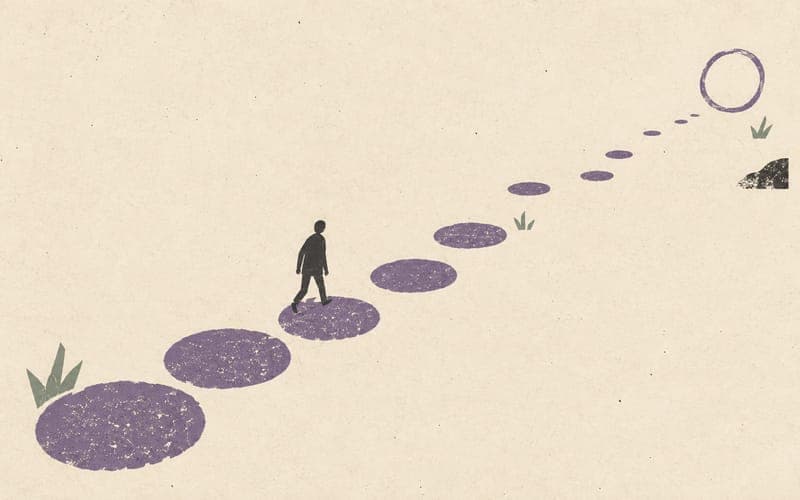
If the skill works only under ideal conditions, more ideal-condition practice may improve fluency without solving the generalisation problem.
Consider building a graded practice ladder. The steps will depend on the client, the skill and the actual risks involved, but a sequence might move through:
- describing the skill in the client's own words;
- practising one component with prompts;
- rehearsing a recent low-intensity example;
- role-playing a predictable complication;
- using the skill in a mildly activating real situation;
- reviewing what changed when another person, time pressure or fatigue was present;
- adapting the plan before trying a more demanding context.
The aim is not to make every rehearsal maximally emotional. It is to vary the conditions enough that the client and therapist can learn what supports transfer. Practice can be stopped, simplified or moved back a step if it becomes overwhelming or ceases to serve the agreed goal.
Role-play may help some clients rehearse language, timing and likely responses. It can feel artificial, exposing or inaccessible to others. Ask rather than assume. Imagery, written scenarios, therapist modelling, audio rehearsal or practising only the opening sentence may fit better.
Use plans and cues to reduce cognitive load
"Use grounding when anxious" still requires the client to notice anxiety, remember the plan, decide whether it applies and choose where to begin.
A more specific plan links a recognisable cue with a small response:
If I notice my hands gripping the steering wheel after I park, then I will put both feet on the floor and name three things I can see before leaving the car.
Implementation-intention research describes this as an if-then plan. A meta-analysis found that these plans can help translate intentions into action across a wide range of goals. This does not establish that an if-then statement will generalise every therapy skill, particularly when safety, capacity or treatment fit is the real issue. It does suggest that specifying the cue and response can reduce how much must be decided in the moment. Gollwitzer and Sheeran, 2006.
Useful cues might be internal, such as a familiar body sensation, or external, such as entering a particular room. Prompts can be discreet and ordinary: a phone reminder, a card in a wallet, an object already present in the environment or a phrase agreed with a support person.
Keep the first action small. "Complete the full worksheet" is not one action when the client is overloaded. "Open the note and write the situation in one sentence" may be.
Check what the environment does next

Sometimes the client remembers, chooses and performs the skill, then the environment punishes it.
A boundary leads to retaliation. A request for a pause is interpreted as rejection. A regulation strategy draws ridicule. A workplace technically permits a break but makes taking one professionally costly. In these situations, "use the skill more consistently" may ignore the information the client has learned from previous attempts.
Ask:
- What response did the skill produce from other people?
- What did it cost the client socially, practically or emotionally?
- Does the skill need different wording, timing or support?
- Is the environment merely uncomfortable, or is there a genuine safety concern?
- Are we trying to help the client tolerate a system that should instead be challenged or left?
The answer may still involve skill development. It may also involve advocacy, environmental change, communication with support people, a different treatment target or safety planning. Generalisation is not entirely an individual responsibility.
Review failed attempts without turning them into failure
After an attempt, resist the urge to ask only whether it worked. Review it as a sequence:
- What was the earliest sign that this was a skill-use moment?
- When did the skill first come to mind?
- What helped the client begin?
- Where did the attempt become harder?
- What happened immediately afterwards?
- Was any part useful, even if the whole sequence did not work?
- What is the smallest adjustment worth testing next?
This is behavioural analysis, not a search for the point at which the client failed to comply. The distinction matters. Shame narrows the information clients are likely to bring back, while curiosity gives treatment something to work with.
Also review success carefully. A skill may have been useful because the situation was easier, another person responded differently or the client had more capacity that day. Those contextual details help you identify what needs to be recreated, not just what the client should repeat.
The worked example in From Case Formulation to the Next Session shows how new information from a client's week can change the next intervention rather than being forced into the original plan.
Know when the formulation needs to change
Generalisation is only the right formulation if the skill is sufficiently learned, relevant to the client's goal and capable of helping with the problem.
Reconsider the formulation when:
- the client cannot yet perform the skill even with support;
- the steps depend on abilities or resources that are not currently available;
- repeated, well-supported attempts produce little benefit;
- the skill addresses distress but not the situation the client wants to change;
- the social or physical environment makes use unsafe;
- the intervention has become a source of pressure, shame or therapeutic disconnection;
- the underlying clinical picture has changed or remains unclear.
Sometimes we have a strengthening problem. Sometimes we have selected the wrong skill. Sometimes the treatment target is wrong. Sometimes the client is giving us accurate feedback that the intervention does not fit.
Calling all of these problems "poor generalisation" would simply create a more sophisticated way to miss the point.
The goal is availability, not perfect performance
Clients do not need therapy skills only when they are calm, resourced and sitting opposite a supportive clinician. They need them in kitchens, cars, staffrooms, waiting rooms and difficult conversations, often while attention is narrowed and consequences feel immediate.
That does not mean the goal is flawless performance in every situation. It means treatment should examine whether the skill can be noticed, retrieved, started, sustained and adapted under the conditions that matter.
Sometimes the next intervention is not another skill. It is a better cue, a smaller first step, a graded rehearsal, a change in the environment or a revised formulation.
The existing skill may be useful. It may simply not yet be available when the client is not calm.
For more practical articles on formulation, treatment planning and clinical resources, explore the Therapist Resources hub or browse clinician-designed resources on PsychVault.
Discussion
Share your thoughts and experiences with this resource.
Sign in to leave a comment
Comments
Therapist Resources for Australian Clinicians
Continue with the complete therapist resources for australian clinicians collection.
Browse Therapy Worksheets
Find templates, handouts, and clinical tools created for use in real psychology and allied health work.
Continue exploring Therapist Resources for Australian Clinicians

When clients say they already know the coping skills, explore barriers, treatment fit and shared goals before deciding what to do next in therapy.
A calm in-session presentation may conceal substantial post-session cost. Learn how recovery data can inform therapy pacing, formulation and transition planning.

Learn how a working case formulation can guide the next therapy session by linking client priorities, proposed mechanisms, interventions and review points.