Caseload Is More Than a Number: Planning a Sustainable Clinical Load
A practical framework for translating active clients, appointment frequency, indirect work, complexity and buffer into a more honest picture of clinical capacity.
Clinical documentation, NDIS resources, psychoeducation, and worksheets
Good clinical documentation saves time, improves client outcomes, and protects you in AHPRA complaints. This hub brings together PsychVault's practical articles on clinical documentation, NDIS reporting, psychoeducation, and therapy worksheets — plus links to the resource categories where you can download ready-to-use templates.

A practical framework for translating active clients, appointment frequency, indirect work, complexity and buffer into a more honest picture of clinical capacity.

A practical guide to separating useful professional uncertainty from global self-doubt, perfectionism and shame in therapy work.

Learn how a working case formulation can guide the next therapy session by linking client priorities, proposed mechanisms, interventions and review points.

When clients say they already know the coping skills, explore barriers, treatment fit and shared goals before deciding what to do next in therapy.

A practical clinical guide to understanding why familiar therapy skills disappear under emotional load, and how to build retrieval, rehearsal and generalisation into treatment.

A calm in-session presentation may conceal substantial post-session cost. Learn how recovery data can inform therapy pacing, formulation and transition planning.

Clinical mistakes are not all equivalent. Learn how alliance rupture research can guide proportionate accountability, repair, supervision and safer psychology practice.

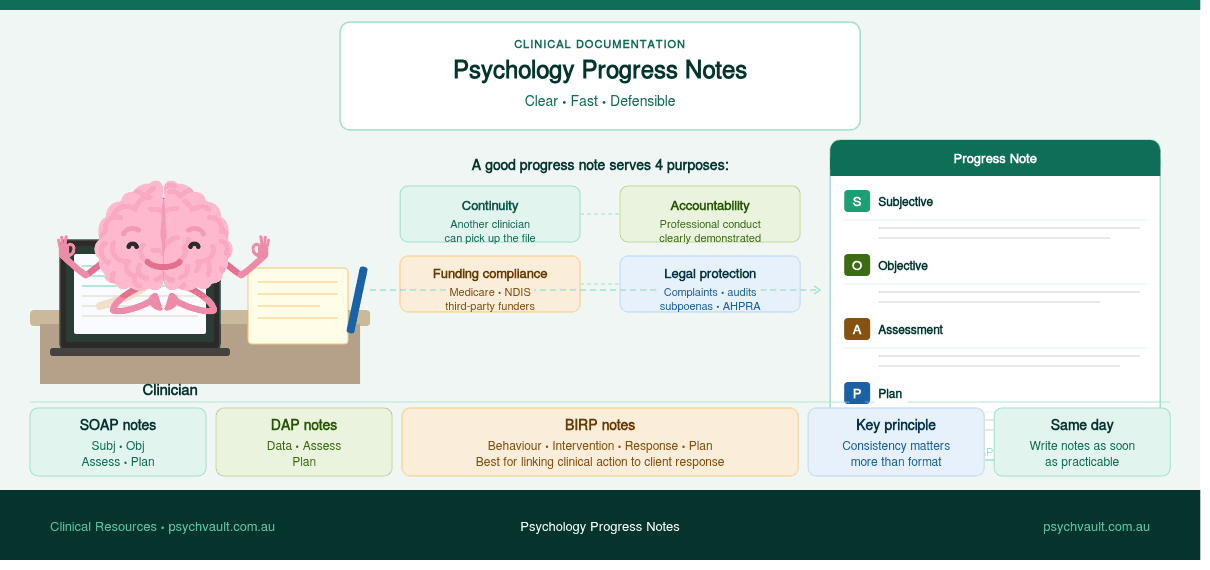
A practical guide to efficient psychology session records, including note structure, clinical reasoning, risk, client response, defensibility, and next steps.

Can psychologists use AI scribes in Australia? Learn what Ahpra requires around informed consent, privacy, accountability, clinical records, TGA regulation and human oversight.

What should Australian psychology practices do about smart glasses? Explore covert recording, WA law, consent, waiting-room privacy and accessibility-aware policy.

From October 2026, Improved Daily Living Skills budget allocations will be reduced by 10%. Learn when the reset applies, what is exempt and what to do next.

The NDIS still funds some psychology supports in 2026. Learn the difference between disability-related functional capacity building, clinical treatment, assessments, reports and pricing.

A practical 2026 guide to NDIS psychology billing for sessions, telehealth, reports, non-face-to-face work, travel and cancellations.

A practical checklist for writing clearer NDIS psychology reports: stronger functional wording, cleaner recommendations, and less admin for Australian clinicians.
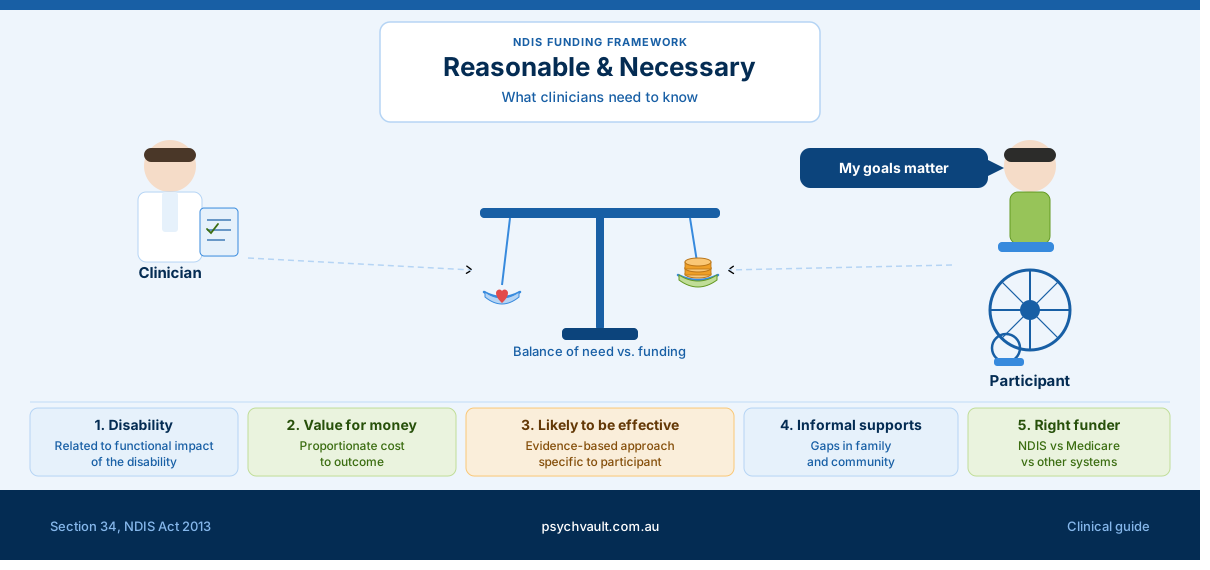
Understand the NDIS reasonable and necessary criteria and learn how to write psychology reports that justify supports clearly for Australian clinicians.

A practical guide to creating psychoeducation handouts for Australian practice: clear, credible, and designed for real clinical sessions.

A practical PDA assessment and formulation framework for clinicians integrating autism history, psychometrics, masking, sensory load, executive function, family context, and school or work data.

A practical guide to finding psychology resources that actually work in Australian practice: covering templates, handouts, NDIS tools, and what makes a clinical resource worth using.

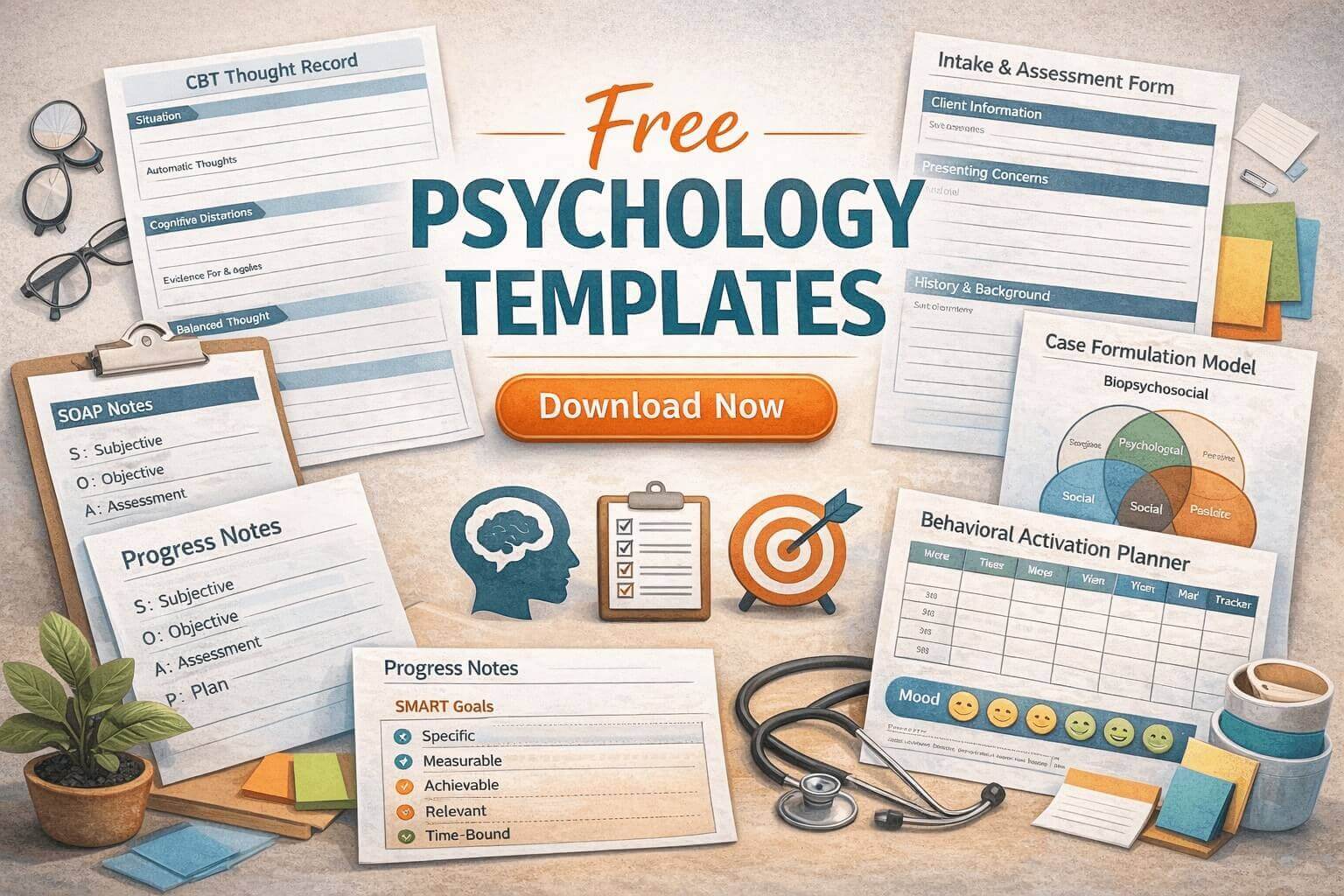
Find and assess free or downloadable psychology templates for therapy, intake, case formulation, behaviour support, progress notes, and NDIS documentation.

A grounded guide to selling psychology resources with clear scope, useful previews, credible claims, and marketing that does not undermine clinical trust.

A practice-focused guide to dual relationships in psychology: what they are, why they matter, when they are manageable, and how Australian ethical frameworks expect psychologists to think about risk.

A practical guide to role collapse, multiple relationships, supervision conflicts, workplace power, and safeguards under the Psychology Board's Code of conduct.

A practical guide to confidentiality, serious risk and mandatory child protection reporting for psychologists in Australian private practice.

A practical guide to what can happen after a mandatory notification to Ahpra, including early assessment, immediate action, investigations, outcomes, statistics, insurance, and the first 48 hours.

A practical guide to competence boundaries, role drift, and dual relationships in Australian psychology practice, with a focus on when helpfulness becomes a second role.

Coercive control is a pattern, not a single incident. A look at how disagreement becomes risky, why emotional safety matters, and what accountability actually sounds like.

A clinician-facing guide to PTSD in psychologists, risk factors, graded return to work, AHPRA mandatory notification thresholds, supervision, disclosure and recovery without unsafe overexposure.

A practical clinician guide to video game therapy, including Minecraft, Roblox, telehealth sessions, gaming groups, consent, privacy, and therapeutic intent.

A systems-informed guide to enmeshment, boundaries, individuation, estrangement and mutualism, exploring how families, workplaces, training systems and professional cultures respond when people become more fully themselv
Australian clinicians face a significant administrative burden: progress notes, NDIS reports, initial assessments, session plans, and psychoeducation handouts all take time to write well. The articles in this hub cover how to write clear psychology progress notes, what makes an effective NDIS report, how to create psychoeducation handouts that clients actually engage with, and where to find quality free and paid psychology templates. PsychVault's marketplace has resources created by psychologists for psychologists — worksheets, templates, and handouts designed to meet Australian AHPRA and NDIS standards. Browse the categories below to find what you need.
Download ready-to-use clinical tools from PsychVault's resource library.
A good psychology progress note documents: the session date and duration, who attended, presenting issues addressed, clinical observations, interventions used, the client's response, any risk factors reviewed, and a plan for the next session. Notes should be objective, specific, and written as soon as possible after the session.
An NDIS support is 'reasonable and necessary' if it relates to the participant's disability, represents value for money, is effective and beneficial (backed by evidence), accounts for informal supports, and is most appropriately funded by the NDIS rather than another system. Reports must clearly link the requested supports to these criteria.
PsychVault has a growing library of free and paid psychology templates from independent creators, including progress note formats, NDIS report checklists, psychoeducation handouts, and therapy worksheets. Review each listing for its intended use. APS, PACFA, and state psychological societies also publish clinical resources for their members.