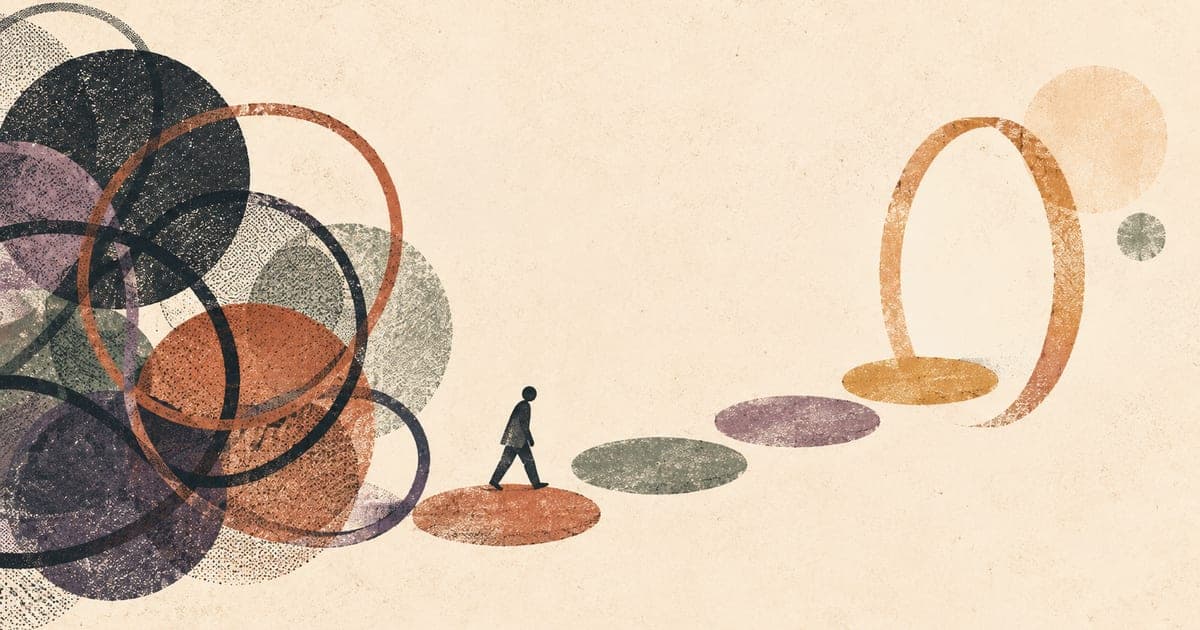
A systems-informed guide to enmeshment, boundaries, individuation, estrangement and mutualism, exploring how families, workplaces, training systems and professional cultures respond when people become more fully themselv
Educational information, not individual clinical, legal or regulatory advice. No independent review is identified for this article. Editorial policy and corrections.
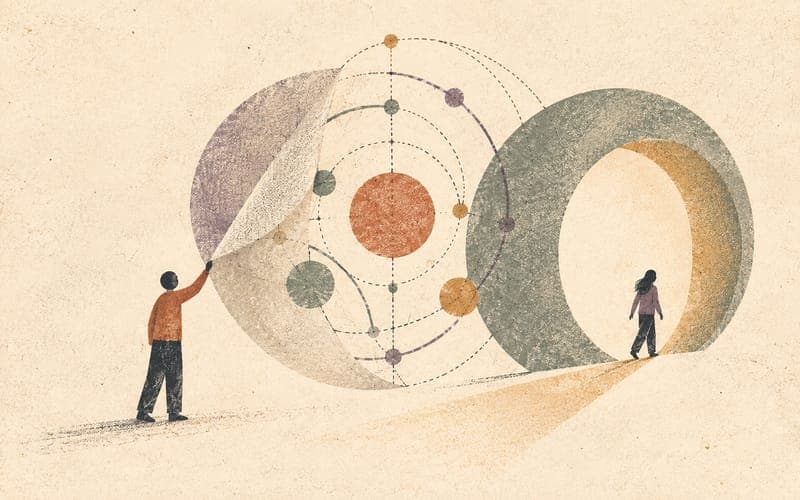
Some systems make room for difference. Others can only tolerate people when they stay in role.
In those systems, a boundary is not heard as information. It is heard as betrayal. Individuation is not seen as development. It is seen as abandonment. Difference is not treated as data. It is treated as danger.
This is one of the most useful lenses in systems psychology for understanding why some families, workplaces, training programs and professional cultures feel safe to grow inside, while others feel like you are slowly being asked to disappear.
Note: This article is a general, research-informed discussion intended for educational purposes. It does not comment on or make findings about any specific individual, organisation, workplace, training program, or legal matter. Nothing in this article constitutes legal, clinical, or career advice.

When we talk about dysfunctional systems, we usually mean families. But a system is any relational structure with roles, rules, expectations, power, belonging and consequences.
That includes families, schools, clinical placements, workplaces, religious and cultural communities, friendship groups, professional boards, online communities and professional cultures.
The dynamics we associate with enmeshed families — fused identities, conditional belonging, intolerance of dissent — are not specific to families. They show up wherever a group needs sameness to feel safe.
That is the underlying pattern:
A system becomes dysfunctional when its stability depends on people suppressing difference.
A healthier system is not one where everyone becomes independent, detached or untouched by others. The goal is mutualism: a system where people can remain connected while also becoming more fully themselves, and where difference becomes a source of adaptation rather than threat.
A functional system can metabolise difference. It can feel the discomfort of change without needing to punish the person who brought the difference into view.
You can see this in small moments. Someone sets a boundary, and the system says, thanks for telling us what works. Someone asks for an accommodation, and the system asks, what would make this accessible? Someone disagrees, and connection stays intact. Someone changes, and they are allowed to grow.
This is close to what Murray Bowen described as differentiation of self: the capacity to maintain a self while staying emotionally connected to others. Bowen’s theory frames the family as an emotional unit, but the principle generalises. The Bowen Center describes a well-differentiated person as someone who recognises their realistic dependence on others while still being able to stay calm and clear-headed in the face of conflict, criticism and rejection.
The recent scoping review by Calatrava and colleagues frames differentiation of self as a multidimensional construct that includes both an intrapersonal capacity to distinguish thinking from feeling and an interpersonal capacity to maintain autonomy while remaining connected.
A differentiated system does not require everyone to feel the same, think the same, perform the same, or protect the same story.
It can tolerate the emergence of a person.
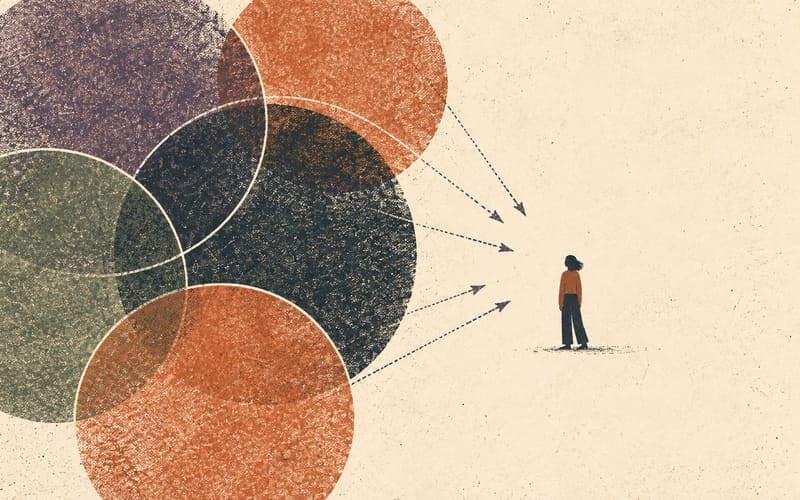
Dysfunctional systems depend on predictability, role compliance and emotional fusion. When someone becomes more distinct — more honest, more boundaried, more competent, more visible, more themselves — the system experiences that distinctness as destabilising.
The language gives it away:
Each of these sentences performs the same move: it reframes the person’s individuation as the problem, so the system does not have to look at itself.
| When someone… | Functional system | Dysfunctional system |
|---|---|---|
| Sets a boundary | “Thanks for telling us what works.” | “You’re rejecting us.” |
| Needs accommodation | “What would make access possible?” | “Why do you need special treatment?” |
| Disagrees | “We can stay connected and think differently.” | “You’re being difficult.” |
| Changes | “You’re allowed to grow.” | “You’re not who we thought you were.” |
| Names harm | “We need to understand the impact.” | “You’re attacking the system.” |
| Stops masking | “We’re seeing more of you.” | “You’ve become rude or selfish.” |
| Individuates | “You can belong and be separate.” | “You can belong only if you stay the same.” |
| Leaves | “What made staying unsafe?” | “How dare you abandon us?” |
In functional systems, difference creates information.
In dysfunctional systems, difference creates threat.
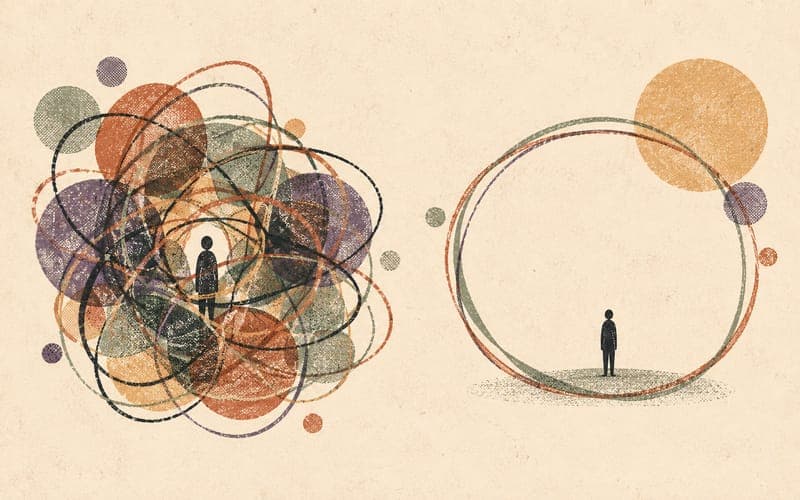
Enmeshment is often mistaken for warmth, loyalty or family closeness. It is not.
Enmeshment is closeness that cannot tolerate separateness.
Structural family therapy makes a useful distinction here. Salvador Minuchin described enmeshed and disengaged relationships as the two ends of a continuum of boundary clarity. Enmeshed systems have boundaries that are too diffuse, with people over-involved in each other’s emotional lives. Disengaged systems have boundaries that are too rigid, with people emotionally unreachable or unsupported. Both extremes can be dysfunctional. Healthy systems are neither fused nor abandoned; they allow contact with separateness.
Families can be enmeshed, but so can workplaces that call themselves families and then treat boundary-setting as disloyalty. So can training programs that demand emotional fusion as evidence of commitment. So can professional communities where questioning the culture is treated as questioning the field.
When this loss of autonomy is maintained through fear, monitoring, punishment, or escalating consequences, the more specific framework may be coercive control, rather than enmeshment alone.
A workplace that says we’re like a family here and punishes you for taking your sick leave is not describing closeness.
It is describing enmeshment.
A boundary is not the end of connection. It is the condition that makes safer connection possible.
In a system with healthy boundaries, people know where their responsibility ends and someone else’s begins. In a dysfunctional system, responsibility is distributed unevenly: usually downward, toward the person with the least power.
This is why the people labelled “difficult” are so often the people with the least slack: junior staff, students on placement, clients in services, children, trainees, casual workers, disabled people, neurodivergent people, or the family member in the most marginal position.
They are often not creating the conflict.
They are surfacing the conflict the system was already metabolising onto them.

Biology offers a useful metaphor for thinking about what kinds of relationships a system can produce. These are not literal descriptions of human dynamics, but the structure of the typology travels well.
The question is not simply whether a relationship is “close” or “distant,” “healthy” or “toxic.” A more precise question is:
Who benefits, who is depleted, and what does the system reward?
From this view, mutualism is the goal. Not fusion. Not self-sacrifice. Not rugged independence. Mutualism: connection where both people, or both parts of the system, are made more capable by the relationship.
In psychological terms, mutualism is belonging without self-erasure.
Ecologists describe several symbiotic patterns, distinguished by who benefits, who is harmed, and who is unaffected.
Mutualism (+ / +). Both parties benefit. Clownfish and sea anemones are the classic example: the anemone shelters the clownfish from predators, while the clownfish defends the anemone, cleans debris from its tentacles and provides nutrients through its waste. The relational analogue is the relationship in which both people, or both parties in a system, are nourished by the connection. Generative supervision, healthy mentorship, secure attachment, families where parents are sustained by parenting and children are sustained by being parented. Mutualism is what functional systems are organised to produce.
Commensalism (+ / 0). One benefits, the other is unaffected. Remora fish attach to sharks and feed on scraps without affecting the shark in any meaningful way. The relational analogue is the relationship that costs one party nothing but offers the other something useful. Acquaintances, professional networks, the colleague whose name on a reference helped without taking anything from them. These are not deep relationships, but they are not harmful either.
Parasitism (+ / -). One benefits at the expense of the other. Ticks feed on the blood of a host. The relational analogue is the relationship that drains one party to sustain the other. The boss who extracts unpaid labour. The friend who only contacts you in crisis. The parent who uses the adult child as their primary emotional regulator. The institution that benefits from the unrewarded suffering of the people inside it. Parasitism describes the structure, not necessarily the intent: the parasite is not malicious. It is simply living in a way that depends on depletion of its host.
Competition (- / -). Both parties are harmed by fighting over limited resources. Lions and hyenas, sharing the same habitat and preying on the same animals, compete in ways that impose real costs on both sides. The relational analogue is the dynamic in which a system creates artificial scarcity — of attention, recognition, advancement, affection — and the people inside it must compete with each other for what should be sufficient for all. Sibling rivalry organised by a parent who can only love one child at a time. Workplaces that pit colleagues against each other for promotions kept deliberately scarce. Training programs that ration approval. Competition harms both parties even when one wins, because it forecloses what might have been a collaborative relationship.
Amensalism (- / 0). One party is harmed, the other is unaffected. Black walnut trees release juglone, a chemical that inhibits the growth of surrounding plants. The walnut gains nothing. The other plants are simply harmed by its presence. The relational analogue is the harm-without-awareness dynamic that runs quietly through many dysfunctional systems. The senior figure whose presence dampens everyone around them without their noticing. The family member who occupies all the emotional space, leaving no room for anyone else’s needs, but who is unaware they are doing it. The institution whose ordinary functioning grinds down particular people while remaining indifferent to the cost. Amensalism describes much of what makes default systems hostile to non-default people. There is often no malice: just a structure that produces harm as a byproduct of how it operates.
| Pattern | Effect | Relational analogue |
|---|---|---|
| Mutualism (+ / +) | Both benefit | Generative relationship, healthy supervision, secure attachment |
| Commensalism (+ / 0) | One benefits, one unaffected | Useful acquaintance, neutral professional contact |
| Parasitism (+ / -) | One benefits at the cost of the other | Exploitative dynamic, extractive system |
| Competition (- / -) | Both harmed by rivalry | Manufactured scarcity, forced rivalry |
| Amensalism (- / 0) | One harmed, one unaffected | Harm without intent, system indifference |
The diagnostic question becomes:
What kind of symbiosis does this system reward, and what kind does it produce?
Functional systems try to reward mutualism, tolerate harmless commensalism, and identify and interrupt parasitism, unnecessary competition and amensalism. Dysfunctional systems often invert this. They reward parasitism, provided the parasite has higher status. They tolerate amensalism, provided the affected party has less power. They manufacture competition where collaboration would have been possible. And they frame mutualism as suspicious: too soft, too cooperative, not competitive enough to count as serious.
This typology is a metaphor, not a diagnosis. But it captures something the language of “toxic” or “healthy” relationships does not: most of the harm in dysfunctional systems is not the work of identifiable villains. It is the work of structures that produce parasitism and amensalism by default, while presenting themselves as neutral.
Mutualism is the opposite of enmeshment. Enmeshment asks one person to disappear so the system can stay stable. Mutualism lets people become more distinct, and the system becomes stronger because of it.

Most systems have hierarchies. What distinguishes functional from dysfunctional systems is not the mere presence of hierarchy, but the kind of hierarchy the system protects.
Anthropologists Joseph Henrich and Francisco Gil-White describe two distinct routes to status: prestige and dominance. Prestige is freely conferred deference, often given to people seen as skilled, knowledgeable, generous, competent or worth learning from. Dominance relies more on coercion, fear, force, gatekeeping or control over valued resources.
Functional systems tend to favour prestige-based authority over dominance-based control. Senior people are senior because their experience has earned the respect of others, and that respect flows through contribution rather than fear. New ideas are welcome because the hierarchy can absorb them. A more talented junior person is not a threat; they are the point.
Dysfunctional systems often run on dominance hierarchies dressed up as prestige. The senior person is “respected” because the system has made disagreement costly. Promotion runs on loyalty rather than skill. Influence flows through gatekeeping rather than contribution. The hierarchy is presented as meritocratic but cannot survive merit-based challenge.
This is why systems that rely on dominance-based hierarchy may become destabilised when someone competent rises through them, not because competence is unwelcome in principle, but because it shifts relative position in a system organised around control rather than contribution.
Political scientist Graham Allison popularised the term Thucydides trap to describe the structural danger that can arise when a rising power threatens to displace an established one. The destabilising force is not always the rising power’s aggression. Often it is the incumbent’s fear of being surpassed.
This is not a claim that families, workplaces or training systems are the same as states in conflict. It is a structural metaphor: when an incumbent’s status depends on remaining above others, another person’s growth can be misread as aggression.
The same dynamic can play out inside relational systems.
The trainee who becomes more skilled than the supervisor. The adult child whose insight outpaces the parent’s. The junior colleague whose work starts getting noticed by people the senior colleague reports to. The family member who builds a life the rest of the family cannot match. The student whose grasp of the material has overtaken the teacher’s.
In a functional system, this is welcomed. Rising capability is the entire point of training, mentoring, parenting and leadership. A good supervisor can tolerate being surpassed. A good parent wants their child to outgrow them. A good mentor measures success by what the mentee becomes capable of without them.
In a dysfunctional system, the same trajectory triggers something closer to a threat response. The incumbent senses the loss of relative position, and the system mobilises to restore the previous order: usually by reframing the rising person as the problem.
Suddenly they are arrogant, ungrateful, “not a team player,” failing to show appropriate humility, getting ahead of themselves, forgetting their place.
The tells are predictable. Opportunities that were promised quietly disappear. Feedback becomes vague and impossible to action. Concerns are raised about “fit” or “maturity” rather than performance. The person finds themselves accused of the very things the system is doing to them.
What looks like a personal conflict is often structural. The system’s hierarchy was held together by relative position, and someone has disturbed it by growing.
This is one of the most demoralising experiences inside dysfunctional systems, because the person being targeted often cannot see what is happening. They assume they have done something wrong. They work harder. They try to reassure the incumbent. They take on the system’s framing of themselves.
And the more they succeed, the more the system tightens around them.
A clean diagnostic question is:
Does this system reward me more when I am competent, or when I am controllable?
Healthy systems can tolerate competence.
Dysfunctional systems reward control and punish competence that threatens it.
Self-Determination Theory, developed by Richard Ryan and Edward Deci, identifies autonomy, competence and relatedness as three basic psychological needs whose satisfaction is essential for motivation, growth and wellbeing. The implication is that healthy systems should support both belonging and self-direction. They should not force people to choose between being themselves and being included.
When systems do force that choice, the patterns are predictable.
| Pattern | What it creates |
|---|---|
| Belonging without autonomy | Enmeshment |
| Autonomy without belonging | Isolation |
| Difference without safety | Masking |
| Safety without difference | Conditional acceptance |
| Autonomy with belonging | Secure connection |
Most people who describe feeling “trapped” in a family, workplace or training environment are not describing the absence of connection. They are describing the presence of conditional connection: belonging that requires self-erasure.
Social acceptance is powerful. Humans need belonging. But when acceptance depends on staying small, silent, compliant or familiar, it stops being secure belonging.
It becomes a form of control.
The healthiest systems do not ask people to choose between autonomy and belonging. They organise themselves around mutualism: connection that strengthens both the person and the system.
This pattern matters acutely in clinical training systems, which often hold themselves out as reflective and growth-oriented while operating in ways that punish reflection beyond a narrow range.
Research on professional socialisation in medicine, nursing, and psychology has described a recurring pattern: training systems that simultaneously invite reflection and discourage the voicing of systemic concerns can create a double-bind for trainees, particularly those whose reflections touch on power, accessibility, or institutional practice. The invitation to reflect often carries implicit limits on what reflections are welcome.
Trainees who name concerns about power dynamics, supervision quality, or procedural fairness may learn quickly whether the system's stated values match its actual responses.
For provisional psychologists, this can be the first experience of being inside a system that requires sameness as the price of progression. Boundary-setting can read as immaturity. Disagreement can read as poor insight. Distress can be pathologised rather than understood as a reasonable response to conditions. Competence that threatens a supervisor’s position can be reframed as ego or overreach.
The training itself becomes a test of how much self the system will let you keep.
This is not unique to psychology. It happens in medicine, law, academia, education and most professions that train through long apprenticeships. But it is worth naming, because the cost is most often carried by exactly the people the field claims to value: thoughtful, ethically attuned, neurodivergent or otherwise non-default trainees who notice things the system would rather not be noticed.
The psychology-specific governance problem is explored further in When Psychology Training Is Too Small to Govern Fairly and Provisional Psychologists Are Holding the System Together.
Neurodivergent people often expose whether a system can tolerate difference, because access needs make the system’s unwritten rules visible.
When someone needs clear communication, written instructions, sensory accommodations, predictable expectations, or the freedom to opt out of small talk, they are not adding a new rule. They are revealing that the system had a rule all along: one everyone else had been quietly complying with.
The request for access is often mistaken for a request for exception, because the system has confused its own defaults with neutrality.
A functional system responds with curiosity:
What would make this accessible?
A dysfunctional system responds with resentment:
Why do you need special treatment?
For neurodivergent people, individuation is often access work. The act of asking for what you need is also the act of becoming visible in a system that may have preferred you stayed shaped to its defaults.
For the workplace version of this problem, see Neurodivergent Clinicians: Navigating a Profession Not Built for Us.
That visibility can be liberating.
It can also be costly.
Estrangement is usually discussed in families, but systems offer many forms of exit: quitting, withdrawing, going quiet, leaving a profession, dropping out of study, ending a friendship, changing churches, blocking a group chat, becoming unreachable.
Kristina Scharp’s work reframes family estrangement as a communicative process rather than a single event. In her grounded theory of family distancing, estrangement appears as a continuum that includes communication quality and quantity, physical distance, affect, role reciprocity, and the desire or lack of desire to reconcile. Other researchers have framed estrangement as the cumulative result of repeated unsuccessful attempts at boundary-setting and renegotiation, with the final distancing often arrived at slowly and reluctantly.
The same shape shows up across other systems.
Exit is not always avoidance.
Sometimes it is the final boundary left after smaller boundaries were ignored.
But the nuance matters. Not every exit is healthy, and not every estrangement is protective. Sometimes distance is a trauma response. Sometimes it is punishment. Sometimes it is grief. Sometimes it is safety. Often it is several of these at once.
The clinical task is not to celebrate or pathologise the exit.
It is to understand what made staying unsafe.
When you are trying to assess whether a system is functional or dysfunctional — a family, workplace, placement, relationship, community or professional culture — these questions tend to tell you more than any single incident:
| Question | What it reveals |
|---|---|
| What happens when someone says no? | Boundary tolerance |
| What happens when someone needs something different? | Accommodation capacity |
| What happens when someone changes? | Role flexibility |
| What happens when someone surpasses an incumbent? | Whether the hierarchy is prestige or control |
| What kind of symbiosis does this system reward? | Whether the system produces mutualism or extraction |
| What happens when someone names harm? | Repair capacity |
| What happens when someone leaves? | Whether connection was voluntary |
| Can people belong without masking? | Conditional versus secure acceptance |
| Who carries the system’s discomfort? | Power and responsibility |
| Are boundaries negotiated or punished? | Safety |
The answers tend to cluster. A system that punishes one of these often punishes all of them. A system that allows one of these often allows all of them.
The single most useful question may be:
Can this system remain connected to someone it can no longer control?
Most people who grow up, train, study or work inside dysfunctional systems come away asking:
What is wrong with me?
They learned to read difference as failure, distance as cruelty, individuation as betrayal, and their own competence as a kind of provocation.
The more useful question is:
What does this system require, and what does it cost the people inside it?
And the more hopeful question is:
Could this system become mutualistic?
Could difference become information rather than threat?Could boundaries make contact safer rather than weaker?Could competence be welcomed rather than punished?Could someone grow without having to leave?Could belonging expand instead of contract?
Functional systems can usually metabolise difference. Dysfunctional systems tend to treat it as threat.
The distinction is not whether the people in the system are good or bad. It is whether the system can stay stable when someone in it changes, and whether it can become stronger when someone in it grows.
A boundary is not betrayal.
Disagreement is not disloyalty.
Individuation is not abandonment.
Competence is not aggression.
And mutualism is not self-erasure.
It is the kind of connection where becoming yourself does not cost you belonging, and your becoming makes the system more alive.
Share your thoughts and experiences with this resource.
Sign in to leave a comment
Continue with the complete therapist resources for australian clinicians collection.
Find templates, handouts, and clinical tools created for use in real psychology and allied health work.
A clinician-facing guide to PTSD in psychologists, risk factors, graded return to work, AHPRA mandatory notification thresholds, supervision, disclosure and recovery without unsafe overexposure.
A practical 2026 guide to NDIS psychology billing for sessions, telehealth, reports, non-face-to-face work, travel and cancellations.
The NDIS still funds some psychology supports in 2026. Learn the difference between disability-related functional capacity building, clinical treatment, assessments, reports and pricing.