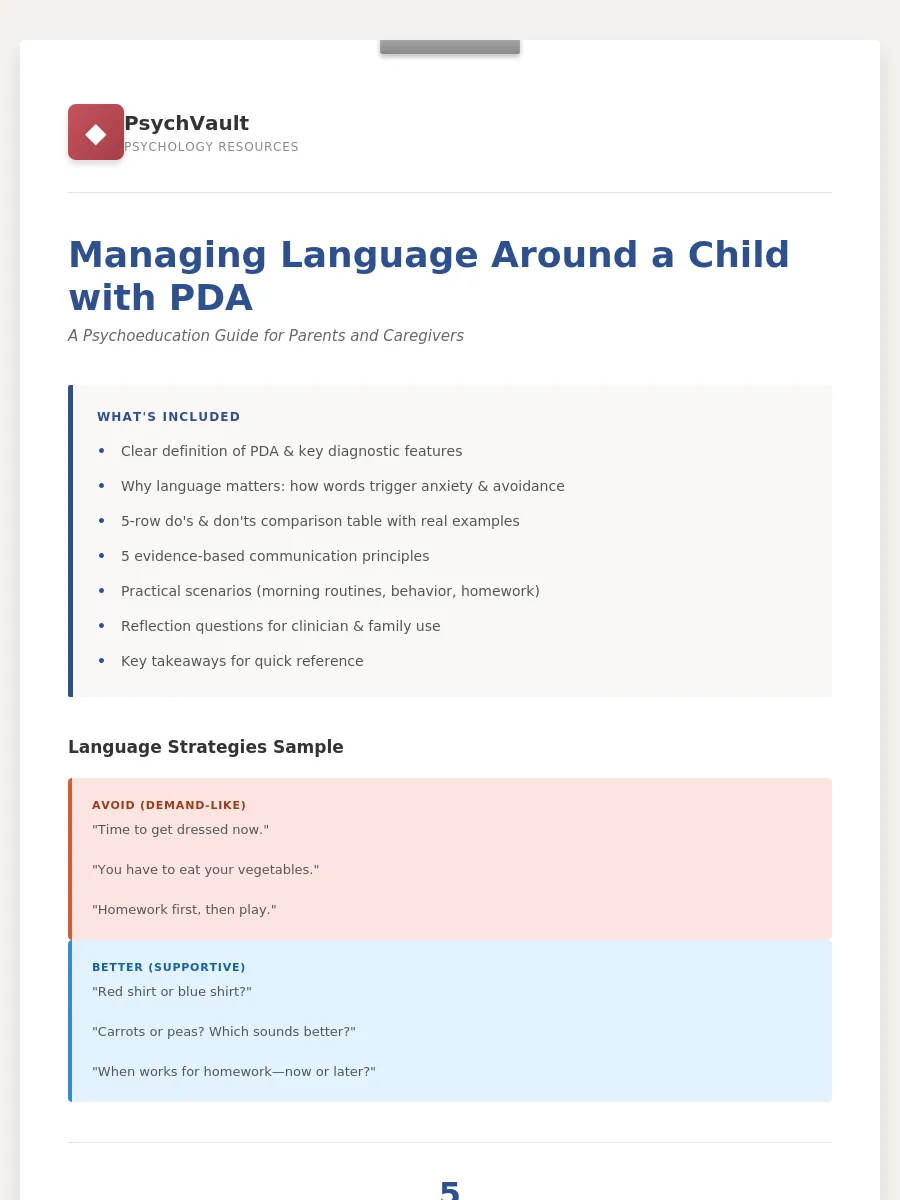
PDA - Psychoeducation Handout: Understanding Pathological Demand Avoidance preview gallery
1 / 5
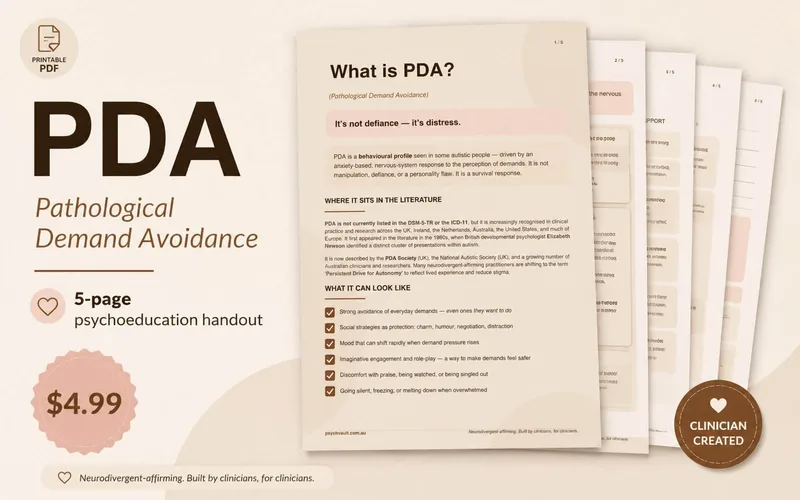
A neurodivergent-affirming psychoeducation handout explaining PDA, how it presents across ages and cognitive profiles, common myths, and low-demand support strategies.
This 5-page psychoeducation handout provides a clear, compassionate introduction to PDA — commonly known as Pathological Demand Avoidance, and increasingly reframed by some as Persistent Drive for Autonomy. Designed for clinicians, educators, families, and neurodivergent adults, it explains PDA as an anxiety-based nervous-system response rather than defiance, manipulation, or “bad behaviour.”
The resource covers what PDA can look like in daily life, how it may co-occur with autism, ADHD, intellectual disability, giftedness, learning differences, and sensory processing differences, and why support needs to focus on autonomy, connection, co-regulation, and reduced demand load. It also includes practical language shifts, common myths and truths, further reading, and a dedicated section on PDA in adulthood.
A practical, neurodivergent-affirming PDA psychoeducation handout for $4.99. Ideal for therapy rooms, parent consultations, educator discussions, adult self-understanding, and introductory clinical conversations about demand avoidance, autonomy, masking, burnout, and nervous-system threat responses.

A quick snapshot of what buyers receive and how this resource is packaged.
Explore more resources for the same client group, theme, or workflow.
No reviews yet.
Loading similar resources from this creator and category.
Related resourcesSimilar resources from this creator or the same category.

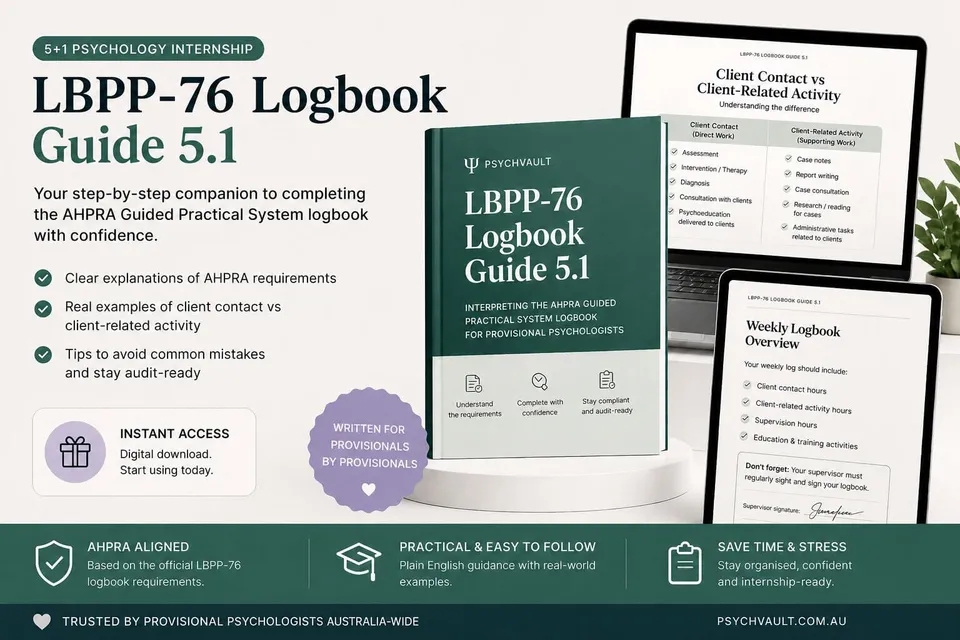
A clear, practical guide to mastering your LBPP-76 logbook with confidence, structure, and supervisor-ready entries.
MindFrame
★ 0.0 · 0 reviews
Secure Stripe checkout available

evidence-based psychoeducation worksheet teaches parents the language strategies that reduce anxiety and avoidance while building autonomy. Includes do's and don'ts, practical examples, and reflection questions. Printabl
MindFrame
★ 4.0 · 1 reviews
Secure Stripe checkout available

A colourful, print-ready weekly chart to help children identify and track their emotions each day.
MindFrame
★ 0.0 · 0 reviews

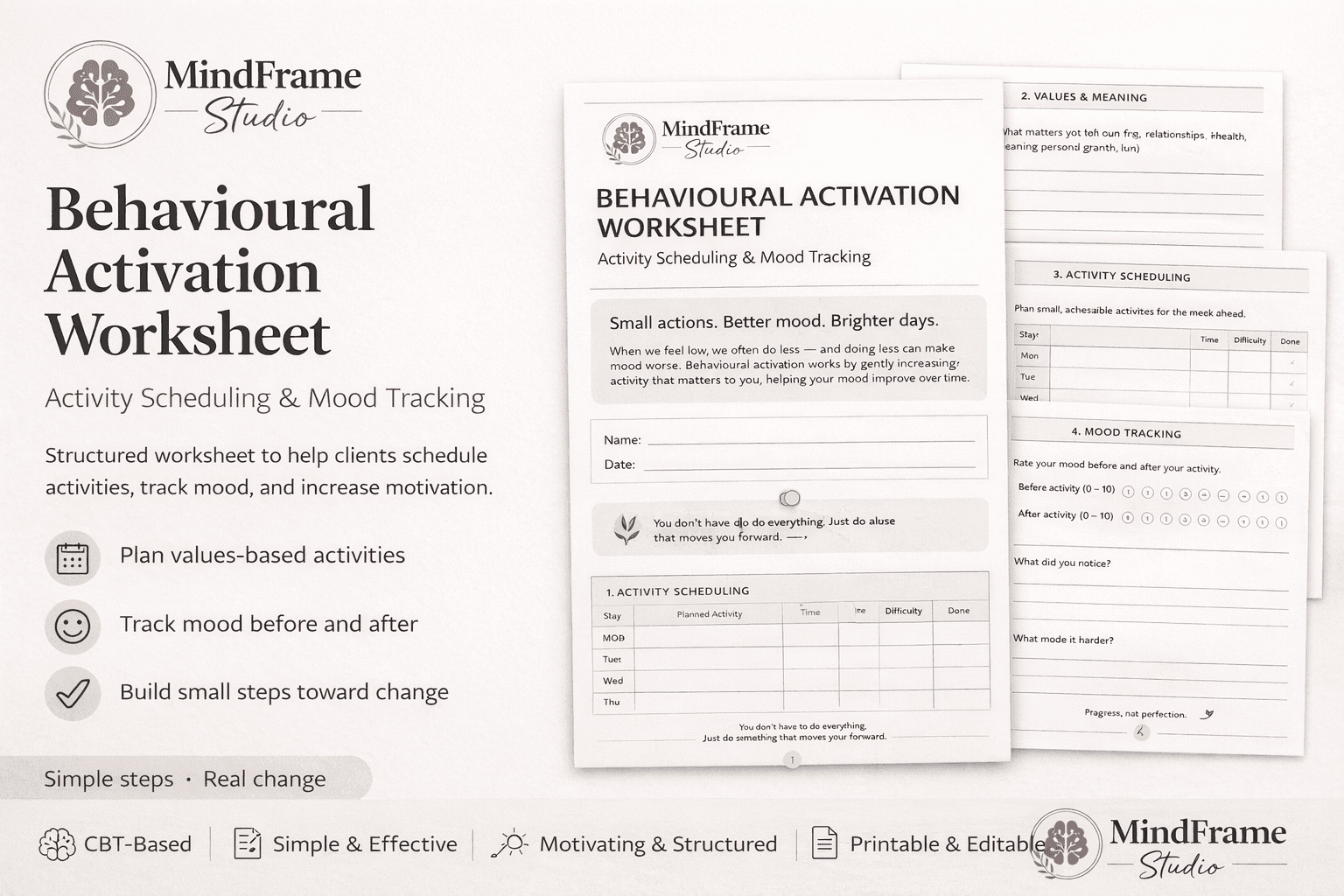
A clear, structured worksheet designed to help clients gently reconnect with meaningful activities and improve mood through evidence-based behavioural activation.
MindFrame
★ 0.0 · 0 reviews
A 46-page printable workbook for Australian psychology honours graduates and repeat applicants preparing for postgraduate psychology interviews, including reflective worksheets, case formulation prompts, weak-to-strong a
MindFrame
★ 0.0 · 0 reviews
Secure Stripe checkout available
A 16-page printable mood tracking worksheet built for neurodivergent brains — ADHD, autism, anxiety, and beyond. Track your emotions 4 times a day across a full week, with structured check-ins for feelings, body sensatio
MindFrame
★ 0.0 · 0 reviews
Secure Stripe checkout available