When Coping Stops Working: Autistic Burnout Recovery Workbook

by MindFrameVerified creatorNew listing2 sales
Share
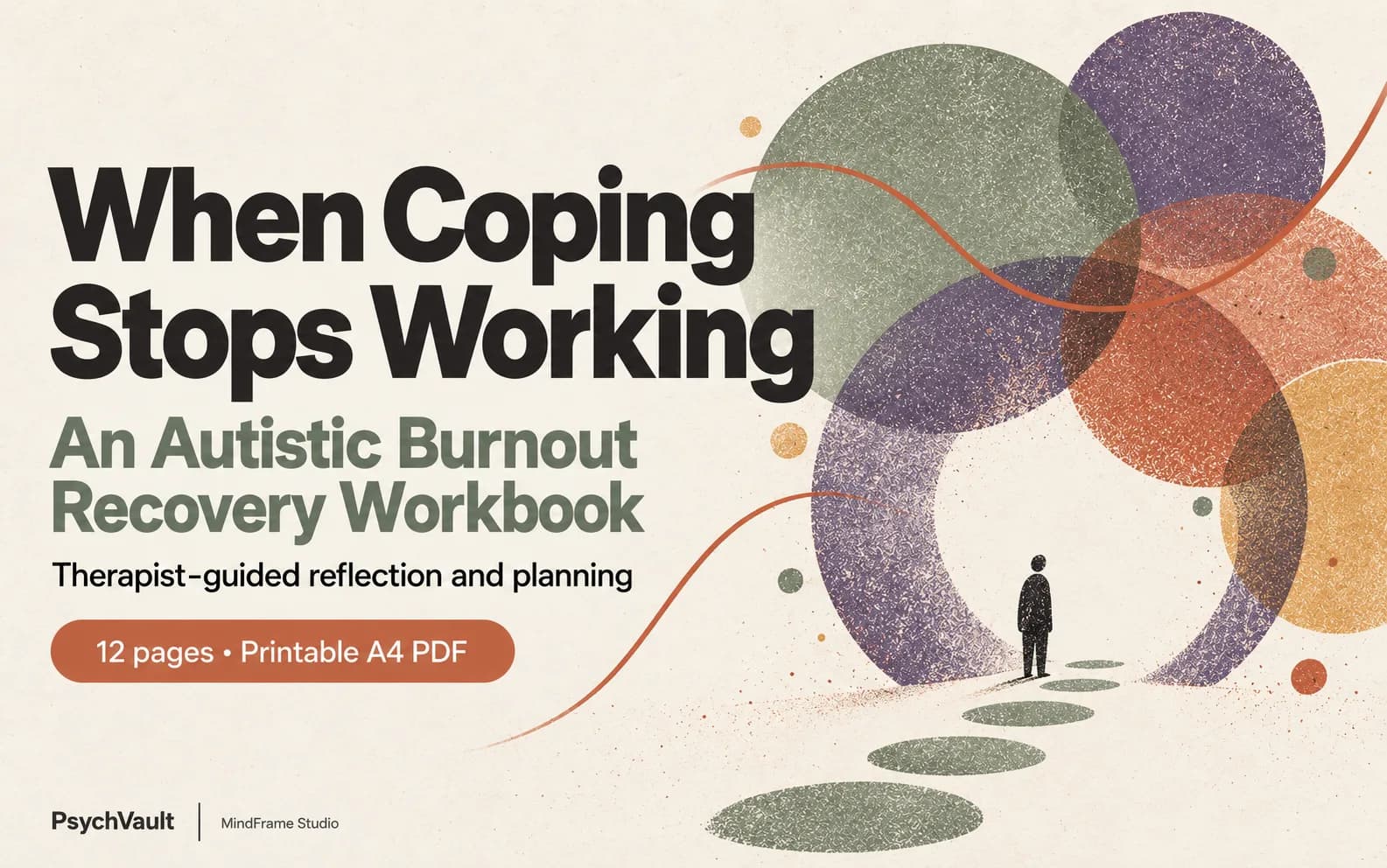
PsychVault thumbnail for When Coping Stops Working, showing a small faceless figure within overlapping textured circles and an open pathway.
View full size

1 / 2

About this resource

A 12-page therapist-guided printable workbook for exploring autistic burnout, cumulative load, reduced capacity, recovery needs and sustainable support.

When coping stops working

Autistic burnout can involve profound exhaustion, reduced functioning and a lower tolerance for sensory, social and everyday demands. It is not simply ordinary tiredness, and recovery may require more than rest alone.

When Coping Stops Working is a 12-page therapist-guided workbook for exploring what has changed, where the cumulative load is coming from and what needs to become more sustainable.

The workbook centres the autistic person’s account. It allows responses to be written, drawn, pointed to, dictated or skipped, depending on available capacity.

What the workbook explores

  • Changes in energy, thinking, communication and everyday functioning
  • Visible demands and the effort other people may not see
  • Masking, compensation and the cost of appearing okay
  • Personal signs that capacity is dropping
  • Expectations that can stop, pause, become smaller or receive support
  • Individual sensory, practical and relational recovery needs
  • Communication when words or decisions require too much energy
  • Specific, consent-based support from other people
  • Gradual re-engagement without recreating the same conditions
  • Clinical reflection, wider assessment and follow-up responsibilities

Included worksheets

  1. 1Start together
  2. 2What has changed?
  3. 3Where is the load coming from?
  4. 4What has been holding me up?
  5. 5How I know capacity is dropping
  6. 6Stop, pause, simplify or ask for help
  7. 7What recovery actually looks like for me
  8. 8When words take too much energy
  9. 9Make support practical
  10. 10Do not rebuild the same unsustainable conditions
  11. 11My capacity and recovery plan
  12. 12Review the wider picture

Designed for therapeutic use

The workbook can be completed with a psychologist, counsellor, occupational therapist or another appropriate support person. Pages can be selected according to the person’s priorities and revisited over time.

Therapist prompts encourage attention to autonomy, consent, delayed fatigue, environmental demands and the difference between appearing functional and recovering sustainably.

What you receive

  • One 12-page printable PDF
  • A4 page size
  • Spacious tables and writing areas
  • Restrained PsychVault colour palette
  • Suitable for colour or black-and-white printing
  • Linked evidence and further reading
  • Australian crisis-support information

Evidence-informed and neurodiversity-affirming

The workbook draws on autistic burnout research, lived-experience studies and clinical guidance. It treats reduced capacity as meaningful information rather than a failure of motivation.

Recovery is not simply becoming able to tolerate the same unsustainable conditions again.

Autistic burnout remains an emerging construct and is not a formal diagnosis. This workbook is a guided reflection and planning resource, not a diagnostic assessment or validated treatment programme. Persistent fatigue or changes in functioning may also require medical or mental health assessment.

What's included

A quick snapshot of what buyers receive and how this resource is packaged.

Download files (1)
Delivered after purchase or free claim
  • when-coping-stops-working-autistic-burnout-recovery-workbook.pdf
Preview gallery
Screenshots buyers can click through before downloading
1 in gallery
File format
Main download type
PDF
Resource type
Primary marketplace category

Good fit for

Explore more resources for the same client group, theme, or workflow.

Recent reviews

No reviews yet.

Checking review access...

Loading similar resources from this creator and category.

Related resources