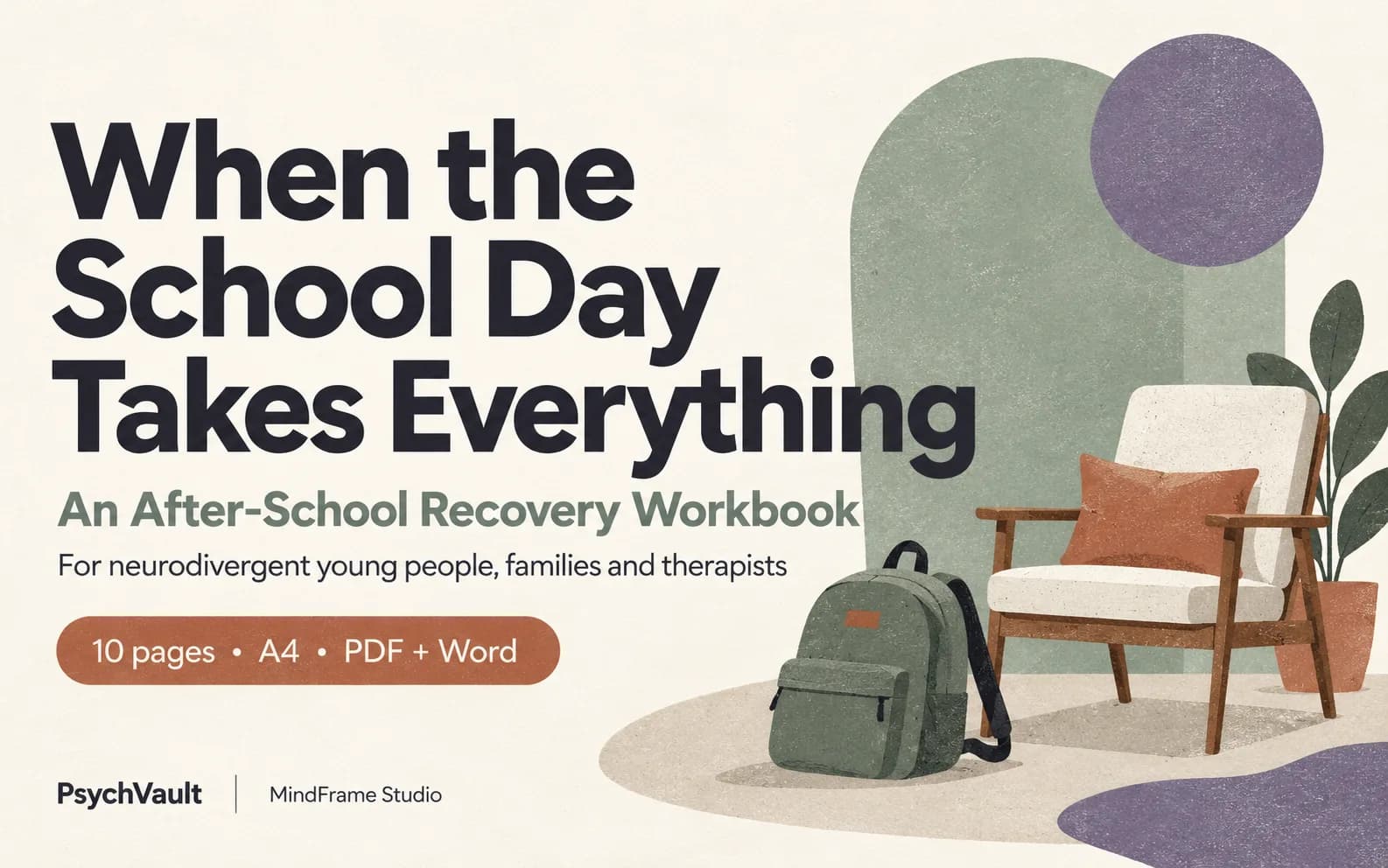
When the school day takes everything
Getting through school can leave little capacity for conversation, homework or the next demand. What looks manageable in the classroom may feel very different by the time a young person gets home.
This 10-page therapist-guided workbook helps neurodivergent young people, families and therapists explore what the school day asks of them, what helps them recover and which conditions need to change.
The young person’s perspective sits at the centre, with room to write, draw, talk or work through prompts together.
What the workbook covers
- Start together: agree on priorities, participation preferences and what can be shared.
- Explore the day: identify demands and changes in energy.
- Notice early signs: recognise support needs, including quieter signs of distress.
- Arrive home: plan a gentler transition and decide what can wait.
- Find useful recovery: explore sensory preferences, movement, familiar interests and connection.
- Communicate when words are difficult: agree on signals and helpful adult responses.
- Adjust evening demands: consider homework, chores and activities in relation to available capacity.
- Plan school support: identify barriers, possible adjustments and who will follow up.
- Review together: try a manageable change and check how it feels.
- Reflect with a therapist: consider the wider picture and whether further support is needed.
Who it is for
Designed for neurodivergent school-aged young people and their families, working alongside a therapist.
The worksheets allow for individual preferences and family circumstances. They can be selected and revisited across sessions, without needing to complete every page in order.
What you receive
Downloadable PDF workbook
One 10-page printable PDF containing:
- A4 worksheets with generous space for responses
- Minimal colour fills and a layout suitable for colour or black-and-white printing
- Therapist prompts and linked sources
The approach
Recovery is treated as a support need. The workbook considers both what helps at home and what needs attention at school, including demands, relationships, access and safety.
It is evidence-informed, drawing on guidance about autistic fatigue, sensory needs, communication and inclusive education. It is a flexible discussion and planning resource, rather than a validated assessment or treatment programme.
Persistent or changing fatigue deserves broader consideration. The final page includes prompts for discussing further health or support needs.