PsychVault
HomeBrowseStoresBlogSell
AboutContactFAQFeedbackCareersTemplatesCategories
PsychVault

Discover and sell psychology resources that save time in real clinical work.

hello@psychvault.com.au
FacebookInstagramTikTokLinkedInYouTube

Browse

All resourcesCreator storesBlogTemplatesFree resourcesBest sellersTop rated

Creators

DashboardUploadStore

Support

ContactFAQFeedbackCareersPrivacy policyTerms of serviceRefund policy

Made in Australia for Australian psychologists and allied health professionals.

Handcrafted resources by practising clinicians for your practice.

© 2026 PsychVault · RSS · Sitemap

AHPRAExternalAPS AlignedExternalAAPI MemberExternal
Free Resources
Home/Blog/What Cyberbullying Looks Like Online in Australia: Exclusion, Emoji Bullying, Ghosting, and Group Chat Abuse
Abstract school social world rendered as chat bubbles, exclusion rings, screenshot shards, and emoji signals, Risograph editorial illustration in teal and charcoal on warm cream, 1
Digital Safetycyberbullying Australiaemoji bullyinggroup chat bullying

What Cyberbullying Looks Like Online in Australia: Exclusion, Emoji Bullying, Ghosting, and Group Chat Abuse

A practical Australian guide to what cyberbullying actually looks like in real life, including exclusion, screenshot abuse, emoji-coded bullying, fake accounts, love bombing, ghosting, and school-facing red flags.

By Ethan Smith17 May 20264 min read809 words
Share

Cyberbullying is often easier to recognise in policy than in practice.

Adults usually look for obvious cruelty: threats, insults, explicit slurs, humiliating posts. Those matter. But much of the online harm children and teenagers experience now is more social, coded, and relational than that.

This article sits inside the wider Online Safety in Australia pillar guide. Its job is to focus on one narrower question: what cyberbullying actually looks like in real school, family, and peer-group life now.

Cyberbullying is often social before it is explicit

Some of the most distressing online harm does not begin with a direct threat.

It begins with:

  • being left out
  • being screenshotted
  • being mocked indirectly
  • being turned into a joke
  • being watched by a group
  • never quite knowing where the humiliation will surface next

This matters because adults can underestimate the harm when the content looks trivial out of context.

Patterns that show up again and again

Exclusion

Exclusion is not always passive. It can be organised, repeated, and highly intentional.

Online, that might mean:

  • not being added to the group chat everyone else uses
  • being removed and re-added as a form of humiliation
  • watching everyone else interact in a parallel group while you are frozen out
  • seeing inside jokes, event plans, or reaction chains built around your absence

For many young people, social life is now coordinated through chat infrastructure. Exclusion from the infrastructure can feel like exclusion from the whole friendship network.

Screenshot abuse

Private chat has become public evidence culture.

A single emotional reaction, awkward confession, argument, or sexual disclosure can be screenshotted and redistributed in seconds. Sometimes the target knows. Sometimes they only discover it after the tone of the group changes around them.

This is one reason children often describe feeling "exposed" rather than just insulted.

Emoji-coded bullying

Adults often miss emoji bullying because the symbols look unserious.

But in the right group context, emojis can mean:

  • mockery
  • sexual insinuation
  • threat
  • dismissal
  • coordinated group alignment against one person

Meaning comes from repetition, timing, and shared group knowledge, not from the emoji in isolation.

Fake accounts and indirect posting

Young people are often harassed through:

  • fake accounts
  • impersonation pages
  • anonymous confession pages
  • vague posts clearly aimed at one person
  • "jokes" that everyone understands but no one names directly

The indirectness is part of the power. It lets the aggressor deny intent while still producing a highly targeted social effect.
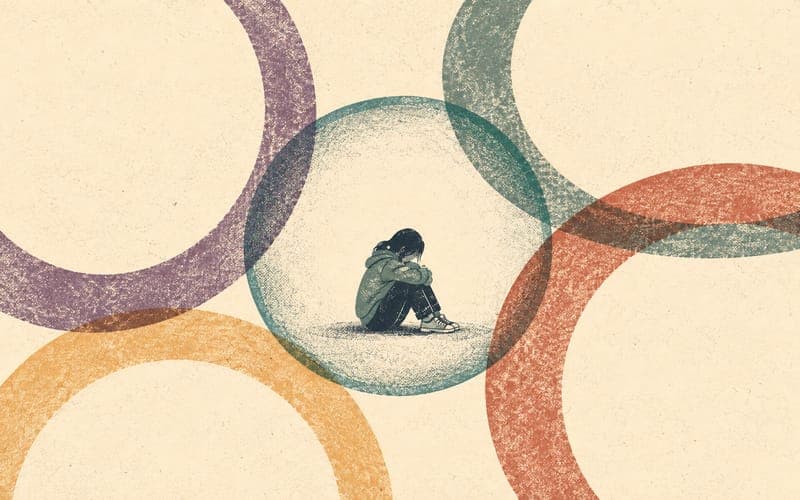
School social network shown as exclusion circles, screenshot fragments, fake profiles, and emoji-coded pressure around one isolated student, Risograph editorial illustration in teal and charcoal on warm cream, 16:10 landscape
Much of cyberbullying works through social structure rather than obvious threats

Love bombing and ghosting can become control tactics

Not every intense friendship or romantic interaction is abuse. But some online dynamics become coercive very quickly.

Love bombing

Love bombing is not just "being really nice". It becomes a risk when intense attention is used to create fast trust, emotional dependency, or a sense of obligation.

That may then be used to pressure someone into:

  • sharing sexual material
  • disclosing private information
  • staying in a relationship they no longer want
  • accepting monitoring or control

Ghosting as punishment

Ghosting is not automatically abusive either. Sometimes people simply withdraw.

But ghosting can become part of a control pattern when it is deliberately used to:

  • create panic
  • destabilise someone
  • punish them for setting a boundary
  • push them into chasing reassurance

This is why online safety conversations need to include relationship dynamics, not just "internet rules".

What it can look like at school

Schools often notice the downstream signs before they see the content itself.

Common practical red flags include:

  • panic after notifications
  • sudden school refusal
  • requests to change classes or seating
  • social collapse after a screenshot incident
  • distress linked to group chats rather than face-to-face conflict
  • a student insisting "it's nothing" while clearly monitoring a device obsessively

The content may have been posted after hours. The impact is still educational, relational, and safety-relevant during the school day.

What helps adults respond better

The worst first move is often interrogation or punishment.

A better first response is:

You are not in trouble. Show me what happened and we will work out what to do next.

Useful next steps:

  1. 1preserve evidence if it is safe
  2. 2work out whether the issue is peer cruelty, coercive control, sexual harm, or a wider group dynamic
  3. 3assess whether there is immediate safety or self-harm risk
  4. 4involve school staff if school relationships are affected
  5. 5report through the correct platform or formal pathway if needed

If the online behaviour has moved into sexual coercion, threats to share images, or fake explicit imagery, the next relevant guide is Sextortion, Deepfakes, and Image-Based Abuse in Australia.

If the issue is more about app ecosystems, age rules, and why non-social-media apps still create risk, read Australia's Under-16 Social Media Rules Explained.

Final takeaway

Cyberbullying is not only about mean messages.

It is often about:

  • exclusion
  • public-private collapse
  • status games
  • shame
  • surveillance
  • relational control

The more adults understand those mechanics, the less likely they are to minimise what a child is actually experiencing.

Read next in this cluster

  • Online Safety in Australia: A Practical Guide to Social Media, Gaming, AI, Sextortion, and Cyberbullying
  • Australia's Under-16 Social Media Rules Explained
  • Sextortion, Deepfakes, and Image-Based Abuse in Australia
  • When to Report Online Harm in Australia: eSafety, Police, ACCCE, ReportCyber, or Scamwatch?

Discussion

Share your thoughts and experiences with this resource.

Sign in to leave a comment

Comments

Next step

Browse real clinician-designed resources

Move from strategy into implementation with templates, handouts, and psychoeducation tools already live on the marketplace.

For creators

Turn your own resources into a polished store

Publish clinician-grade templates, build trust signals, and start growing an evergreen library under your own brand.

Related reading

Keep the topic cluster growing

Young person and clinician facing a glowing chatbot interface surrounded by privacy fragments and care boundaries, Risograph editorial illustration in violet and charcoal on warm c
Digital Safety
17 May 2026 / 3 min read

AI Safety for Young People, Families, and Clinicians in Australia

A practical Australian guide to AI companions, chatbots, privacy, deepfakes, emotional dependence, and the risks of using AI for support, advice, or therapy-adjacent care.

AI safety AustraliaAI companions young peoplechatbot mental health
By Ethan Smith
Read article
Teen silhouette standing between platform icons, age gates, and open pathways, Risograph editorial illustration in dusty blue and charcoal on warm cream, 16:10 landscape
Digital Safety
17 May 2026 / 5 min read

Australia's Under-16 Social Media Rules Explained: What Parents, Schools, and Clinicians Need to Know

A practical Australian guide to the under-16 social media rules, what platforms are age-restricted, what children can still use, where parents get confused, and what schools and clinicians should say about it.

under 16 social media AustraliaeSafety social media rulesparents social media law Australia
By Ethan Smith
Read article
Game controller, coins, crates, season pass ladder, and status skins arranged as a persuasive system, Risograph editorial illustration in amber and charcoal on warm cream, 16:10 la
Digital Safety
17 May 2026 / 4 min read

Gaming Microtransactions, Loot Boxes, and Battle Passes in Australia: What Parents Should Actually Watch For

A practical Australian guide to gaming spending risks, including currency distancing, loot boxes, battle passes, skins, gifting, status pressure, and why modern games can feel more like platforms than toys.

loot boxes Australiabattle passes childrenmicrotransactions gaming
By Ethan Smith
Read article
On this page
Cyberbullying is often social before it is explicitPatterns that show up again and againExclusionScreenshot abuseEmoji-coded bullyingFake accounts and indirect postingLove bombing and ghosting can become control tacticsLove bombingGhosting as punishmentWhat it can look like at schoolWhat helps adults respond betterFinal takeawayRead next in this cluster
Article details
Category: Digital Safety
Published: 17 May 2026
Reading time: 4 min
cyberbullying Australiaemoji bullyinggroup chat bullyingschool online safetyonline exclusion

Found this helpful?

Share