
From October 2026, Improved Daily Living Skills budget allocations will be reduced by 10%. Learn when the reset applies, what is exempt and what to do next.
From 1 October 2026, the Australian Government will begin reducing budget allocations for two groups of NDIS supports:
The changes will be introduced progressively as plans are created, reassessed or renewed. They will not affect every participant on 1 October, and they do not mean that every NDIS budget will be reduced by the same amount.
For people who use Improved Daily Living funding for psychology, assessments or other therapies, however, the change may reduce how much support is available within that category.
This article explains what has been confirmed, what remains unclear and what participants and providers can do without overstating their rights or assuming an outcome.
Information current at 28 September 2026. The NDIA has said that further implementation information will be published. Check the official NDIS and Department of Health, Disability and Ageing websites before relying on this article for an individual plan.
The Department of Health, Disability and Ageing has confirmed that Improved Daily Living Skills budget allocations will be reduced by 10 per cent. Social, Economic and Community Participation allocations will be reduced by 50 per cent.
The changes apply progressively:
The Department describes the rollout as gradual over 12 months. Participants can keep using their current plan and supports until it is reassessed or renewed, and the NDIA says participants will be notified ahead of that.
The official guidance also notes that implementation information may continue to be updated. That is a reason to recheck the official pages after 1 October.
This is a reset to particular support-category allocations. It is not the same as an individual decision that a participant's disability, functional needs or goals have improved.
The government also says the reduction in an allocation will not necessarily equal the reduction in what a participant actually spends. Some participants may not have been using their entire allocation. That explanation does not mean the effect will be minor for everyone. A participant who was using most or all of their Improved Daily Living budget may have less room to continue their existing frequency of support.

Improved Daily Living is a Capacity Building support category. The NDIA describes it as funding for assessments, training and therapies that build living skills, independence and community participation.
Depending on a person's plan and disability-related needs, the category may fund therapeutic supports delivered by psychologists and other allied-health professionals.
Under the current planning arrangements, Capacity Building categories are stated supports. Funding generally cannot simply be moved from another Capacity Building category to cover a shortfall. The support must also be an NDIS support and be consistent with the participant's plan.
This makes a 10 per cent allocation reduction potentially important even when a participant's overall plan contains funding elsewhere.
This point is specific to current plans. Clinicians and participants can also browse the NDIS resources collection for report-writing and planning tools. Participants will begin transitioning to new framework planning from 1 April 2027. The Department says this funding reset will not apply once a participant transitions to a new framework plan, because those plans will use the new assessment and budgeting approach.
Not in every case.
The government has announced a 10 per cent reduction to Improved Daily Living Skills allocations, but the effect on an individual participant will depend on matters including:
The Department has identified six subgroups of supports within the affected categories that will not be reduced:
Other parts of participants' plans are also unaffected. These include essential in-home assistance with activities such as eating, drinking, dressing, toileting, laundry, cleaning and medication, as well as home and vehicle modifications, personal mobility equipment and transport, relevant consumables, and Specialist Disability Accommodation.
The Department's current guidance identifies the supports that are not affected. Participants and providers should recheck the official implementation material as it is updated.

Psychology should not be assumed to be automatically exempt simply because it is a health profession. Whether a particular service is classified as a disability-related health support, Improved Daily Living therapy or another support depends on the purpose and applicable support item. Participants and providers should check the individual plan and current support catalogue rather than relying on the profession delivering the service.
The NDIA says the category-level budget reduction itself is not a reviewable decision.
That statement needs to be read carefully. It does not mean participants have no options in any circumstances, and it does not remove review rights attached to every other NDIA decision.
Participants can still request a plan reassessment or variation when there has been a significant and ongoing change in their circumstances, functional capacity or support needs. Examples identified by the NDIA include changes to:
If a participant experiences fraud or is affected by a crisis or emergency, they can also contact the NDIA to discuss whether a plan variation is needed.
A separate variation pathway is being introduced for eligible high-support-needs participants who require 24-hour disability support. It is intended to maintain sufficient funding for those supports where the level and nature of support required varies across environments or circumstances. Further operational information may still be published.
These pathways are not mechanisms for automatically reversing the general reduction. A request still needs to meet the relevant criteria, and the outcome will depend on the participant's circumstances.
If a participant is uncertain about review rights relating to a separate planning decision, they may wish to seek assistance from an independent disability advocate or a lawyer experienced in NDIS matters.

The reset will not be applied to every plan on 1 October. Check the plan end date and whether a new plan, reassessment or renewal is expected.
Confirm whether current psychology, assessment or therapy services are being paid from Improved Daily Living. A provider, support coordinator or plan manager may be able to help identify the relevant support item, but the NDIA remains the authoritative source for how a plan can be used.
Document:
This will make it easier to understand the practical effect of a new allocation.
If a reduction could interrupt necessary support, record what the service helps the participant do in daily life. Useful information may include changes in communication, emotional regulation, relationships, community participation, decision-making, routines, safety or independence.
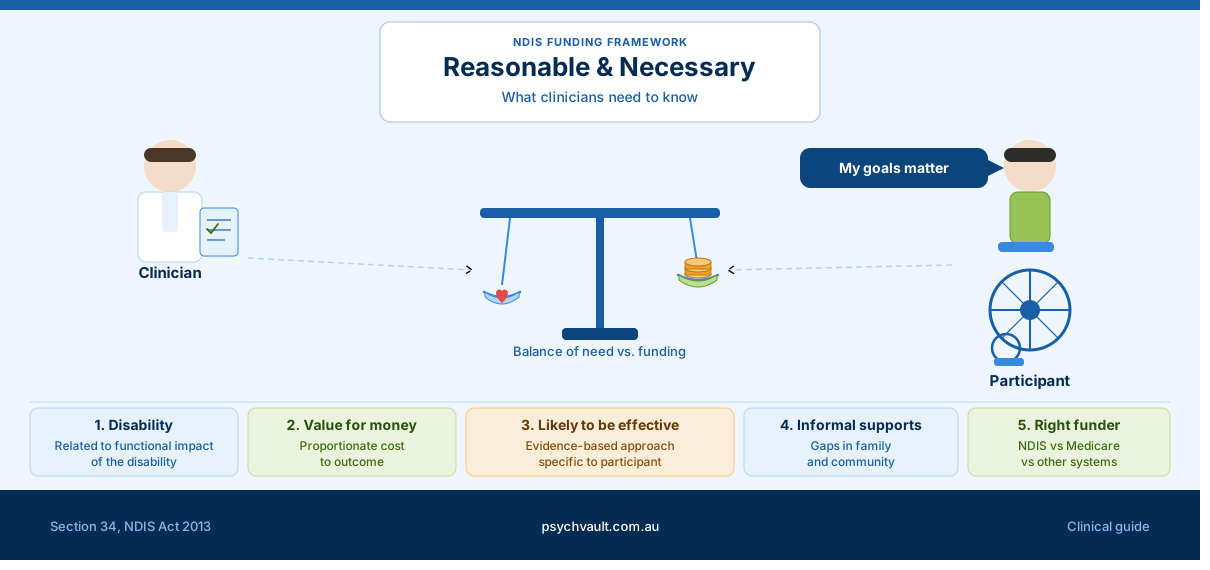
A diagnosis alone does not show the amount or type of support a person needs. The reasonable and necessary NDIS funding guide explains how to connect functional evidence to a support recommendation.
The individual effect may not be known until the participant's plan is renewed or reassessed. Review the actual plan and budget before assuming that a service must stop.
Providers can explain the confirmed dates and percentages, while making clear that they cannot determine the participant's future allocation.
Check how the agreement handles changes in available funding, cancellations, report preparation and transitions in session frequency. Any proposed change should be discussed transparently rather than appearing unexpectedly on an invoice.
If an assessment or progress report will be needed near renewal, discuss timing early. Avoid using limited therapy funding for a lengthy report without the participant understanding the likely cost and purpose.
A useful report should explain:
Providers should not promise that particular wording will secure funding. The role of the clinician is to provide accurate evidence, not to guarantee an administrative outcome. The NDIS report template checklist offers a practical structure for making that evidence easier to follow.
Where funding becomes constrained, discuss options collaboratively. These might include adjusting frequency, prioritising time-limited goals, coordinating with other providers or planning a safe transition. A lower-cost option is not automatically clinically equivalent, and any change should still consider risk, accessibility and the participant's preferences.
A system-level reduction and an individual clinical change are different things.
A participant can receive a smaller allocation while their disability and support needs stay the same. Someone whose circumstances have changed may have grounds for a reassessment or variation, but that process is separate from challenging the general policy.
For psychologists, this means documentation should not be written as though the policy proves that less therapy is clinically required. Reports should continue to describe the person's actual functioning, goals, response to intervention and foreseeable consequences of changing support.
For participants, it means a reduced category does not invalidate the work the support was doing. It may instead require earlier planning, clearer evidence and careful decisions about how a more limited budget is used.
Although the central reduction and dates are confirmed, several practical questions may require further guidance:
The NDIA has indicated that further information will be published. This article should therefore be reviewed when the complete support and implementation material becomes available.
This article provides general information and is not legal, financial or individual NDIS advice. Participants should check their current plan and obtain advice appropriate to their circumstances.
Share your thoughts and experiences with this resource.
Sign in to leave a comment
Move from strategy into implementation with templates, handouts, and psychoeducation tools already live on the marketplace.
Publish clinician-grade templates, build trust signals, and start growing an evergreen library under your own brand.
Understand the NDIS reasonable and necessary criteria and learn how to write psychology reports that justify supports clearly for Australian clinicians.
A practical checklist for writing clearer NDIS psychology reports: stronger functional wording, cleaner recommendations, and less admin for Australian clinicians.
What educational and developmental psychology endorsement covers in Australia, which programs qualify you, where practitioners work, and whether this specialisation fits your goals.