

Why social norms don't stick: PDA and predictive processing
A clinician-facing account of PDA-style resistance through predictive processing, salience network gating, precision weighting, autonomy, and clinical formulation.
Educational information, not individual clinical, legal or regulatory advice. No independent review is identified for this article. Editorial policy and corrections.
A pattern many clinicians recognise is that some clients appear to resist social norms without actually disagreeing with them.
They know the rule. They can often explain the rule. They may even endorse the value behind the rule.
Yet the expectation fails to organise behaviour.
The norm does not appear to be weighed, considered, and rejected. Instead, it never achieves sufficient salience to enter the attentional priority system in the first place.
For psychologists working with PDA-like traits, autism, or AuDHD, that distinction matters. If the pattern is read as defiance, the intervention usually targets motivation, compliance, or values alignment. If it is read as a salience and precision-weighting difference, the clinical target changes completely.
This article offers a neurobiologically grounded account of PDA-style resistance using predictive processing theory, the tri-network model, and current evidence relating to autistic cognitive profiles. PDA is treated here as a clinically described and contested presentation within autism, not a settled neurobiological entity.
This article does not propose that PDA has been established as a distinct salience network disorder. Rather, it explores whether predictive processing and salience network models provide a useful framework for understanding clinically observed patterns of PDA-like resistance.
Jump to a section:
- The pattern clinicians keep seeing
- Predictive processing
- Social norms as externally supplied priors
- The salience network
- Two competing precision pathways
- Clinical illustration
- Implications for assessment and intervention
- A note on the evidence base
- Key takeaways for clinicians
- References
The pattern clinicians keep seeing
A client, often identified with PDA-like traits, autistic, or AuDHD, may understand a norm without the norm becoming behaviourally organising.
The expectation does not land as something to be prioritised. It is not processed, weighed, and rejected. It simply does not enter the attentional priority system with enough weight to guide action.
That is not a small distinction. It changes the formulation.
If the pattern is interpreted as defiance, the clinician may ask, "How do we increase compliance?" If it is interpreted as a salience allocation difference, the better question is, "What conditions allow this signal to become meaningful inside the person's own predictive model?"
This is where predictive processing becomes clinically useful. It gives us a way to describe why externally assigned importance may not become internal importance, and why imposed relevance can sometimes make engagement worse.

Predictive processing
Predictive processing, associated with Karl Friston's free energy principle, describes the brain as a system that continuously generates predictions about incoming sensory and social input, then updates those predictions based on error signals.
When predictions do not match incoming data, a prediction error arises. Learning and attention are driven by these errors, but not all errors are treated equally.
The brain assigns precision weighting to prediction errors. Precision determines how much influence a signal has on perception, learning, and behaviour.
High-precision signals are prioritised. They drive updating. They recruit attention. They change behaviour.
Low-precision signals are down-weighted. They may be noticed, but they do not necessarily alter the person's model of the world. They do not become sticky.
Precision is not fixed. It is shaped by prior experience, perceived reliability of the signal source, context, bodily state, social safety, and autonomy conditions.
In clinical terms, the problem is not always that the client cannot understand the demand. It may be that the demand has not been assigned enough precision to compete with other signals.
Social norms as externally supplied priors
Social norms function as externally supplied priors about what is important:
- "This person matters."
- "You should know this."
- "This is culturally significant."
- "People like us do it this way."
Norms differ from many other forms of learning because they derive much of their influence from socially distributed precision signals rather than direct predictive utility. Their importance is often inferred from social consensus itself.
In other words, the norm becomes important because other people collectively treat it as important.
For those priors to influence behaviour, they must be assigned sufficient precision.
In typical social cognition, consensus itself increases precision. If something is widely treated as important, that social convergence acts as a reliability signal. The fact that "everyone knows this" helps the signal become meaningful.
This is how cultural knowledge becomes sticky. Social agreement scaffolds attention and memory.
In some neurodivergent profiles, external consensus does not automatically translate into internal precision weighting. Social importance does not necessarily become cognitive importance. A famous name, a status hierarchy, or a cultural rule may fail to consolidate, not because it is rejected, but because it never becomes a high-precision signal.
That can look like refusal from the outside. Internally, it may be closer to absence.
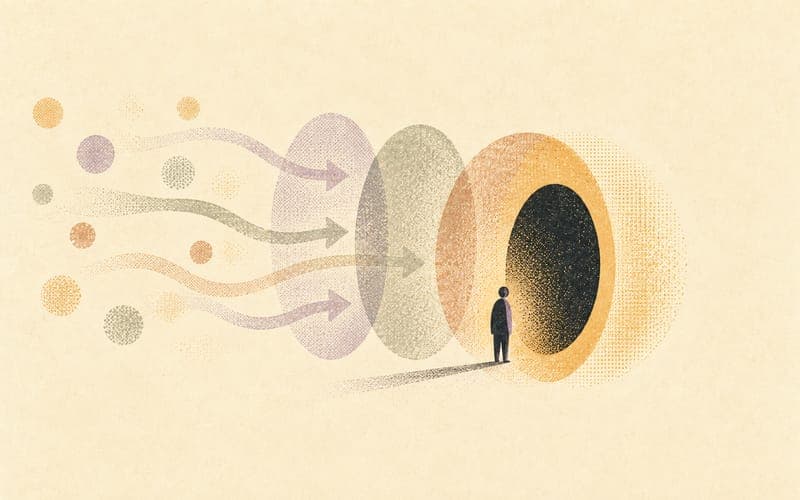
The salience network
Understanding how this plays out neurobiologically requires the salience network, a core large-scale brain network identified in Menon's tri-network model.
The salience network is not just a detector of importance. It regulates access to cognitive resources.
Core nodes
The salience network is anchored by two major cortical regions.
Anterior insula. The anterior insula sits deep within the lateral sulcus. It integrates interoceptive signals with cognitive and affective context. It helps translate bodily state into subjective feeling and contributes to the sense that something matters.
Dorsal anterior cingulate cortex. The dorsal anterior cingulate cortex, or dACC, sits on the medial frontal surface. It is involved in conflict monitoring, effort allocation, and mobilisation of cognitive control. It contributes to deciding whether a signal warrants action or further processing.
These regions operate as a tightly coupled system, supported by subcortical structures including the amygdala, striatum, and thalamus. Those structures contribute to motivational and affective salience detection.
The gating function
The salience network functions as a switch between two other large-scale systems:
- Default Mode Network, or DMN: internally directed thought, narrative construction, self-referential processing, memory, and mind-wandering.
- Central Executive Network, or CEN: externally directed attention, working memory, task control, and goal-directed action.
When the salience network assigns high importance to a stimulus, it helps suppress DMN activity and recruit the CEN. When it does not, cognition may remain internally oriented or disengaged from the external demand.
What is flagged as salient therefore determines more than attention. It shapes the entire cognitive mode that follows.

Two competing precision pathways
Within this architecture, PDA-like presentations can be understood as differences in how precision is assigned across two competing pathways.
Pathway 1: externally assigned salience
In typical social cognition, the pathway often works like this:
- 1A social signal is encountered, such as a name, norm, expectation, or status cue.
- 2Social consensus increases its inferred reliability.
- 3The salience network assigns it sufficient precision.
- 4The CEN is recruited.
- 5The information is encoded as relevant.
This is why names stick. This is why celebrity culture can feel intuitive to many people. This is why social norms propagate. The system is calibrated to treat consensus as a meaningful signal.
Pathway 2: internally generated salience
A second pathway is driven less by social consensus and more by predictive utility:
- 1A structured system is encountered, such as game mechanics, fictional worlds, rule-based environments, or a specialised interest.
- 2The system generates reliable, testable predictions with clear feedback loops.
- 3Prediction error is reduced through exploration and mastery.
- 4High precision is assigned because the system is coherent, controllable, and useful.
- 5Deep encoding and sustained attention follow.
Here, salience is not derived from social agreement. It is derived from predictive usefulness.
The PDA-like pattern
In PDA-like presentations, what clinicians observe is not a simple absence of social interest. It is an asymmetry in how these two pathways are weighted.
Externally assigned salience does not reliably achieve high precision on its own. It has to earn its way in through predictive utility, personal relevance, relational meaning, or autonomy-consistent engagement.
When social importance is explicitly imposed, the signal may fail to increase in precision. In some cases, the imposition itself appears to reduce its effective weighting.
"You should know this."
"Everyone knows this."
"This matters."
Those statements are intended to increase relevance. For some clients, they may do the opposite.
Within a predictive processing frame, this can be understood as context-dependent down-weighting of externally imposed precision, particularly when autonomy is perceived to be constrained.
This is a theoretical extension. PDA as a distinct neurobiological profile is not established in the research literature. The account here should be understood as a computational formulation of a clinically described pattern, not a confirmed mechanism.

Clinical illustration
This pattern has a recognisable phenomenology.
Some individuals describe delayed or absent engagement with culturally dominant salience systems, including celebrity culture, social status hierarchies, public figures, and mainstream entertainment references. This is not usually experienced as active rejection. It is experienced as a lack of inherent salience.
The signal does not automatically register as worth encoding.
At the same time, there may be strong and sustained engagement with structured systems, fictional universes, game mechanics, technical taxonomies, or niche domains where internal logic, feedback, and mastery pathways are clear.
The same dynamic may help explain why some individuals can spend hours mastering a complex game system while struggling to send a two-line email they genuinely want to send. The issue is not effort tolerance, intelligence, or even motivation in the conventional sense. The problem may lie in how salience and precision are being allocated across competing demands.
The distinction is not capacity. It is how precision is assigned to different classes of information.
Importantly, these patterns are not fixed. Socially derived information can become highly salient when it is connected to personally meaningful goals, relationships, interests, or values.
Memory encoding often reflects this. Public figures may not be represented primarily through names or labels, but through functional attributes such as demeanour, role, pattern, values, or behavioural signature. Identity is encoded relationally or functionally rather than nominally.
The name may be the low-utility handle. The person's functional pattern may be what actually consolidates.
The issue is not that social information cannot matter. It is that social importance alone may not be enough.
For a broader clinical frame, this sits alongside the wider PsychVault guide to PDA and demand avoidance, the practical guide to low-demand communication scripts, and the discussion of autistic burnout and demand avoidance.

A simplified version of the model looks like this:
Externally imposed norm-> low precision assignment-> limited salience network recruitment-> reduced encoding and behavioural engagement
Autonomy-supportive, personally meaningful system-> high precision assignment-> salience network recruits executive resources-> deep encoding and sustained engagement
Implications for assessment and intervention
The clinical implications differ sharply from standard behavioural interpretations.
Repetition and social pressure are unlikely to be effective when the underlying issue is precision weighting rather than motivation. Increasing exposure to normative information does not guarantee increased salience. In some cases, it may reduce engagement if the person experiences the repetition as externally imposed demand.
More effective approaches target the conditions under which precision is assigned.
Autonomy and choice
Autonomy appears to modulate whether external signals achieve sufficient precision to guide action. The more a person experiences the demand as imposed, the less likely the signal may be to land.
Choice is not decoration here. It is a salience condition.
Personal relevance
Information becomes more available when it connects to the person's own goals, meanings, relationships, or predictive models. "This matters because everyone says it matters" is a weak lever. "This matters because it helps you predict, choose, protect, connect, or build" is stronger.
Predictive utility
For some clients, the question is not "what is the expected behaviour?" but "what does this information help me do?" A demand that has a clear functional payoff is more likely to be assigned precision.
Low-demand communication
Low-demand approaches reduce the autonomy threat attached to the signal. This can allow the underlying information to be processed without the nervous system first having to defend against the demand form.
Demand avoidance, in this model, is not primarily a behavioural problem to be corrected. It is information about how the individual is allocating precision, salience, and cognitive resources in real time.
Viewed this way, resistance becomes less a question of compliance and more a question of architecture.
The intervention question shifts from "how do we increase compliance?" to "how do we increase the intrinsic precision of this signal within the individual's predictive model?"
That is slower work. It is also more clinically honest.

A note on the evidence base
The salience network and its role in switching between DMN and CEN are well established in cognitive neuroscience.
Predictive processing accounts of autism are an active area of research, including models of attenuated priors, aberrant precision weighting, and atypical updating dynamics. These models are debated, but they are empirically grounded frameworks.
The extension of these models to PDA-like presentations is theoretical. PDA remains a contested construct within autism research, and its neurobiological specificity has not been established.
This formulation is offered as a computationally coherent interpretation of clinical patterns. It should not be treated as a settled explanatory model or as a replacement for careful individual formulation.
Key takeaways for clinicians
- The salience network regulates cognitive prioritisation by gating DMN and CEN switching.
- Social norms rely on externally derived precision signals that may not be uniformly weighted.
- PDA-like demand avoidance can be conceptualised as a context-dependent precision-weighting difference rather than behavioural opposition.
- PDA-style demand avoidance may involve context-dependent down-weighting of externally imposed relevance signals, particularly under conditions where autonomy is perceived to be constrained.
- Effective intervention targets intrinsic salience conditions, not surface-level compliance.
If you are building neurodiversity-affirming resources, PDA support tools, clinical formulation templates, or low-demand psychoeducation handouts, PsychVault is being built as a place to share resources clinicians can actually use. You can browse the resource library, or create a store if you have your own worksheets, group plans, handouts, or templates to share.
Language note: this article uses "PDA-like" and "PDA-style" because PDA is clinically useful for many people but remains contested as a diagnostic construct. The goal is formulation, not labelling for its own sake.
References
Friston, K. (2010). The free-energy principle: a unified brain theory? Nature Reviews Neuroscience, 11(2), 127-138.
Goulden, N., Khusnulina, A., Davis, N. J., Bracewell, R. M., Bokde, A. L., McNulty, J. P., & Mullins, P. G. (2014). The salience network is responsible for switching between the default mode network and the central executive network: replication from DCM. NeuroImage, 99, 180-190.
Lawson, R. P., Rees, G., & Friston, K. J. (2014). An aberrant precision account of autism. Frontiers in Human Neuroscience, 8, 302.
Menon, V. (2011). Large-scale brain networks and psychopathology: a unifying triple network model. Trends in Cognitive Sciences, 15(10), 483-506.
Menon, V., & Uddin, L. Q. (2010). Saliency, switching, attention and control: a network model of insula function. Brain Structure and Function, 214(5-6), 655-667.
Pellicano, E., & Burr, D. (2012). When the world becomes "too real": a Bayesian explanation of autistic perception. Trends in Cognitive Sciences, 16(10), 504-510.
Seeley, W. W., Menon, V., Schatzberg, A. F., Keller, J., Glover, G. H., Kenna, H., ... & Greicius, M. D. (2007). Dissociable intrinsic connectivity networks for salience processing and executive control. Journal of Neuroscience, 27(9), 2349-2356.
Uddin, L. Q. (2015). Salience processing and insular cortical function and dysfunction. Nature Reviews Neuroscience, 16(1), 55-61.
Discussion
Share your thoughts and experiences with this resource.
Sign in to leave a comment
Comments
Neurodiversity-Affirming Practice
Continue with the complete neurodiversity-affirming practice collection.
Browse Autism & Neurodivergent Practice
Find templates, handouts, and clinical tools created for use in real psychology and allied health work.
Continue exploring Neurodiversity-Affirming Practice

A clinical guide to autistic burnout, PDA-profile demand avoidance, masking, shutdown, skill loss, recovery time, and why demand reduction is often treatment.

A clinical differential guide to PDA, oppositional defiant disorder, conduct disorder, anxiety-driven demand avoidance, intent, empathy, and contraindicated behavioural responses.

Practical low-demand communication scripts for clinicians, parents, carers, and schools supporting PDA-profile autistic children, adolescents, and adults.