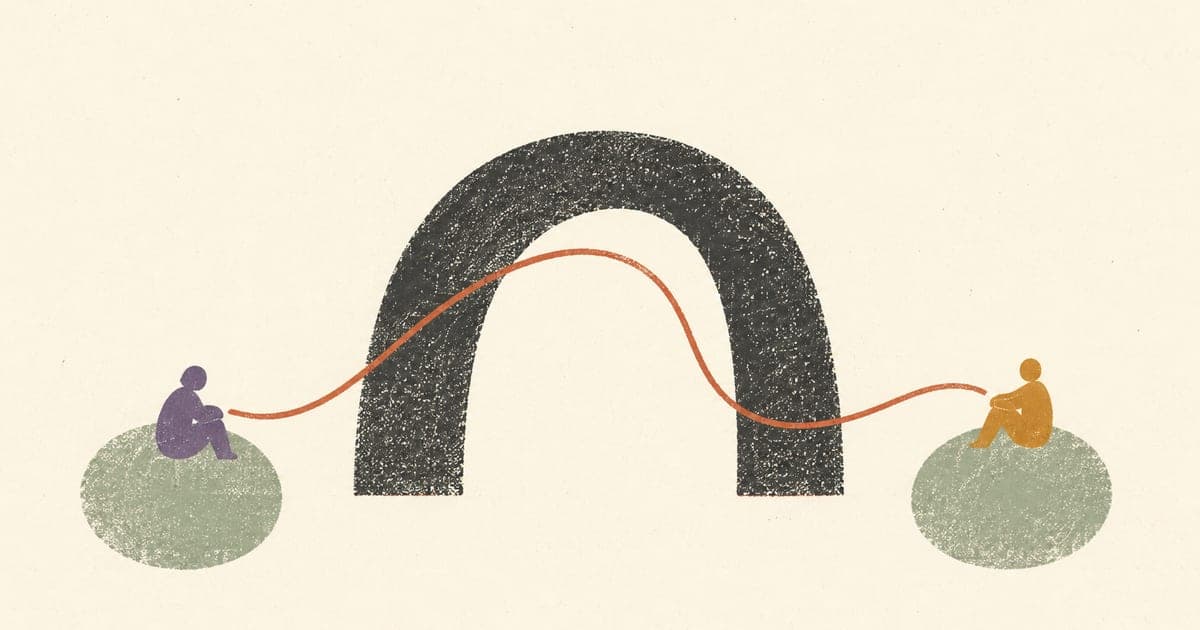
A clinical differential guide to PDA, oppositional defiant disorder, conduct disorder, anxiety-driven demand avoidance, intent, empathy, and contraindicated behavioural responses.
Educational information, not individual clinical, legal or regulatory advice. No independent review is identified for this article. Editorial policy and corrections.
PDA can look oppositional when you only watch the behaviour.
That is the trap.
If the formulation is wrong, the intervention can make the young person look worse. A child whose nervous system is flooded by demand may be placed on behaviour charts, contracts, sanctions, and escalating consequences. The record then fills with evidence of "non-compliance" that the system helped create.
This branch article expands the differential section of the main PDA clinical pillar guide.
Jump to a section:
ODD, conduct disorder, trauma-related behaviour, anxiety, ADHD, autism, and PDA-profile demand avoidance can all involve refusal, escalation, aggression, avoidance, running away, lying, swearing, or property damage.
The same behaviour can have different functions.
That is why the differential matters.
If the behaviour functions to gain power, obtain a reward, intimidate others, or violate rules with limited distress, one set of interventions may be considered.
If the behaviour functions to escape threat, restore autonomy, or regulate overload, a different approach is needed.
Treating the second as the first can cause harm.
From the outside, a PDA-profile young person may:
These behaviours can resemble oppositional or conduct presentations.
But surface resemblance is not mechanism.
A panic attack and deliberate avoidance can both involve leaving a room. That does not make them the same clinical event.
PDA-profile demand avoidance is usually threat-driven.
The demand is experienced as a loss of autonomy. The nervous system mobilises to escape, resist, control, distract, shut down, or regain safety.
ODD is typically described around patterns of angry or irritable mood, argumentative or defiant behaviour, and vindictiveness. Conduct disorder involves more serious patterns of violating rights, rules, or norms, including aggression, destruction, deceitfulness, theft, or serious rule violations.
Those categories may be relevant for some young people. But PDA requires clinicians to ask a different question:
What happens inside the person when demand lands?
If the answer is threat, panic, shame, collapse, or loss of capacity, the formulation should not stop at "oppositional."
Ask:
No single answer proves PDA.
The pattern is what matters.

Behaviour charts can work for some children in some contexts.
For PDA-profile young people, they often add demand.
The chart says:
That is a lot of demand.
Consequences can also escalate threat. Removing privileges, cancelling preferred activities, public accountability, or forcing apologies may increase the young person's sense that adults are controlling their autonomy.
This does not mean there are no boundaries.
It means boundaries need to be held with regulation, not domination.
For practical wording, see low-demand communication scripts for PDA.
One of the most clinically important distinctions is what happens after.
Many PDA-profile young people are distressed by their own behaviour. They may feel shame, fear, guilt, or confusion. They may avoid apology because apology itself is a demand, not because they lack remorse.
Some describe intense empathy. Some are highly attuned to unfairness, distress, or moral inconsistency. Some appear cold during escalation because they are in survival mode.
Do not assess empathy only during threat.
Ask what the young person is like:
The output channel may be different from what adults expect.
This differential should not become a new oversimplification.
Some young people have PDA profiles and trauma histories. Some have autism and ODD-like behaviour. Some have ADHD, learning difficulties, family stress, sensory overload, sleep problems, and school mismatch all operating at once.
The aim is not to replace one simplistic label with another.
The aim is to stop treating all refusal as wilful defiance.
Family stress also needs careful handling. Parents may be exhausted, dysregulated, inconsistent, or frightened. That does not automatically mean they caused the pattern. Many families become dysregulated after years of living inside escalation loops and being given advice that does not work.
For the school side of this loop, read PDA and school refusal.
Helpful wording:
"The presentation includes behaviours that may appear oppositional at the surface level. However, the pattern is more consistent with anxiety-driven demand avoidance associated with perceived loss of autonomy."
"Standard reward/consequence systems have reportedly escalated distress, suggesting that behaviour is not primarily maintained by ordinary motivational contingencies."
"The young person often shows distress and exhaustion following episodes, which supports a regulatory formulation rather than a conduct-based formulation."
"Intervention should prioritise demand reduction, relational safety, sensory regulation, and autonomy-supportive communication."
Less helpful wording:
"The child is manipulative."
"Parents need firmer boundaries."
"The behaviour is attention seeking."
"The student refuses because they do not like being told what to do."
Sometimes behaviour is attention seeking. Sometimes boundaries are part of the work. But in PDA-profile presentations, those phrases often stop the assessment too early.
The differential that matters is not whether the behaviour is inconvenient.
It is whether the behaviour is communicating threat.
This is a formulation guide, not a way to diagnose PDA or rule out ODD, conduct disorder, trauma, ADHD, learning difficulty or safeguarding concerns from a distance. A useful next step is to write down the prediction each formulation makes. If lowering pressure, increasing predictability and changing the environment reduce escalation, that is relevant data. It is not proof of one diagnosis.
For a fuller multi-source assessment structure, use the PDA assessment and formulation template. For practical changes once threat has been identified, see low-demand communication scripts.
Share your thoughts and experiences with this resource.
Sign in to leave a comment
Continue with the complete neurodiversity-affirming practice collection.
Find templates, handouts, and clinical tools created for use in real psychology and allied health work.
A clinician-facing account of PDA-style resistance through predictive processing, salience network gating, precision weighting, autonomy, and clinical formulation.
A clinical guide to autistic burnout, PDA-profile demand avoidance, masking, shutdown, skill loss, recovery time, and why demand reduction is often treatment.
Practical low-demand communication scripts for clinicians, parents, carers, and schools supporting PDA-profile autistic children, adolescents, and adults.