

Clinical mistakes are not all equivalent. Learn how alliance rupture research can guide proportionate accountability, repair, supervision and safer psychology practice.
Psychologists work in a profession where mistakes can feel unusually personal.
Forget an appointment, misunderstand something a client says, phrase something poorly or send the wrong form. The internal response can be immediate:
I should have known better.
For provisional psychologists and early-career clinicians in particular, an isolated error can quickly become evidence in an internal case against their competence.
Clinical responsibility should not be minimised. Clients share vulnerable information, therapists hold professional power, and apparently small interactions can carry substantial emotional weight. However, competent practice does not mean never making a mistake.
A more useful question is what happens next.
A clinician can be conscientious and still forget to update a calendar. They can communicate well and still phrase something poorly. They can know a client well and still misunderstand them.
There is an important difference between:
Those distinctions matter because each problem requires a different response.
Treating every error as proof of professional incompetence can make reflection less precise. Attention shifts away from what happened and what needs addressing towards what does this say about me?
Conversely, describing every error as a harmless reminder that therapists are human can minimise its effect on the client. Proportionate accountability sits between those positions.

The distinction also matters when assessing broader professional risk. The Four Horsemen of Unsafe Psychological Practice examines the repeated patterns that can move beyond ordinary error into unsafe practice.
Psychotherapy research uses the term alliance rupture to describe a deterioration or strain in collaboration between therapist and client. This may involve disagreement about the goals of therapy, difficulty collaborating on therapeutic tasks or strain in the emotional bond.
Not every mistake creates a rupture.
A forgotten appointment might be a minor inconvenience for one client and feel like rejection to another. A therapist might experience a session as ordinary while the client leaves feeling dismissed or misunderstood. Ruptures can also occur without the therapist having done anything clearly wrong.
The clinically relevant question is whether something has shifted in the relationship.
There is emerging evidence that this matters. A 2026 multilevel meta-analysis by Babl and colleagues found that directly measured alliance ruptures were associated with poorer psychotherapy outcomes, with an overall correlation of r = −.21.
That estimate needs context. The meta-analysis contained only four publications, 18 effect sizes and 301 clients. The included studies also varied in how ruptures and outcomes were measured. The authors called for larger, more methodologically consistent research.
The finding therefore points in a clinically plausible direction, but it should not be treated as a precise or settled estimate of how strongly ruptures affect therapy.
The occurrence of a rupture does not determine what happens next.
Eubanks, Muran and Safran’s 2018 meta-analysis examined 11 studies involving 1,314 clients. Rupture resolution was moderately associated with more positive treatment outcomes, r = .29, 95% CI [.10, .47], p = .003.
This does not show that ruptures are beneficial or that creating relational strain improves therapy. The included studies were observational, and an association between resolution and outcome does not prove that repair alone caused improvement.
The more defensible conclusion is narrower: when ruptures occur, recognising and addressing them appears clinically important.
A 2026 scoping review by López-Vásquez and colleagues examined 25 conceptual and empirical publications about repairing alliance ruptures in adult psychotherapy. Across the empirical literature, recommendations broadly converged around three processes:
The review also highlighted cultural, contextual and trauma-related influences. Repair is not a universal script. It needs to respond to the particular client, relationship and circumstances.
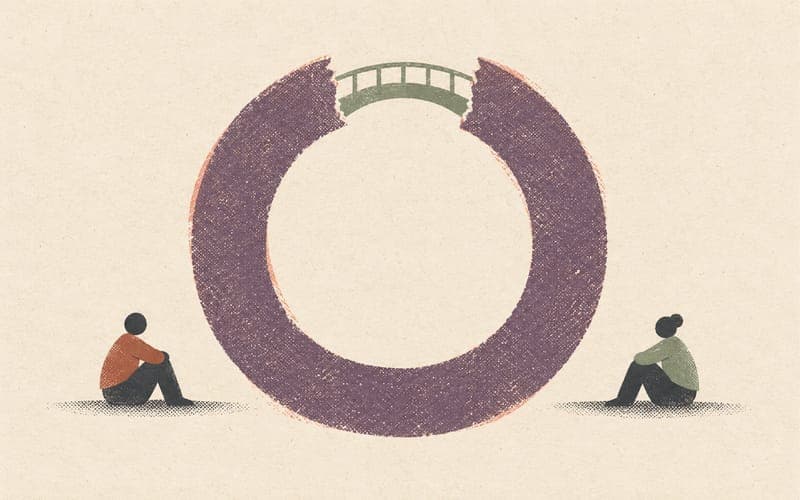
Repair does not necessarily require an elaborate intervention.
Sometimes it might begin with:
“I realised I made a mistake with your appointment. I’m sorry.”
Then leaving room for the client’s actual response.
Not:
“It’s fine, right?”
Not immediately explaining why it happened. Not apologising so extensively that the client ends up reassuring the therapist.
The purpose is not to perform remorse correctly. It is to acknowledge what happened, understand its effect and respond to what the client needs.
A simple repair process might involve:
The scale of the response should match the scale of the issue.
Forgetting one appointment is different from repeatedly missing sessions. A poorly worded comment is different from repeatedly dismissing a client’s concerns. Accountability does not require catastrophising the first. Self-compassion does not excuse the second.
Mistakes often trigger shame precisely because clinicians care about practising well. However, shame can also change what the clinician attends to.
The question becomes:
What does this say about me?
rather than:
What was this like for the client, and is there anything that needs repairing?
These questions lead in different directions.
Reflective practice requires examining our contribution to what occurred. It does not require turning every error into a judgement about our entire professional identity.
When the focus becomes proving that we are either a “good therapist” or a “bad therapist”, reflection loses specificity. The clinician may become defensive, over-apologise, seek reassurance or avoid returning to the issue. None of those responses necessarily clarify the client’s experience.
Accountability without collapse allows the clinician to remain engaged with the actual problem.
When a therapist acknowledges an error without becoming defensive, the client may experience a relationship in which:
For a client accustomed to conflict being followed by denial, withdrawal or punishment, this interaction may differ from previous relational experiences.
That does not make the original mistake desirable. Any value lies in the repair, not the error itself.
Rupture repair is a relational process. Some mistakes also require a clinical, organisational, privacy or regulatory response.
Before treating an event as an ordinary repair issue, consider:
When healthcare causes harm, open and honest communication may form part of open disclosure. Privacy incidents may also require containment, risk assessment and notification. The Office of the Australian Information Commissioner recommends a four-step response for health service providers: contain, evaluate, notify where required and review.
An apology can be clinically appropriate while still being only one part of the response.
For documentation errors, the guide to writing psychology progress notes explains the wider record-keeping context. Where automated transcription is involved, AI scribes, consent and privacy require separate consideration.
This distinction is particularly important for provisional psychologists and early-career clinicians.
Supervision needs to identify ethical concerns, skills deficits and patterns of practice that require intervention. It should also help clinicians respond proportionately to isolated mistakes.
Useful supervisory questions include:
These questions produce more useful information than simply asking whether the clinician should have known better.
A mistake should be taken seriously enough to learn from. It does not automatically need to become a conclusion about someone’s fitness to practise.

This is part of the broader distinction between developing competence and pretending certainty. What Good Supervision Actually Feels Like considers how supervision can make uncertainty discussable without losing accountability.
Clinical competence involves knowledge, judgement, ethics, boundaries and technical skill. It also includes the capacity to respond when practice does not unfold as intended.
Can the clinician notice that something has gone wrong? Can they tolerate hearing that it affected someone? Can they distinguish an isolated error from a pattern requiring intervention? Can they repair what is repairable and take additional action when an apology is not enough?
Mistake-free therapy is not a realistic professional standard. The more useful standard is accurate recognition, proportionate accountability, appropriate repair and demonstrable learning.
Babl, A., Gómez Penedo, J. M., Nimphy, C., Keßel, M., Crainic, C., Boendermaker, N., & Eubanks, C. F. (2026). Alliance ruptures and psychotherapy outcomes: A multilevel meta-analysis of their association. Journal of Clinical Psychology, 82(10), 1683–1691.
Eubanks, C. F., Muran, J. C., & Safran, J. D. (2018). Alliance rupture repair: A meta-analysis. Psychotherapy, 55(4), 508–519.
López-Vásquez, A., González-Araneda, N., Vaccarezza, S., Eubanks, C. F., & Errázuriz, P. (2026). Repairing alliance ruptures in psychotherapy with adults: A scoping review. Research in Psychotherapy: Psychopathology, Process and Outcome, 29(1), Article 892.
This article provides general professional information and does not replace supervision, legal advice, organisational incident procedures or advice from a professional indemnity insurer.
Information reviewed: 23 September 2026.
Share your thoughts and experiences with this resource.
Sign in to leave a comment
Move from strategy into implementation with templates, handouts, and psychoeducation tools already live on the marketplace.
Publish clinician-grade templates, build trust signals, and start growing an evergreen library under your own brand.
A practical framework for translating active clients, appointment frequency, indirect work, complexity and buffer into a more honest picture of clinical capacity.
A practical guide to role collapse, multiple relationships, supervision conflicts, workplace power, and safeguards under the Psychology Board's Code of conduct.
A practical guide to what can happen after a mandatory notification to Ahpra, including early assessment, immediate action, investigations, outcomes, statistics, insurance, and the first 48 hours.


