Emotional regulation is a core target for therapy across a wide range of presentations, including anxiety, PTSD, autism, ADHD, and mood disorders. This collection includes window of tolerance worksheets, co-regulation scripts for caregivers, sensory and body-based regulation tools, emotion identification wheels, distress tolerance aids, and grounding exercises — suitable for children, adolescents, and adults in individual and group therapy settings.

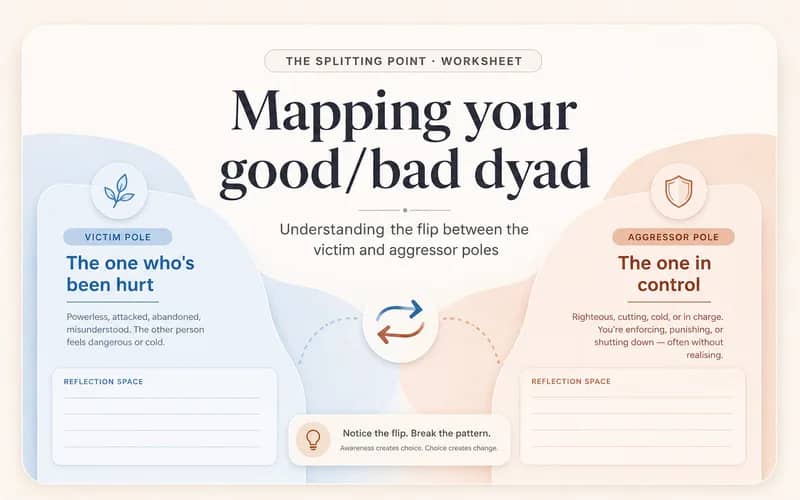
A 3-page fillable PDF worksheet for exploring splitting, role-flipping, emotional regulation, and the victim/aggressor dyad in therapy or supported self-reflection.
The Splitting Point
★ 0.0 · 0 reviews

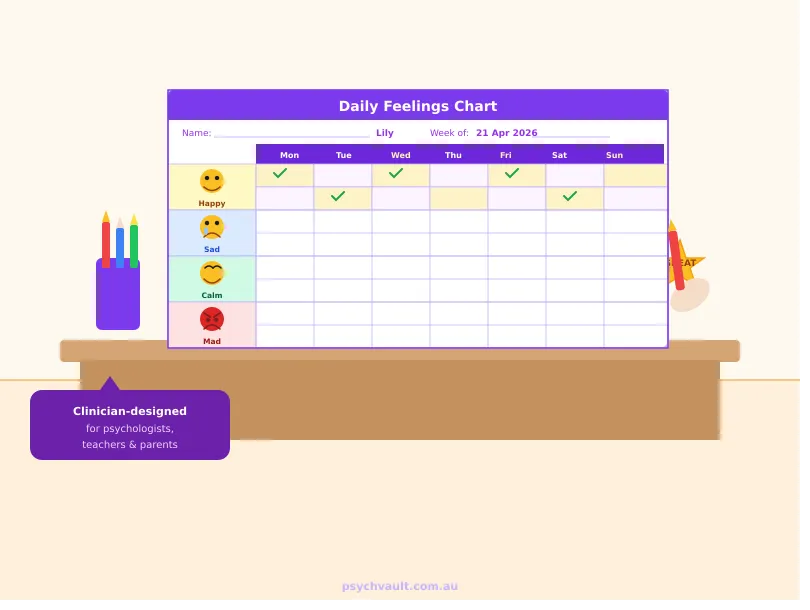
A colourful, print-ready weekly chart to help children identify and track their emotions each day.
MindFrame
★ 0.0 · 0 reviews
A visual, child-friendly self-regulation worksheet that helps kids identify when they’re “too high,” “just right,” or “too low". Choose strategies that work.
MindFrame
★ 0.0 · 0 reviews
Secure Stripe checkout available
Clinically structured NDIS quote letter template to recommend psychological supports, intervention, and funding.
MindFrame
★ 0.0 · 0 reviews
Secure Stripe checkout available

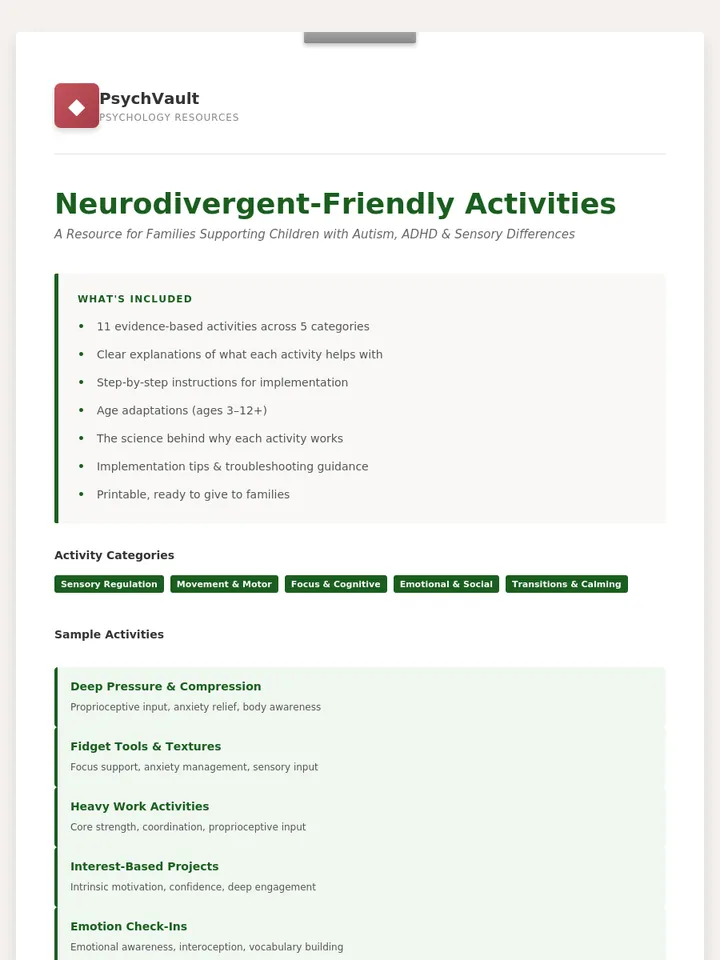
A Resource for Families Supporting Children with Autism, ADHD & Sensory Differences
MindFrame
★ 0.0 · 0 reviews
Secure Stripe checkout available
The collection includes tools for children (school-age), adolescents, and adults. Filter by age group or read individual resource descriptions for suitability guidance.
Yes. Many of the emotional regulation tools are designed with neurodivergent clients in mind, using clear visual formats, low-jargon language, and strengths-based framing. Look for resources tagged with 'neurodivergent-affirming'.