
1 / 5
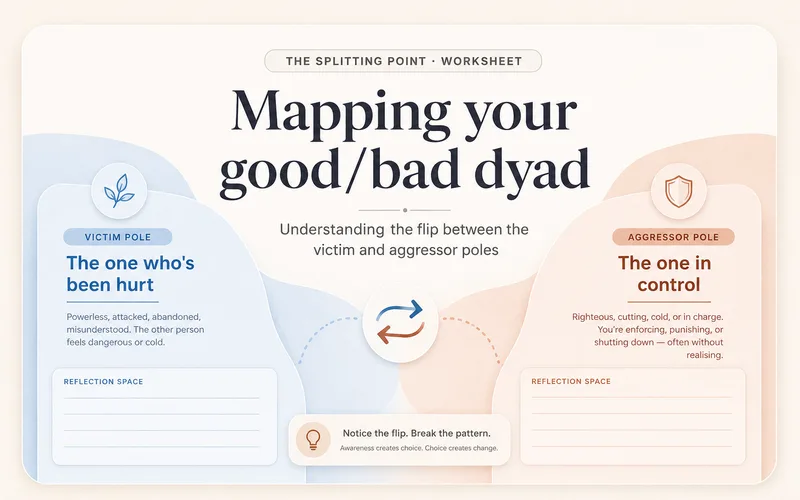
A 3-page fillable PDF worksheet for exploring splitting, role-flipping, emotional regulation, and the victim/aggressor dyad in therapy or supported self-reflection.
Mapping Your Good/Bad Dyad is a 3-page fillable PDF worksheet designed to help clients explore the rapid flip that can happen during splitting: moving between feeling wronged, hurt, abandoned, or misunderstood, and then shifting into control, anger, shutdown, criticism, or emotional distance.
The worksheet gently maps the victim pole and aggressor pole, helping clients notice what each side feels like, what tends to trigger the switch, and what softer emotions may sit underneath the protective reaction.
It includes:
a visual map of the two polescommon triggers for role-flipping5 guided reflection prompts with fillable answer fieldsintegration steps for holding both truths at oncea compassionate grounding statement for supported self-reflection
This resource may be useful for psychologists, provisional psychologists, clinical psychologists, occupational therapists, behaviour support practitioners, and other allied health professionals working with emotional regulation, attachment patterns, trauma responses, interpersonal conflict, relationships, neurodivergence, and black-and-white thinking.
Informed by Transference-Focused Psychotherapy and Dialectical Behaviour Therapy principles. Designed for use in therapy, psychoeducation, or supported self-reflection. Not a substitute for professional mental health support.
A quick snapshot of what buyers receive and how this resource is packaged.
Explore more resources for the same client group, theme, or workflow.
No reviews yet.
Loading similar resources from this creator and category.
Related resourcesSimilar resources from this creator or the same category.
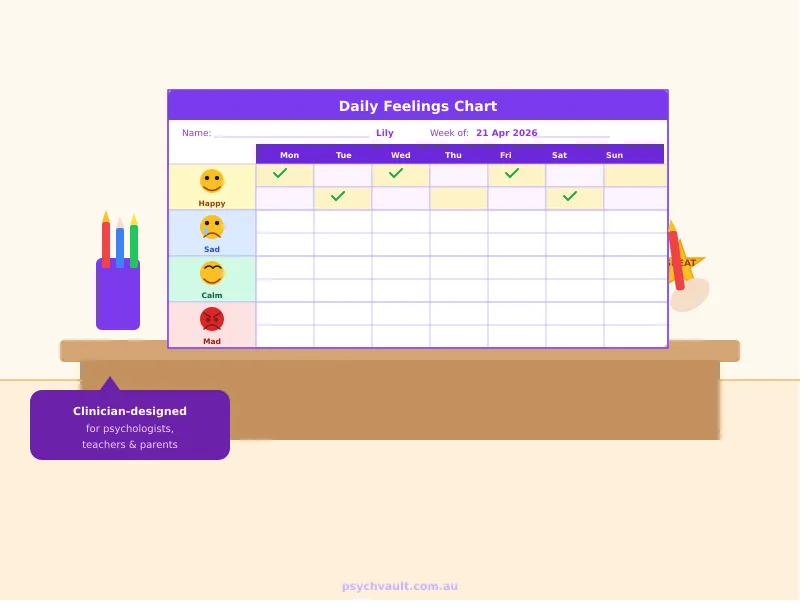
A colourful, print-ready weekly chart to help children identify and track their emotions each day.
MindFrame
No reviews yet

A visual, child-friendly self-regulation worksheet that helps children identify when their engine feels “too high,” “just right,” or “too low” and choose supportive strategies.
MindFrame
No reviews yet
Secure Stripe checkout available
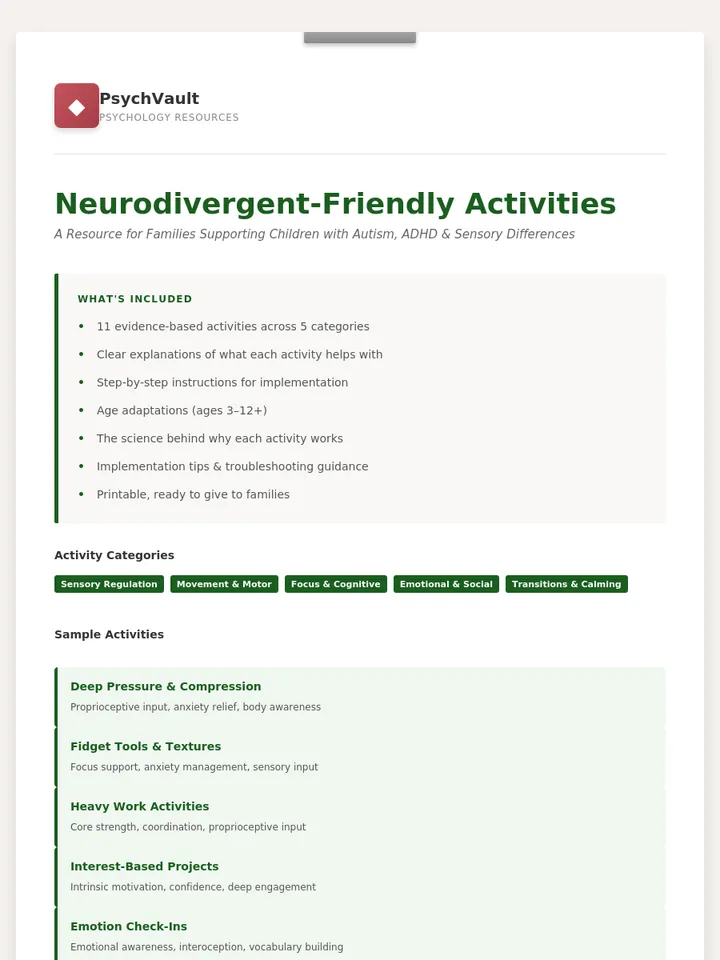
A Resource for Families Supporting Children with Autism, ADHD & Sensory Differences
MindFrame
No reviews yet
Secure Stripe checkout available

Clinically structured NDIS quote letter template to recommend psychological supports, intervention, and funding.
MindFrame
No reviews yet
Secure Stripe checkout available