Twice-exceptional people can have substantial strengths and genuine disabilities at the same time. Learn why 2e profiles are missed and what thoughtful assessment and support involve.
A person can grasp complex ideas quickly and still struggle to organise everyday tasks. They may reason at an advanced level while finding reading, writing, attention or processing unusually effortful. They might excel in one setting and become significantly disabled by the demands of another.
These experiences are not contradictions. They can be part of being twice-exceptional.
This guide explains what twice-exceptionality means, how strengths and disabilities can obscure one another, why identification is difficult, what useful support can look like and where the research remains limited.
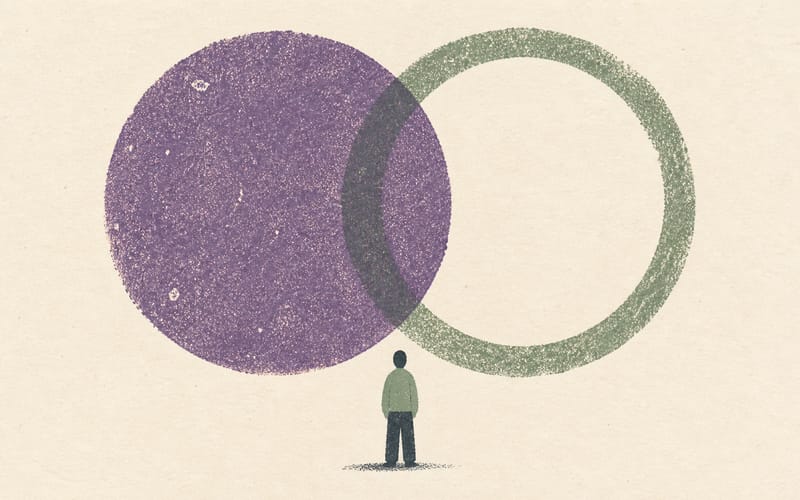
Twice-exceptional, usually shortened to 2e, describes a person who has high ability or the potential for high achievement in one or more areas and also has a disability or neurodevelopmental difference.
One influential operational definition describes twice-exceptional learners as demonstrating the potential for high achievement or creative productivity in one or more domains while also meeting criteria for one or more disabilities. Reis, Baum and Burke, 2014.
Examples may include giftedness or high ability alongside:
The boundaries are not uniform. Definitions of giftedness differ across researchers, education systems and services, and some definitions of 2e are tied to particular disability or school-eligibility frameworks. The term should therefore be used with enough precision to explain what has actually been identified in a particular person.
The word twice refers to the coexistence of high ability and disability. It does not mean that a person is highly capable in every area. Nor does having autism, ADHD or a learning disorder automatically make someone 2e. Evidence of high ability or potential is also part of the concept.
Twice-exceptionality is mainly a descriptive concept in education and psychology. It is not a standalone diagnosis in the DSM or ICD. A person may have one or more formally diagnosed conditions, while high ability is considered separately through reasoning, achievement, creativity, expertise, learning rate or demonstrated performance.
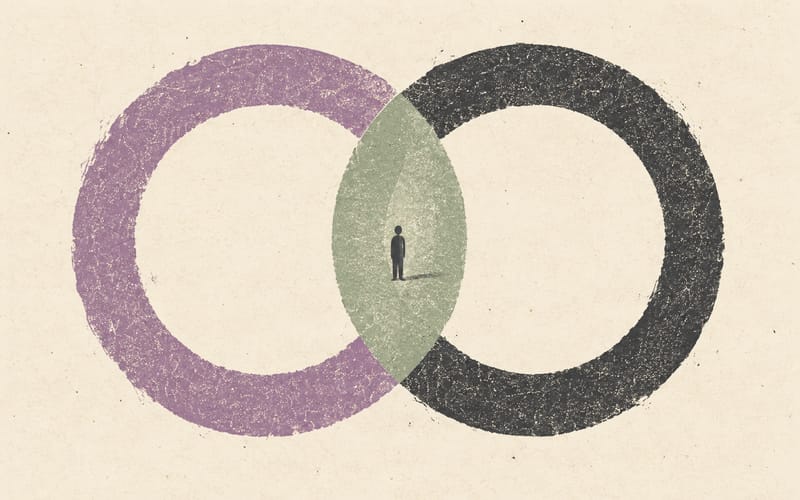
The central idea is simple: strengths do not erase disabilities, and disabilities do not erase strengths.
A twice-exceptional person might:
Research does not support a single, uniform 2e profile. A 2025 systematic review found considerable heterogeneity across cognitive, academic, metacognitive, emotional, social and physical domains. It identified recurring patterns, but not one cohesive profile that could function as a diagnostic template. Rizzo, Pinnelli and Minnaert, 2025.
People sometimes call this a spiky profile: pronounced strengths in some areas alongside marked difficulty in others. The phrase can be useful descriptively, but uneven scores alone do not establish twice-exceptionality. Human abilities naturally vary, and similar-looking score patterns can arise for different reasons.
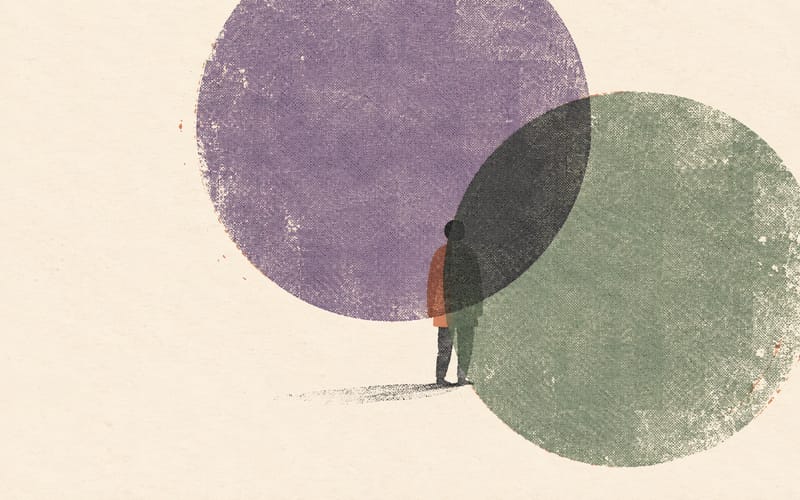
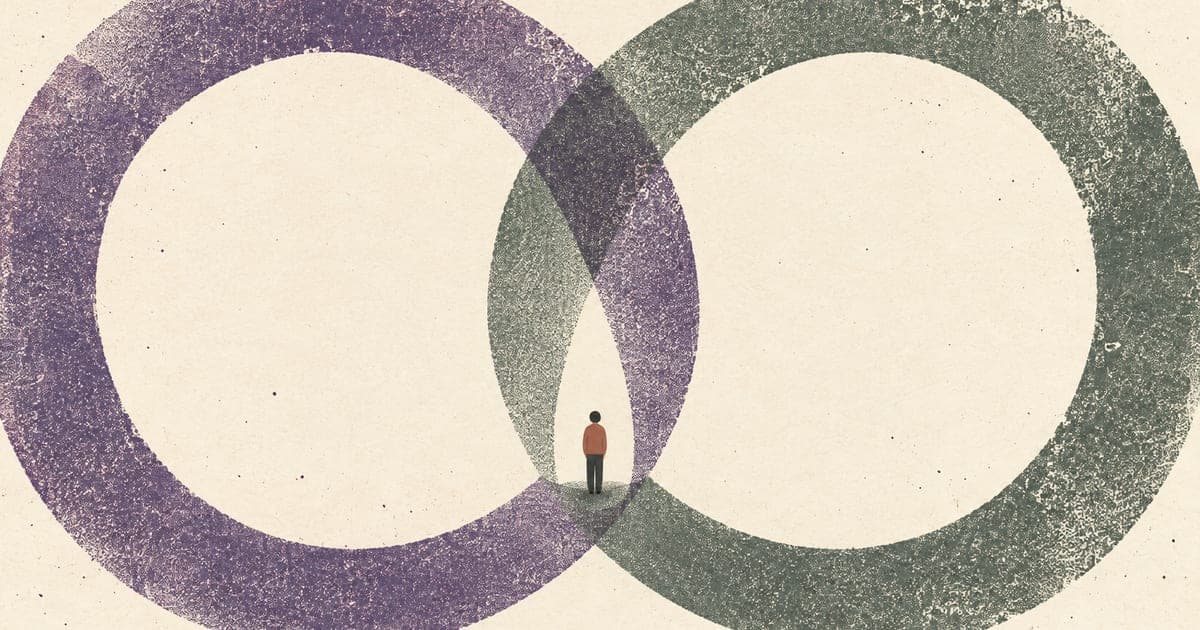
Twice-exceptionality is often missed because the two parts of the profile may partially obscure one another. In this literature, that interaction is sometimes described as cognitive masking or compensation.
This use of masking should not be confused with autistic camouflaging. Autistic masking usually refers to suppressing, changing or concealing autistic characteristics in response to social expectations. Cognitive masking in 2e research refers more broadly to ability lifting observable performance, disability suppressing it, or both processes producing a deceptively ordinary result.
A highly able person may compensate well enough to meet standard expectations. They might rely on reasoning, memory, verbal skill or intense effort to work around a difficulty. Their grades or job performance may look adequate, while the time, exhaustion and distress required to achieve them remain invisible.
This can produce familiar but misleading responses:
"You are doing too well to have a disability."
"If you can do that, you should be able to do this."
"You just need to try harder or be more organised."
The reverse can also happen. Slow reading, inconsistent attention, motor difficulties, anxiety or difficulty producing work may prevent a person from demonstrating what they understand. Observers may focus on missed deadlines, incomplete tasks or lower attainment and never recognise the underlying ability.
When strengths lift performance and disability constrains it, the final result may sit near the average range. An average-looking outcome does not necessarily represent an average experience. It may conceal a substantial gap between what a person can understand and what they can reliably demonstrate under particular conditions.
A meta-analysis of Wechsler assessment studies illustrates the group-level complexity. Compared with gifted peers, 2e learners with learning disabilities had lower average scores in full-scale IQ, working memory and processing speed, while 2e learners with ADHD differed most consistently in processing speed. These results do not provide an individual diagnostic profile, and they should not be used as one. Atmaca and Baloğlu, 2022.
Twice-exceptionality can involve many combinations. Research does not establish one pairing as the definitive 2e profile.
Advanced knowledge, intense interests, pattern recognition or original thinking may coexist with differences in communication, flexibility, sensory processing and executive functioning. An autistic person may be highly articulate and still need substantial support. Conversely, strong language or academic performance should not be used to dismiss sensory, adaptive or social-communication needs.
Fast associative thinking and creative problem-solving may coexist with differences in attention regulation, working memory, inhibition, time awareness or task initiation. Performance can vary sharply with interest, structure, novelty and environment. That variability is not proof of unwillingness.
Strong reasoning or oral language may coexist with persistent difficulty in reading, writing or mathematics. Dyslexia is not evidence of low intelligence. Longitudinal research found that reading and IQ development were less dynamically coupled among people with dyslexia than among typical readers, supporting the distinction between reading development and broader cognitive ability. Ferrer and colleagues, 2010.
High ability may also coexist with developmental coordination disorder, sensory or physical disabilities, communication disorders, chronic illness or mental health conditions. The practical impact depends on the individual, the environment and the support available, not merely the label.

Identification can fail in several ways:
The better question is not simply, "Are they achieving adequately?" It is:
What are they capable of, what is interfering with access to that ability, and what does current performance cost them?
That final part matters. A student obtaining acceptable grades through nightly distress, extensive parental scaffolding or many more hours of work than their peers is not necessarily functioning without impairment. Outcome and effort are different data.
There is no universally accepted 2e test or cut-off. Researchers and practitioners differ in how they define high ability, which disabilities they include and what evidence should establish the interaction between them.
Identification practices for gifted learners with learning disabilities have historically varied widely. Lovett and Sparks found substantial variation in research criteria and questioned the validity of some identification methods. Lovett and Sparks, 2013. This criticism is important because enthusiasm for recognising missed strengths should not lower the standard of evidence used to identify disability.
Modern diagnosis of a specific learning disorder does not depend on a simple IQ-achievement discrepancy. Likewise, a large difference between two cognitive scores is not sufficient by itself to diagnose a learning disorder or establish twice-exceptionality.
A sound evaluation looks for convergence across the referral question, history, standardised assessment, observed behaviour, achievement, functional impact and response to support. The aim is not to locate one dramatic discrepancy. It is to develop the explanation that best accounts for the person's functioning while preserving credible alternatives.
There is no settled population prevalence figure.
Reliable estimates are difficult because studies use different definitions of giftedness, disability and twice-exceptionality. Identification also depends on referral pathways, available measures and thresholds. People whose strengths and difficulties mask one another may never enter the datasets used to estimate prevalence.
An Australian paper examined whether prevalence could be estimated from existing educational data, but emphasised that exact rates remain unknown. Ronksley-Pavia, 2020. It is more accurate to describe twice-exceptionality as under-identified and difficult to quantify than to present one percentage as a national fact.

Difficulty is often interpreted through character rather than context.
A person who produces excellent work sometimes but not consistently may be called lazy. Someone who requests support may be told that a genuinely intelligent person should not need it. Success becomes evidence against disability, while struggle becomes evidence against ability.
A systematic review of gifted students with learning disabilities documented negative emotions, low self-perception, difficult interpersonal experiences and frustration, alongside motivation, perseverance and coping strengths. Some included studies reported that teachers or parents perceived students as lazy. The evidence was limited and heterogeneous, so these themes should not be treated as universal. Beckmann and Minnaert, 2018.
A later systematic review examined self-concept, self-esteem and self-efficacy among twice-exceptional children. It included 18 papers, many using case-study designs, and identified significant methodological limitations. Even so, recognition of both strengths and needs, supportive relationships and appropriate challenge repeatedly appeared relevant to more positive self-perception. Küry and Fischer, 2025.
These findings do not mean every 2e person will experience low self-esteem or emotional difficulty. They do explain why curiosity is more useful than praise, disbelief or shame.
Assessment should be individualised and led by professionals appropriately qualified for the referral question. Depending on that question, it may include:
For adults, the same principle applies. The purpose is to understand patterns of ability, disability and functioning, not merely to obtain a label.
Cognitive testing may reveal meaningful relative strengths and weaknesses. A composite score can sometimes hide important variation, particularly when its component scores differ substantially.
However:
Assessment becomes useful when it explains how the person learns and functions and leads to proportionate recommendations. A long list of scores without a functional account is not the same thing as understanding the person.
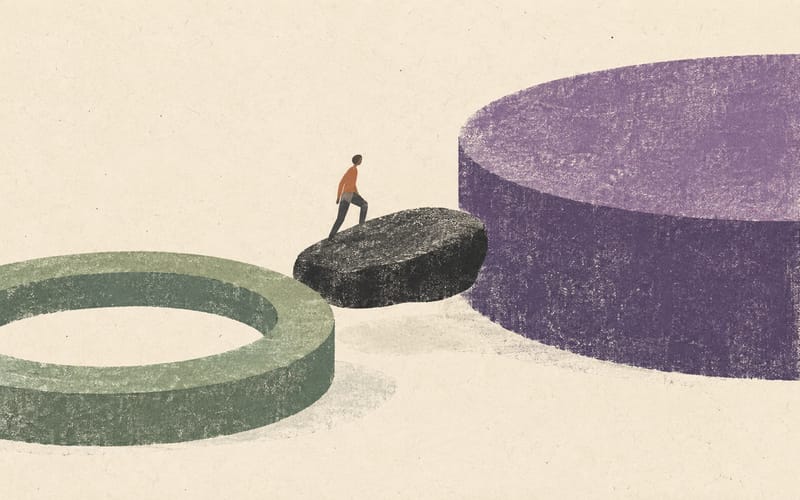
Useful support addresses both sides of the profile. Remediating difficulty while ignoring strengths can leave a person bored or demoralised. Providing advanced opportunities while denying disability can make participation inaccessible.
Depending on the person's goals and context, support may include:
Technology can help, but "just use this tool" is rarely a complete response. A tool must fit the barrier, and using it may require training, setup, energy and permission. Support works best when developed with the person rather than prescribed from a distance.
The 2e label itself does not automatically determine eligibility for educational or workplace adjustments. Eligibility depends on the relevant law, policy, evidence of disability and functional impact in the person's location and setting.
Most 2e research concerns children and education. Its findings should not be transferred automatically to adults, employment or clinical populations.
The adult literature is beginning to grow. An August 2026 qualitative study explored retrospective school experiences among 17 intellectually gifted autistic adults from Australia, Canada and the United States. Participants described barriers including delayed identification, inadequate programming, bullying, executive-function difficulties and sensory demands, as well as facilitators such as self-directed learning, supportive relationships, self-acceptance and community belonging. Townend and colleagues, 2026.
The study offers valuable first-person insight into one form of adult twice-exceptionality. However, it was small, retrospective and specific to intellectually gifted autistic adults. It cannot represent all 2e adults or establish what another individual's experience must be.
Adults may nevertheless recognise similar tensions in higher education, employment and daily life: complex thinking alongside difficulty with administration, exceptional output alongside inconsistent capacity, or professional success alongside a high private cost. Some people recognise the pattern only after increasing demands expose the limits of strategies that had worked earlier.
The article on autistic burnout as a mismatch problem explores what can happen when demands repeatedly exceed available capacity. The concepts overlap for some people, but twice-exceptionality and autistic burnout are not interchangeable.
Clinicians do not need to adopt an uncritical 2e label to take the underlying problem seriously.
When a client's ability and functioning appear inconsistent, avoid treating either side as the correction to the other. High reasoning ability does not invalidate executive, sensory, attentional or learning difficulties. Disability does not tell you the ceiling of a person's insight, learning or creative potential.
Useful clinical habits include:
For neurodivergent clinicians, the same contradiction can appear inside professional training: visible capability may be used to dismiss support needs, while support needs may be misread as evidence against competence. Neurodivergent Clinicians Navigating Psychology considers that professional context in more depth.
No. It is a descriptive concept, not a standalone DSM or ICD diagnosis. A disability may be formally diagnosed, while high ability is identified separately.
Yes. High ability and neurodevelopmental disability can coexist. Neither invalidates the other.
No. It may be relevant evidence, but identification requires a broader account of strengths, disability, achievement, history and functioning.
Strengths may have compensated for difficulty, disability may have obscured strengths, or the interaction may have produced average-looking results. Systems that respond mainly to visible failure can also overlook people who are succeeding at an unsustainable cost.
Not necessarily. Needs and functioning can change across environments and life stages. Appropriate challenge, adjustments, targeted intervention and supportive relationships can all matter, but no single outcome applies to every 2e person.
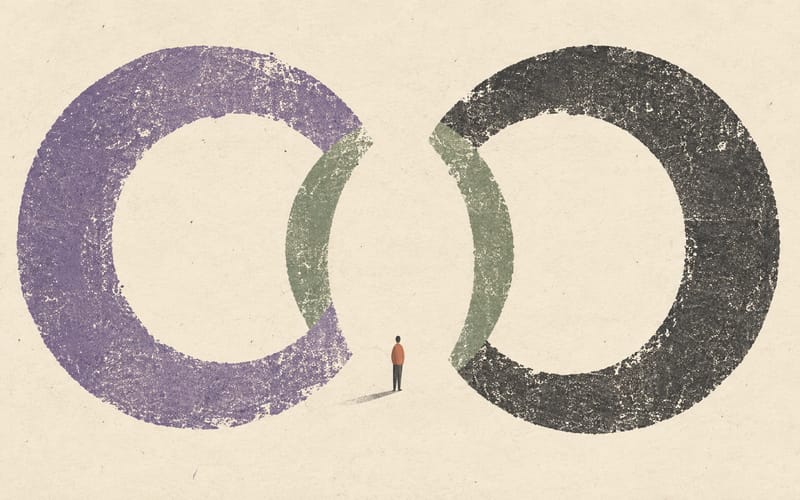
Being twice-exceptional does not mean being uniformly gifted or uniformly impaired.
It can mean understanding an idea deeply while struggling to express it in the expected format. It can mean exceptional performance in one setting and substantial disability in another. Both parts of the profile can be real at the same time.
The most helpful response is neither admiration nor correction. It is curiosity without judgement: believing the strengths, believing the difficulties and taking the time to understand how both can exist within the same person.
Explore the Neurodiversity-Affirming Practice hub for related clinical guides, or browse autism and neurodivergent practice resources created for clinicians and clients.
This article provides general educational information. It does not provide a diagnosis or replace an individual assessment.
Share your thoughts and experiences with this resource.
Sign in to leave a comment
Move from strategy into implementation with templates, handouts, and psychoeducation tools already live on the marketplace.
Publish clinician-grade templates, build trust signals, and start growing an evergreen library under your own brand.
Autistic burnout is often a mismatch problem, not a motivation problem. A practical clinician guide to sensory load, masking costs, demand load, values mismatch, and recovery by reducing load.
A neurodiversity-affirming pillar guide to PDA, demand avoidance, the theoretical pillars behind autistic experience, and what visible behaviour does and does not tell us.
A clinician-focused guide to the gut-brain axis across anxiety, depression, autism, trauma, and autistic burnout, without overclaiming what current evidence can prove.