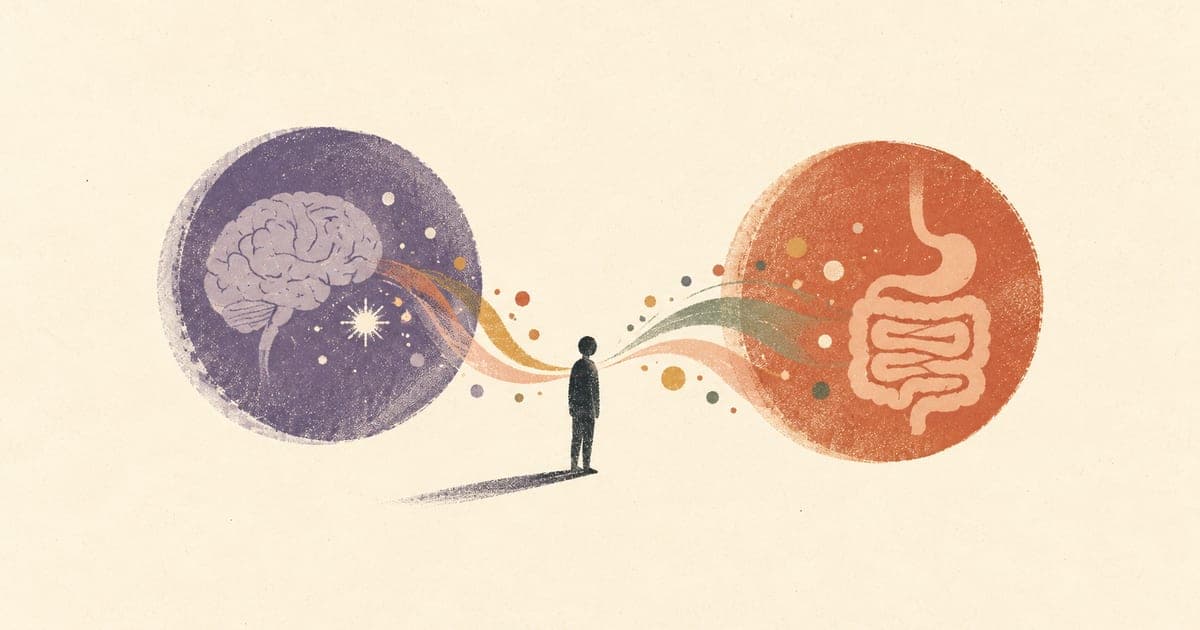
A clinician-focused guide to the gut-brain axis across anxiety, depression, autism, trauma, and autistic burnout, without overclaiming what current evidence can prove.
Educational information, not individual clinical, legal or regulatory advice. No independent review is identified for this article. Editorial policy and corrections.
For much of psychology's history, the body below the neck was treated as scenery.
Thoughts happened in the brain. Emotions belonged to the mind. The gut was plumbing.
That separation no longer holds.
The gastrointestinal system contains an extensive neural network, interacts with the body's stress-response system, and communicates with the brain through pathways that include the vagus nerve, immune signalling, hormones, and microbial metabolites.
This does not mean every psychological difficulty begins in the gut. It does not mean gut bacteria cause autism, depression, anxiety, trauma, or autistic burnout.
It means that the brain and body are not separate systems reluctantly sharing the same person. They are continuously exchanging information.
For clinicians, this matters because anxiety, low mood, sensory overload, chronic stress, pain, disrupted eating, gastrointestinal symptoms, and reduced functioning rarely remain neatly inside separate diagnostic categories.
The gut-brain axis gives us a more integrated way to understand why.
Jump to a section:

The gastrointestinal tract contains its own nervous system, known as the enteric nervous system, or ENS.
Embedded within the gut wall from the oesophagus to the rectum, the human ENS contains an estimated 200 to 600 million neurons. These neurons coordinate digestion, motility, secretion, absorption, and local blood flow. The system can organise many digestive functions without waiting for moment-by-moment instructions from the brain.
This capacity led neuroscientist Michael Gershon to popularise the phrase "the second brain."
The phrase is useful, but it can also be misunderstood. The gut does not think, plan, form beliefs, or possess a second consciousness. It is better understood as a complex, semi-autonomous neural system that remains in constant communication with the central nervous system.
Semi-autonomous does not mean isolated.
The state of the brain can alter gut function. The state of the gut can alter signals reaching the brain. Neither direction is complete on its own.
The gut-brain axis is not a single nerve or chemical. It is a network of overlapping communication systems.
The vagus nerve is one of the major communication routes between the internal organs and the brain.
Approximately four-fifths of its fibres are afferent, meaning they carry sensory information from the body toward the brain. Vagal sensory pathways respond to gut distension, nutrients, hormones, inflammatory signals, and other changes within the gastrointestinal environment.
The brain is therefore not simply issuing instructions to the gut. It is also receiving a continuous stream of information from it.
The gut interacts with hormones involved in hunger, satiety, metabolism, digestion, and stress.
One of the most clinically important endocrine systems is the hypothalamic-pituitary-adrenal axis, usually shortened to the HPA axis.
The gastrointestinal tract is a major interface between the body and the external environment. Immune cells in and around the intestinal lining respond to pathogens, food components, microbial activity, and changes in the intestinal barrier.
Inflammatory molecules can influence neural and hormonal signalling, while stress hormones can alter immune activity and gut function.
The gut microbiota refers to the communities of microorganisms living within the gastrointestinal tract.
These microorganisms interact with food, medications, immune processes, intestinal cells, and one another. They also produce metabolites, including short-chain fatty acids, that can influence intestinal integrity, inflammation, metabolism, and neural signalling.
These pathways do not operate independently. They overlap.
A microbial metabolite may affect an immune cell. The immune response may influence vagal signalling. Stress hormones may alter the gut environment. Changes in eating, sleep, or medication may then alter the microbiota again.
The result is not a straight line. It is a feedback system.
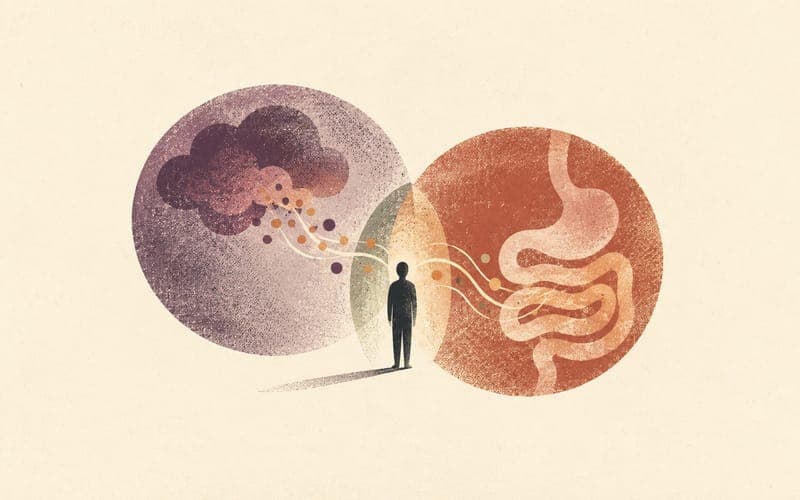
The HPA axis is one of the body's central stress-response systems.
When the brain detects a threat, the hypothalamus releases corticotropin-releasing hormone. This signals the pituitary gland to release adrenocorticotropic hormone, which then stimulates the adrenal cortex to release cortisol.
Cortisol helps mobilise energy and support short-term survival. It is not inherently harmful. Problems are more likely to emerge when stress activation becomes prolonged, repeatedly triggered, or poorly resolved.
The relationship between stress and the gut runs in both directions.
Chronic or intense stress can affect gastrointestinal motility, secretion, pain sensitivity, immune activity, and intestinal permeability. It can contribute to nausea, abdominal discomfort, diarrhoea, constipation, reflux, urgency, appetite changes, or symptom flares in people with existing gastrointestinal conditions.
This does not make the symptoms imaginary or "just anxiety."
A stress-mediated physiological process is still physiological.
One of the foundational studies in this area was conducted by Sudo and colleagues in 2004.
Mice raised without a typical gut microbiota showed an exaggerated ACTH and corticosterone response to restraint stress compared with conventionally colonised mice. Some of this hyperreactivity was reduced when the mice were colonised with Bifidobacterium infantis, particularly during an early developmental period.
This finding helped establish the idea that microbial exposure may contribute to the development and regulation of the HPA stress response.
However, it is important to keep the level of evidence clear.
This was a mouse study. It does not prove that a particular bacterial strain regulates stress in humans, that childhood trauma is caused by gut bacteria, or that probiotics can recalibrate an adult nervous system.
Preclinical evidence can identify plausible mechanisms. It cannot be translated directly into clinical promises.
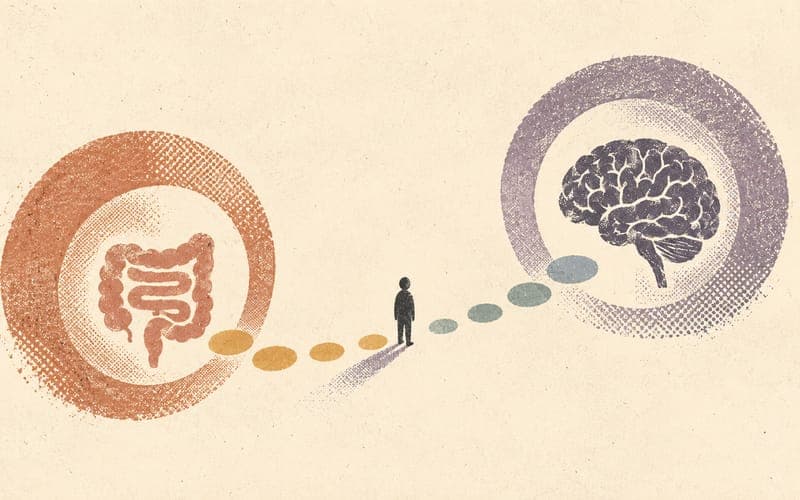
One of the most repeated gut-brain facts is that approximately 90 to 95 per cent of the body's serotonin is synthesised in the intestine, largely by specialised enterochromaffin cells.
This is true, but it is often presented misleadingly.
Gut-derived serotonin does not simply travel into the brain and improve mood. Peripheral serotonin and central serotonin are largely separate pools because serotonin does not ordinarily cross the blood-brain barrier.
Peripheral serotonin still matters.
It contributes to gut motility, secretion, intestinal sensation, platelet function, inflammatory processes, and communication between intestinal cells and sensory pathways.
The microbiota can also influence how tryptophan is metabolised. Tryptophan is a precursor involved in both serotonin synthesis and the kynurenine pathway. Inflammation can shift tryptophan metabolism toward kynurenine-related processes that have been investigated in depression and other neuropsychiatric conditions.
The accurate conclusion is not:
Most serotonin is made in the gut, so gut health controls happiness.
It is:
Gut and brain serotonin are distinct, but intestinal, immune, metabolic, and tryptophan-related processes may still influence mood and stress through indirect pathways.
That distinction matters.
Read more: PMDD, Hormones, ADHD and Autism: Mental Health Across Body Systems.
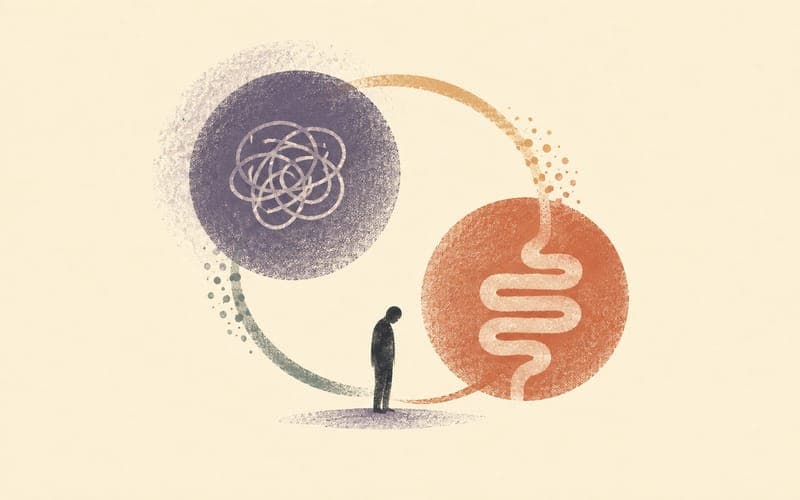
Anxiety is commonly experienced in the body before it is fully articulated in thought.
A person may notice:
These sensations can then become additional sources of threat.
The person feels anxious, their gut responds, they notice the gut response, and the sensation confirms that something must be wrong. This increases vigilance, which can intensify both anxiety and gastrointestinal discomfort.
The cycle can also begin in the opposite direction. Unpredictable abdominal pain, constipation, urgency, or nausea can create anticipatory anxiety about leaving home, travelling, eating in public, attending work, or being unable to access a bathroom.
This is particularly relevant in irritable bowel syndrome. Meta-analytic research consistently identifies elevated anxiety and depressive symptoms among people with IBS, although this association does not demonstrate that either condition has one single cause.
A gut-brain formulation therefore does not require deciding whether symptoms are "physical" or "psychological."
They may be maintained through both.
Research has identified differences in gut microbial composition between some groups of people with depression and non-depressed comparison groups.
However, the findings are not consistent enough to define a universal "depression microbiome."
Different studies identify different bacterial patterns. Results are affected by diet, medications, geography, age, illness severity, gastrointestinal conditions, sleep, alcohol use, antibiotics, sampling methods, and many other variables.
Systematic reviews have found some recurring transdiagnostic patterns, including lower levels of certain short-chain-fatty-acid-producing bacteria and higher levels of some pro-inflammatory taxa. At the same time, measures of overall microbial diversity have been inconsistent.
This suggests that inflammation, microbial metabolism, intestinal function, and HPA-axis regulation may be relevant to at least some forms of depression.
It does not mean depression is fundamentally a bowel disorder.
Depression is heterogeneous. Two people can meet the same diagnostic criteria through very different combinations of developmental history, stress, grief, isolation, inflammation, sleep disruption, disability, pain, medication effects, trauma, social adversity, and neurobiology.
The gut-brain axis may be one part of that picture. It is not the whole picture, and it is not yet a reliable diagnostic tool.
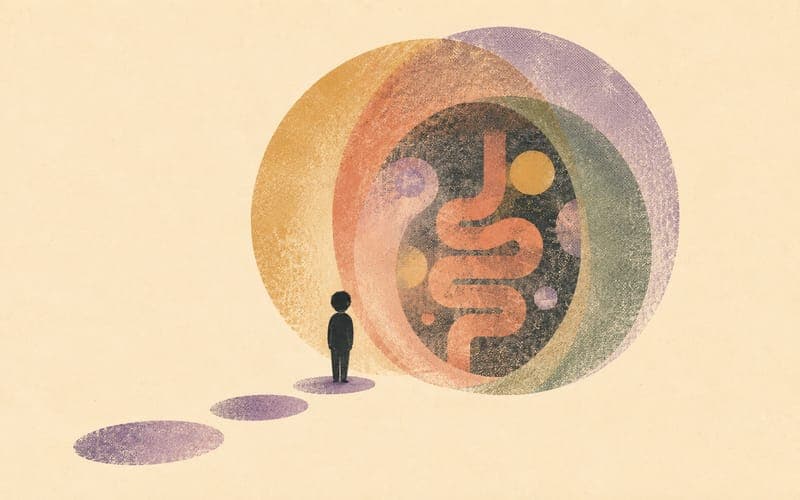
Autistic people experience gastrointestinal symptoms at higher rates than non-autistic comparison groups, particularly in the child and adolescent literature.
The strongest meta-analytic evidence in children concerns constipation, diarrhoea, abdominal pain, and gastrointestinal concerns more broadly. Reflux, bloating, and feeding-related difficulties are also reported clinically, although prevalence estimates vary considerably across studies.
This association needs to be interpreted carefully.
It does not establish that gut bacteria cause autism.
Autism is a neurodevelopmental difference. Reported microbial differences between autistic and non-autistic groups have been inconsistent and do not demonstrate that gut microbiota cause autism. Microbiome-modifying interventions have also not been established as treatments for autism itself. A 2024 meta-analysis of 12 randomised controlled trials found no high-quality evidence that probiotics improve core autism characteristics, with most included studies carrying a high risk of bias.
There are also several more immediate reasons gastrointestinal needs may be particularly relevant for autistic people:
When an autistic person becomes distressed, withdrawn, irritable, less communicative, or less able to meet demands, clinicians should not automatically interpret the change as behavioural resistance or worsening "autism symptoms."
Pain, constipation, reflux, hunger, medication effects, or other physical health concerns may be contributing.
The goal is not to medicalise every change in functioning. It is to avoid overlooking physical distress because the person communicates it differently.
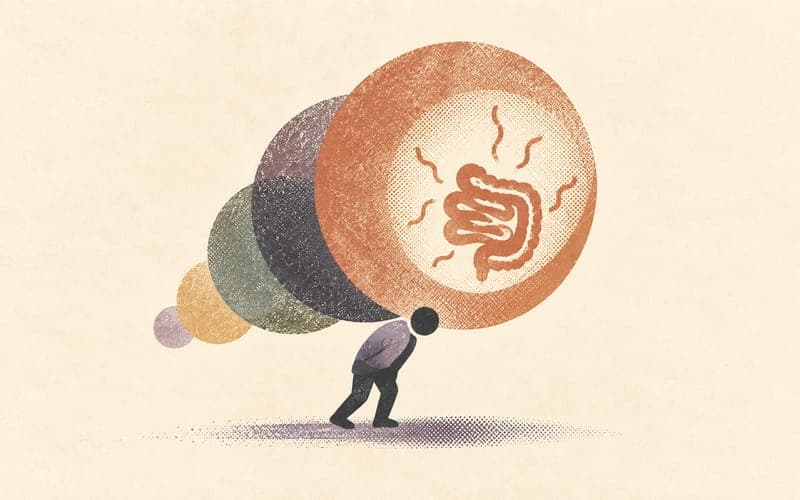
Autistic burnout is commonly described as a state of profound exhaustion, reduced functioning, loss of skills, and decreased tolerance for sensory or social demands.
Research drawing directly on autistic adults' accounts conceptualises it as emerging from chronic life stress, cumulative demands, and a mismatch between expectations, capacity, and available support.
Current evidence does not establish gut dysbiosis as a cause of autistic burnout.
The more clinically useful connection is that gastrointestinal symptoms can become part of the person's total load.
For example:
The relationship can become circular.
Burnout reduces the person's capacity to manage physical needs. Unmet physical needs increase pain, stress, and sensory load. That additional load can make recovery more difficult.
The answer is not to tell an autistic person in burnout to optimise their microbiome.
It may involve reducing demands, increasing practical support, making food and hydration more accessible, investigating persistent symptoms, supporting communication, treating pain, improving predictability, and addressing the environmental mismatch that contributed to burnout in the first place.
Read more: Autistic Burnout Is Not Just "Stress": It Is Often a Mismatch Problem.

People with trauma histories often experience distress as intensely physical.
The body may respond to reminders of danger before the person consciously identifies what has been triggered. Changes in heart rate, breathing, muscle tension, nausea, appetite, bowel urgency, or abdominal pain may occur as part of a broader defensive response.
This does not mean trauma is "stored in the gut" in a literal or anatomically specific way.
It means that trauma-related learning involves integrated neural, autonomic, endocrine, immune, and behavioural systems. The gastrointestinal system is one place where this activation may become visible.
A gut-brain explanation can be validating for clients who say:
"My stomach reacts even when I know I am safe."
Knowing something cognitively and feeling safe physiologically are not always the same process.
At the same time, clinicians must be careful not to attribute every gastrointestinal symptom to trauma. New, severe, persistent, or changing symptoms require appropriate medical assessment.
Trauma-informed practice should reduce diagnostic overshadowing, not create a new version of it.
Read more: PTSD Return to Practice: A Clinical Guide for Returning Psychologists.

Burnout, depression, chronic stress, and physical illness can overlap in ways that are difficult to separate.
A person experiencing severe exhaustion may have reduced capacity to:
Poor intake, disrupted sleep, pain, gastrointestinal illness, and medication effects may then deepen fatigue, cognitive slowing, irritability, and low mood.
This does not mean depression or burnout can be fixed through diet.
It means that basic physical capacity should be included in formulation rather than treated as background information.
Sometimes the most useful clinical question is not:
"Which diagnosis does this symptom belong to?"
It is:
"What is increasing this person's total load, and what is preventing recovery?"
Read more: Neurodivergent Clinicians in Psychology: Ableism, Masking and Sustainable Practice.
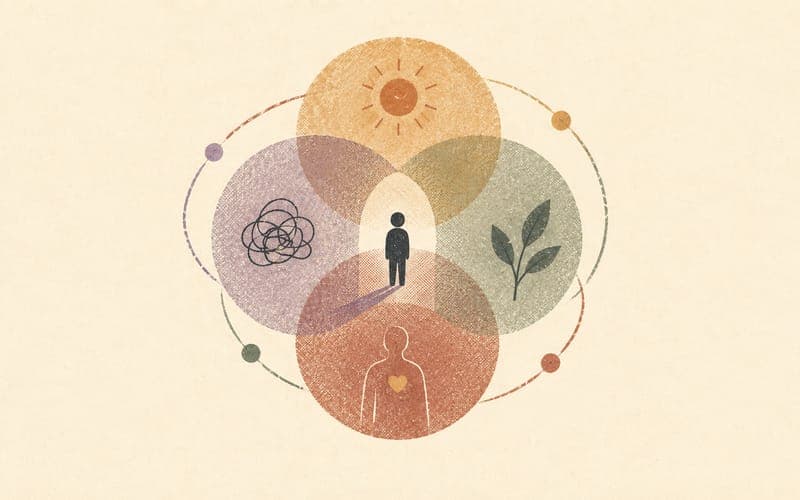
The gut-brain axis is most useful when it improves formulation without encouraging overreach.
When clinically appropriate, ask about:
These questions do not require the psychologist to diagnose a gastrointestinal condition. They help identify factors that may be affecting mood, anxiety, attention, behaviour, sleep, and capacity.
Stress can worsen gastrointestinal symptoms, but this does not mean symptoms should be dismissed as psychological.
A client can have anxiety and a gastrointestinal condition.
They can have trauma and inflammatory disease.
They can be autistic and experience pain that has not been recognised.
Psychological formulation should sit alongside appropriate medical investigation rather than replacing it.
Psychologists can provide psychoeducation, help clients identify symptom patterns, support communication with health professionals, and address fear, avoidance, stress, or shame associated with gastrointestinal symptoms.
Directing restrictive diets, probiotic regimens, fasting protocols, elimination diets, or supplement programmes generally requires relevant medical or dietetic expertise.
This is especially important with autistic clients, people with eating disorders, and clients with limited safe foods. Removing foods without adequate support can increase nutritional risk, rigidity, anxiety, and loss of accessible options.
Breathing, grounding, movement, sensory regulation, sleep support, and stress-management strategies may help some clients manage arousal and physical discomfort.
They should not be marketed as ways to "reset," "detox," or permanently heal the vagus nerve.
The vagus nerve is not an emotional on-off switch, and feeling dysregulated does not mean it is damaged.
For someone in autistic burnout or severe depression, useful accommodations may include:
These interventions do not reduce the person to their body.
They recognise that psychological recovery requires enough physical and environmental support for recovery to become possible.
The gut-brain axis is a legitimate field of neuroscience and psychoneuroimmunology.
It is also heavily commercialised.
Current evidence does not justify claims that:
Much of the strongest causal evidence still comes from animal research. Human findings are often correlational, heterogeneous, and affected by substantial confounding variables.
Promising is not the same as proven.
Biologically plausible is not the same as clinically established.
The most useful implication of gut-brain research is not that the gut secretly controls the mind.
It is that the division between "physical" and "psychological" symptoms is often clinically artificial.
Anxiety can alter gastrointestinal function.
Gastrointestinal pain can increase anxiety.
Depression can reduce eating, movement, sleep, and self-care.
Inflammation, medication effects, chronic illness, and poor sleep can contribute to depressive symptoms.
Autistic burnout can reduce the capacity to manage food, hydration, pain, and appointments.
Unmet physical needs can then add further load to an already overwhelmed nervous system.
These are not competing explanations.
They are interacting parts of the same person.
"As above, so below" is usually treated as a mystical phrase.
In this context, it is a description of reciprocity.
The state of the brain influences the gut through autonomic, endocrine, immune, and behavioural pathways. The state of the gut influences the information reaching the brain through neural, inflammatory, hormonal, and metabolic signalling.
The traffic moves both ways.
The clinical task is not to decide whether suffering belongs to the mind or the body.
It is to understand how the person's whole system is responding, what is adding to their load, what has been overlooked, and what support might make regulation and recovery more possible.
The mind is not floating above the body, directing it from a distance.
They were never separate systems to begin with.
For clinician-ready resources that support whole-person formulation across neurodiversity, mental health, and practical service delivery, browse the latest tools on PsychVault.
Language note: This article uses identity-first and person-first language where clinically relevant, and follows the phrasing used in cited research while aiming to respect diverse autistic and lived-experience preferences.
Breit, S., Kupferberg, A., Rogler, G., & Hasler, G. (2018). Vagus nerve as modulator of the brain-gut axis in psychiatric and inflammatory disorders. Frontiers in Psychiatry, 9, 44.
Cryan, J. F., & Dinan, T. G. (2012). Mind-altering microorganisms: The impact of the gut microbiota on brain and behaviour. Nature Reviews Neuroscience, 13(10), 701-712.
Cryan, J. F., O'Riordan, K. J., Cowan, C. S. M., Sandhu, K. V., Bastiaanssen, T. F. S., Boehme, M., Codagnone, M. G., Cussotto, S., Fulling, C., Golubeva, A. V., Guzzetta, K. E., Jaggar, M., Long-Smith, C. M., Lyte, J. M., Martin, J. A., Molinero-Perez, A., Moloney, G., Morelli, E., Morillas, E., et al. (2019). The microbiota-gut-brain axis. Physiological Reviews, 99(4), 1877-2013.
Dinan, T. G., & Cryan, J. F. (2012). Regulation of the stress response by the gut microbiota: Implications for psychoneuroendocrinology. Psychoneuroendocrinology, 37(9), 1369-1378.
Foster, J. A., Rinaman, L., & Cryan, J. F. (2017). Stress and the gut-brain axis: Regulation by the microbiome. Neurobiology of Stress, 7, 124-136.
Furness, J. B., Callaghan, B. P., Rivera, L. R., & Cho, H. J. (2014). The enteric nervous system and gastrointestinal innervation: Integrated local and central control. Advances in Experimental Medicine and Biology, 817, 39-71.
Kotowska, M., Kołodziej, M., Szajewska, H., & Łukasik, J. (2024). The impact of probiotics on core autism symptoms: A systematic review and meta-analysis of randomized clinical trials. Clinical Nutrition ESPEN, 63, 893-902.
McElhanon, B. O., McCracken, C., Karpen, S., & Sharp, W. G. (2014). Gastrointestinal symptoms in autism spectrum disorder: A meta-analysis. Pediatrics, 133(5), 872-883.
Nikolova, V. L., Smith, M. R. B., Hall, L. J., Cleare, A. J., Stone, J. M., & Young, A. H. (2021). Perturbations in gut microbiota composition in psychiatric disorders: A review and meta-analysis. JAMA Psychiatry, 78(12), 1343-1354.
O'Mahony, S. M., Clarke, G., Borre, Y. E., Dinan, T. G., & Cryan, J. F. (2015). Serotonin, tryptophan metabolism and the brain-gut-microbiome axis. Behavioural Brain Research, 277, 32-48.
Raymaker, D. M., Teo, A. R., Steckler, N. A., Lentz, B., Scharer, M., Delos Santos, A., Kapp, S. K., Hunter, M., Joyce, A., & Nicolaidis, C. (2020). "Having all of your internal resources exhausted beyond measure and being left with no clean-up crew": Defining autistic burnout. Autism in Adulthood, 2(2), 132-143.
Rea, K., Dinan, T. G., & Cryan, J. F. (2016). The microbiome: A key regulator of stress and neuroinflammation. Neurobiology of Stress, 4, 23-33.
Simpson, C. A., Diaz-Arteche, C., Eliby, D., Schwartz, O. S., Simmons, J. G., & Cowan, C. S. M. (2021). The gut microbiota in anxiety and depression: A systematic review. Clinical Psychology Review, 83, 101943.
Sudo, N., Chida, Y., Aiba, Y., Sonoda, J., Oyama, N., Yu, X. N., Kubo, C., & Koga, Y. (2004). Postnatal microbial colonization programs the hypothalamic-pituitary-adrenal system for stress response in mice. The Journal of Physiology, 558(1), 263-275.
Zamani, M., Alizadeh-Tabari, S., & Zamani, V. (2019). Systematic review with meta-analysis: The prevalence of anxiety and depression in patients with irritable bowel syndrome. Alimentary Pharmacology & Therapeutics, 50(2), 132-143.
Share your thoughts and experiences with this resource.
Sign in to leave a comment
Continue with the complete neurodiversity-affirming practice collection.
Find templates, handouts, and clinical tools created for use in real psychology and allied health work.
Autistic burnout is often a mismatch problem, not a motivation problem. A practical clinician guide to sensory load, masking costs, demand load, values mismatch, and recovery by reducing load.
A clinician-facing account of PDA-style resistance through predictive processing, salience network gating, precision weighting, autonomy, and clinical formulation.
A clinical guide to autistic burnout, PDA-profile demand avoidance, masking, shutdown, skill loss, recovery time, and why demand reduction is often treatment.